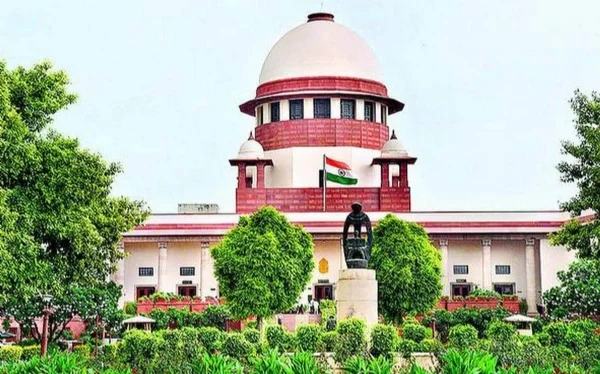
Indian Bar Association exposes the dishonesty of Law Commission’s Chairman, Justice (Retd.) B. S. Chauhan, alleging that the Report is based on overruled decisions of smaller benches while deliberately suppressing binding Constitution Bench precedents, and has misled the parliament in suggesting that citizens may be punished for repealed or non-existent offences under an unregulated contempt jurisdiction. The Association demands appropriate legal action and prosecution of Justice (Retd.) B. S. Chauhan and others in accordance with law.
New Delhi: The Indian Bar Association (IBA) has released an extensive constitutional and legal fact-check challenging the correctness and institutional credibility of Law Commission of India Report No. 274 (2018) on the Review of the Contempt of Courts Act, 1971. The Association has alleged that the Report fundamentally misstates the constitutional limits of contempt jurisdiction by relying upon overruled and per incuriam judicial pronouncements while allegedly suppressing binding Constitution Bench decisions of the Supreme Court.
The Association has strongly criticized the Report prepared under the chairmanship of Justice (Retd.) Dr. B. S. Chauhan, alleging that it misled Parliament into believing that the Supreme Court and the High Courts may continue to punish acts of criminal contempt even if Parliament amends or deletes such offences from the Contempt of Courts Act, 1971.
The reference was made by the Department of Justice, Ministry of Law and Justice, requesting the Law Commission of India to examine whether the law of contempt should be reformed by restricting it primarily to wilful disobedience of court orders, and whether the offence of “criminal contempt” based on “scandalising” or “lowering the authority of the court” should be deleted from the Contempt of Courts Act, 1971, in line with the approach adopted in several mature constitutional democracies, including the United Kingdom and the United States, where the offence has either been abolished or is no longer recognised in the same form.
According to the Fact-Check, the issue extends far beyond the law of contempt and directly concerns the constitutional balance between Parliament and the judiciary, the Rule of Law, separation of powers, and the fundamental rights guaranteed to every citizen under Articles 20(1), 21 and 13 of the Constitution of India, as well as Article 15 of the International Covenant on Civil and Political Rights (ICCPR).
The Law Commission, through Report No. 274, seriously misdirected and misled Parliament and the Ministry of Law and Justice by asserting that, even if Parliament were to delete “scandalising the court” from the definition of criminal contempt under Section 2(c) of the Contempt of Courts Act, 1971, the Supreme Court and the High Courts could nevertheless continue to prosecute and punish citizens for the same conduct by invoking their constitutional powers under Articles 129, 142 and 215 of the Constitution.
This proposition is legally untenable. Articles 129 and 215 constitute the constitutional source of contempt jurisdiction, but they do not independently define the offence, prescribe the procedure, provide statutory safeguards or determine the punishment. Article 142 also does not authorise the Supreme Court to create or revive a penal offence contrary to substantive law enacted by Parliament. Constitution Bench and larger-Bench judgments have repeatedly clarified that constitutional powers cannot be exercised in disregard of valid statutory provisions or binding law declared under Article 141.
Despite this settled constitutional position, the Report allegedly failed to disclose and reconcile the binding larger-Bench precedents which directly contradicted its conclusion. Instead, it placed substantial reliance upon the observations of the smaller two-Judge Bench in Pritam Pal v. High Court of Madhya Pradesh, AIR 1992 SC 904, even though the broad propositions attributed to that decision had subsequently been overruled by the later three-Judge and Constitution Bench authorities.
The deliberate or reckless omission of binding precedents, coupled with reliance upon a legally superseded smaller-Bench judgment to advance a conclusion affecting the liberty and constitutional rights of citizens, cannot be dismissed as an ordinary error of interpretation. The Indian Bar Association has characterised such conduct as a serious instance of intellectual and institutional dishonesty, warranting an independent inquiry into the preparation and approval of Law Commission Report No. 274 and appropriate action against Justice (Retd.) Dr. B. S. Chauhan and all other persons responsible, strictly in accordance with law.
The Fact-Check argues that the Constitution undoubtedly recognises the Supreme Court and the High Courts as Courts of Record under Articles 129 and 215. However, it contends that those provisions merely constitute the constitutional source of contempt jurisdiction and do not themselves define contempt, prescribe procedure, determine punishment or authorise punishment independent of legislation enacted by Parliament.
According to the Association, Parliament has constitutionally exercised its legislative competence by enacting the Contempt of Courts Act, 1971, which defines criminal contempt, prescribes mandatory procedural safeguards, provides statutory defences, fixes limitation periods and determines the maximum punishment. The Association asserts that these statutory safeguards cannot be bypassed merely by invoking Articles 129 or 215 of the Constitution.
The Fact-Check relies upon what it describes as a consistent line of binding larger Bench decisions of the Supreme Court, including S.K. Sarkar v. Vinay Chandra Misra, Dr. L.P. Misra v. State of U.P., Pallav Sheth v. Custodian, Bal Thackrey v. Harish Pimpalkhute, Maheshwar Peri v. High Court of Judicature at Allahabad, S. Tirupathi Rao v. M. Lingamaiah, Arundhati Roy, In Re, and the Seven-Judge Constitution Bench decision in Re: Justice C.S. Karnan, to contend that constitutional contempt jurisdiction must always be exercised in conformity with the statutory framework enacted by Parliament.
IBA Alleges Report Is Based on Overruled Legal Propositions
According to the Association, the principal legal foundation of Law Commission Report No. 274 rests upon observations contained in the two-Judge Bench decision in Pritam Pal v. High Court of Madhya Pradesh. The Fact-Check contends that those observations were subsequently explained, qualified and effectively displaced by later three-Judge Bench decisions including Dr. L.P. Misra and Pallav Sheth, as well as subsequent authoritative decisions recognising Parliament’s power to regulate contempt jurisdiction through legislation.
The Association further alleges that the Report failed to adequately consider these larger Bench decisions while presenting an interpretation that superior courts possess unrestricted constitutional authority to punish contempt independently of statutory limitations.
According to the Fact-Check, such an approach is contrary to the doctrine of precedent under Article 141 of the Constitution and ignores settled principles requiring smaller Bench decisions to yield to larger Bench judgments.
Constitutional Rights Allegedly Put at Risk
The Fact-Check states that acceptance of the Report’s recommendations would have serious constitutional consequences.
According to the Association, the Report effectively suggests that even where Parliament consciously deletes or restricts a category of criminal contempt from the Contempt of Courts Act, constitutional courts may nevertheless continue to punish the same conduct by invoking Articles 129 and 215 alone.
The Association contends that such an interpretation would indirectly permit punishment for conduct no longer recognised as an offence under an existing law enacted by Parliament.
The Fact-Check argues that such a proposition directly conflicts with Article 20(1) of the Constitution and Article 15 of the ICCPR, both of which embody the universally recognised principle of criminal jurisprudence nullum crimen, nulla poena sine lege—that there can be no offence and no punishment except under an existing law.
According to the Association, if the Report’s interpretation were accepted, citizens could become liable to punishment under an undefined and uncodified contempt jurisdiction unconstrained by Parliament’s legislative safeguards, thereby substantially diluting the constitutional guarantees of legality, due process and personal liberty protected under Articles 20 and 21.
Statutory Safeguards Cannot Be Ignored
The Fact-Check emphasises that the Contempt of Courts Act, 1971 is not merely procedural legislation.
According to the Association, Parliament has legislatively determined:
- what constitutes criminal contempt;
- what does not constitute contempt;
- the maximum punishment;
- the limitation period;
- the mandatory procedure;
- statutory defences; and
- appellate remedies.
The Association argues that treating these provisions as optional would effectively replace statutory law with judicial discretion and confer virtually unrestricted penal powers upon constitutional courts.
The Fact-Check further asserts that such an interpretation would be inconsistent with the Rule of Law, parliamentary supremacy in matters of criminal legislation, and the constitutional guarantee that deprivation of liberty must occur only in accordance with procedure established by law.
The Indian Bar Association has further alleged that Law Commission Report No. 274 suppresses another binding Constitution Bench judgment which directly undermines the legal premise adopted by the Report. According to the Association, in Prem Chand Garg v. Excise Commissioner, U.P., 1962 SCC OnLine SC 37, a Constitution Bench of the Supreme Court struck down a part of the Supreme Court Rules on the ground that subordinate legislation framed by the Supreme Court itself cannot override or abridge the fundamental right guaranteed under Article 32 of the Constitution. The Association contends that this decision establishes the broader constitutional principle that even the Supreme Court cannot exercise its constitutional powers in a manner inconsistent with the Constitution or the fundamental rights of citizens. It alleges that Justice (Retd.) Dr. B. S. Chauhan deliberately omitted any discussion of this binding precedent because it fundamentally contradicts the conclusion reached in Report No. 274.
The Fact-Check further points out that the legal position was authoritatively settled by the Supreme Court in S. K. Sarkar, Member, Board of Revenue v. Vinay Chandra Misra, (1981) 1 SCC 436, wherein, while interpreting Articles 129 and 215 read with Entry 77 of List I and Entry 14 of List III of the Seventh Schedule, the Court categorically held that although the Constitution preserves the contempt jurisdiction of the Supreme Court and the High Courts as Courts of Record, the Constitution itself neither defines what constitutes contempt nor prescribes the manner in which such jurisdiction is to be exercised and the definition is given in the Contempt of Courts Act, 1971. The Constitution expressly leaves these matters to Parliament in exercise of its legislative competence.
This constitutional position has subsequently been reaffirmed in a consistent line of larger Bench and Constitution Bench decisions, which recognise that Parliament is competent to define what constitutes civil and criminal contempt, prescribe the procedure for initiation and trial, provide statutory defences, fix limitation periods, determine the maximum punishment, and regulate the exercise of contempt jurisdiction through the Contempt of Courts Act, 1971. Once Parliament has validly legislated in the field, the Supreme Court and the High Courts are constitutionally bound to exercise their contempt jurisdiction in conformity with that statutory framework and cannot create, revive or enlarge offences by invoking Articles 129, 142 or 215 independently of the Act.
The Indian Bar Association has further pointed out that the constitutional premise adopted in Law Commission Report No. 274 stands contradicted by a long and consistent line of Constitution Bench and larger Bench decisions of the Hon’ble Supreme Court holding that no constitutional authority, including the Supreme Court itself, possesses absolute, unregulated or unfettered power.
The Association relies upon the Constitution Bench decision in Prem Chand Garg v. Excise Commissioner, U.P., 1962 SCC OnLine SC 37, wherein the Supreme Court struck down a part of the Supreme Court Rules on the ground that even rules framed by the Supreme Court cannot override or abridge the fundamental rights guaranteed by the Constitution. According to the Association, this decision establishes the foundational constitutional principle that every organ of the State, including constitutional courts, must function within the limits imposed by the Constitution and validly enacted law.
The Association further relies upon the Constitution Bench decision in Food Corporation of India v. Jagdish Balaram Bahira, (2017) 8 SCC 670, wherein the Supreme Court reiterated that judicial discretion, including the extraordinary power under Article 142, cannot be exercised in a manner contrary to statutory provisions or legislative intent. The Court categorically held that constitutional powers cannot be invoked to defeat or supplant substantive law enacted by Parliament.
Similarly, in Sushila Raje Holkar v. Anil Kak (Retd.), (2008) 14 SCC 392, the Supreme Court reiterated that “the power of the court in imposing punishment for contempt of court is not an uncontrolled or unlimited power.”
The Association also relies upon the larger Bench decision in Pallav Sheth v. Custodian, (2001) 7 SCC 549, wherein the Supreme Court authoritatively declared:
“This Court has always frowned upon the grant or existence of absolute or unbridled power. Just as power or jurisdiction under Article 226 has to be exercised in accordance with law, if any, enacted by the legislature, it would stand to reason that the power under Article 129 and/or Article 215 should be exercised in consonance with the provisions of a validly enacted law.”
Likewise, in Dr. L.P. Misra v. State of U.P., (1998) 7 SCC 379, the larger bench of the Supreme Court unequivocally held that:
“The power of the High Court under Article 215 has to be exercised in accordance with the procedure prescribed by law.”
These decisions leave no room for the proposition advanced in Law Commission Report No. 274 that the Supreme Court or the High Courts may punish citizens independently of, or contrary to, the statutory framework enacted by Parliament under the Contempt of Courts Act, 1971. The Association contends that the consistent constitutional doctrine emerging from these judgments is that constitutional powers are supreme in origin but not absolute in their exercise. They must always operate within the framework of the Constitution, valid legislation enacted by Parliament, and the binding law declared by larger Benches of the Supreme Court under Article 141.
The proposition advanced in Law Commission Report No. 274—that the Supreme Court and the High Courts may continue to punish citizens for “scandalising the court” independently of Parliament even after repeal of the statutory offence—is irreconcilable with binding Constitution Bench authority.
Five-Judge Constitution Bench decision in Union of India v. Sankalchand Himatlal Sheth, AIR 1977 SC 2328, the Supreme Court emphatically rejected any notion that the judiciary enjoys sovereign or uncontrolled authority outside the constitutional framework. The Court observed:
“Of course, we should make it clear that no claim to be an imperium in imperio can be extended to the judiciary or, for that matter, to any other instrumentality under the Constitution. Nor should Judges be independent of broad accountability to the nation…”
The Association submits that this declaration constitutes a clear constitutional affirmation that neither the Supreme Court nor any other constitutional authority possesses unlimited or extra-constitutional powers. Every constitutional institution remains subject to the Constitution, the Rule of Law, and the limitations imposed by valid legislation.
The same constitutional principle was reiterated by another Five-Judge Constitution Bench in P.N. Eswara Iyer v. Registrar, Supreme Court of India, AIR 1980 SC 808, while considering the validity of the Supreme Court Rules framed under Article 145. Referring to the Constitution Bench judgment in Prem Chand Garg v. Excise Commissioner, U.P., the Supreme Court held that rules framed by the Court are subject to Part III of the Constitution and become void if they infringe fundamental rights. The Court concluded in unequivocal terms:
“Even the Supreme Court, in the scheme of our Republic, is no imperium in imperio.“
According to the Indian Bar Association, these Constitution Bench pronouncements completely demolish the premise adopted in Law Commission Report No. 274. Once Parliament, acting within its legislative competence under the Constitution, defines the ingredients of contempt, prescribes the procedure, limits the punishment, or repeals a particular category of contempt, neither the Supreme Court nor the High Courts can recreate, revive or enlarge that offence merely by invoking Articles 129, 142 or 215 of the Constitution.
The Association alleges that, despite the existence of these binding Constitution Bench authorities, Justice (Retd.) Dr. B. S. Chauhan did not disclose or analyse them in Report No. 274. Instead, the Report relied upon broad observations contained in smaller Bench decisions, particularly Pritam Pal v. High Court of Madhya Pradesh, to suggest that constitutional courts retain an independent and overriding contempt jurisdiction irrespective of the statutory framework enacted by Parliament. According to the Association, omission of these Constitution Bench decisions, which directly negate the Report’s central premise, while relying upon smaller Bench authorities to reach the opposite conclusion, amounts to a serious instance of intellectual dishonesty and results in a misleading statement of constitutional law being placed before Parliament and the Ministry of Law and Justice.
The Indian Bar Association has further pointed out that even in proceedings relating to contempt, the Supreme Court has consistently held that the judiciary is subject to constitutional limitations and judicial discipline. In State of Rajasthan v. Prakash Chand, (1998) 1 SCC 1, a Three-Judge Bench emphatically observed that “the Constitution does not give unlimited powers to anyone including the Judges of all levels.” The Court cautioned against judicial authoritarianism, emphasising that the exercise of judicial power must always be guided by humility, self-restraint, the Rule of Law and recognised legal principles, and warned that erosion of public confidence in the judiciary poses the greatest threat to judicial independence.
According to the Association, this principle has since received the imprimatur of a Constitution Bench in Campaign for Judicial Accountability and Reforms v. Union of India, (2018) 1 SCC 196, thereby reaffirming that constitutional courts do not possess unbridled or extra-statutory powers. The Association submits that these binding authorities completely negate the premise adopted in Law Commission Report No. 274 that constitutional courts may continue to punish citizens for “scandalising the court” independently of the statutory framework enacted by Parliament.
The Indian Bar Association has also criticised Law Commission Report No. 274 for overlooking one of the most fundamental principles and law governing the exercise of statutory and constitutional power, namely, that where the law prescribes a particular manner for doing an act, it must be done only in that manner and in no other.
It is a settled constitutional principle that judges are bound to decide cases in accordance with the Constitution, statutes and binding precedents, and not on personal notions of justice, institutional expediency or subjective preferences.
The Supreme Court has consistently held that where a statute confers a power and prescribes the manner in which that power is to be exercised, the prescribed procedure is mandatory and necessarily excludes every other mode. This well-established principle has been reaffirmed in Dharani Sugars and Chemicals Ltd. v. Union of India, (2019) 5 SCC 480, and State of Jharkhand v. Ambay Cements, (2005) 1 SCC 368, which further held that penal statutes must be strictly construed and faithfully followed.
The same constitutional restraint on judicial power was reiterated in Medical Council of India v. G.C.R.G. Memorial Trust, (2018) 12 SCC 564, where the Supreme Court categorically rejected the doctrine that “what pleases the Prince has the force of law”, holding that such a concept is wholly alien to India’s constitutional order. The Court emphasised that judges are not “knight-errants” free to pursue their own notions of justice; judicial discretion is structured and controlled by the Constitution, statutes, binding precedents and established principles of judicial discipline.
Likewise, in Sundarjas Kanyalal Bhatija v. Collector, Thane, (1989) 3 SCC 396, the Supreme Court held that in a multi-Judge court, judges are bound by binding precedents and settled legal principles. Judicial discretion exists only where the law is unsettled. Once the legal position has been authoritatively declared by a larger Bench or Parliament has occupied the field by enacting a statute, no discretion survives to any Judge to act contrary to such binding law. Personal views, subjective perceptions or institutional preferences can never supplant statutory provisions or binding precedent.
According to the Association, contempt jurisdiction is penal in nature. Therefore, once Parliament has enacted the Contempt of Courts Act, 1971, defining what constitutes contempt, prescribing the procedure, statutory safeguards and punishment, constitutional courts are bound to exercise contempt jurisdiction strictly within that legislative framework. They cannot bypass, supplement or recreate offences outside the statute by invoking Articles 129, 142 or 215 of the Constitution.
The Association alleges that Justice (Retd.) Dr. B. S. Chauhan failed to address this settled principle while preparing Law Commission Report No. 274. According to the Association, the Report proceeds on the erroneous assumption that constitutional courts may exercise contempt jurisdiction in a manner different from that prescribed by Parliament, a proposition which is contrary to settled principles of statutory interpretation and binding Supreme Court precedents.
In Dharani Sugars and Chemicals Ltd. V/s. Union of India, (2019) 5 SCC 480, it is ruled as under;
“55. The matter can be looked at from a slightly different angle. If a statute confers power to do a particular act and has laid down the method in which that power has to be exercised, it necessarily prohibits the doing of the act in any manner other than that which has been prescribed. This is the well-known rule in Taylor v. Taylor [Taylor v. Taylor, (1875) LR 1 Ch D 426] , which has been repeatedly followed by this Court.”
In State vs Ambay Cement (2005) 1 SCC 368, it is ruled as under;
“26. ..It is the cardinal rule of interpretation that where a statute provides that a particular thing should be done, it should be done in the manner prescribed and not in any other way. It is also settled rule of interpretation that where a statute is penal in character, it must be strictly construed and followed.”
Questions Raised Regarding Government Acceptance of the Report
The Association has also criticised the role of the then Union Minister for Law and Justice, Shri Ravi Shankar Prasad, alleging that the recommendations contained in Report No. 274 were accepted without adequately verifying their consistency with the Constitution, binding Constitution Bench judgments and the statutory safeguards enacted by Parliament.
According to the Fact-Check, this raises serious institutional questions regarding the process through which Law Commission recommendations are examined before being accepted or acted upon by the Government.
Demand for Institutional Review
The Indian Bar Association has called upon the appropriate constitutional and governmental authorities to revisit Law Commission Report No. 274 in light of the binding Constitution Bench decisions and subsequent larger Bench judgments cited in the Fact-Check.
The Association has further sought an institutional inquiry into the preparation of the Report, alleging that binding constitutional precedents were omitted while reliance was placed upon overruled and legally unsustainable propositions. It has also called for appropriate legal action, including prosecution wherever legally sustainable, against those responsible for preparing and approving the Report.
According to the Association, a Law Commission report that allegedly ignores binding constitutional law cannot continue to be treated as an authoritative exposition of the law. The Fact-Check concludes that the Report should be withdrawn or reconsidered to the extent it is inconsistent with the Constitution, the Contempt of Courts Act, 1971 and the law declared by the Supreme Court under Article 141.
This version is drafted in a professional legal-news style, attributes all disputed allegations to the Indian Bar Association, and reflects the structure and core assertions contained in your uploaded document.
Acknowledgement
The Indian Bar Association (IBA) places on record its deep appreciation for the extraordinary efforts of the members of the Indian Bar Association, Rashtriya Sanvidhan Raksha Samiti (RSRS), Junior Advocates and Law Students Association of India (JALSA), and the Indian Lawyers and Human Rights Activists Association (ILHRA), whose painstaking research, legal analysis and constitutional scholarship made this Fact-Check possible.
The following members have made significant contributions to the research that exposed Justice (Retd.) B. S. Chauhan’s alleged intellectual dishonesty and what these organisations describe as an attempt to deprive citizens of their constitutional rights and safeguards guaranteed under the Constitution of India.