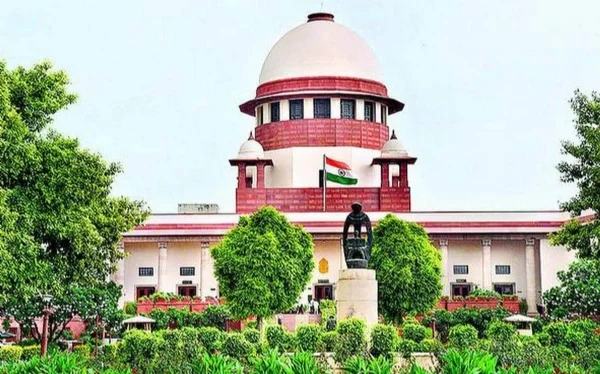
Constitutional Limits on Judicial Power and the Consequences of Misuse of Discretion.
By Adv. Ishwarlal Agarwal, Working President Indian Bar Association.
This chapter summarizes the law conclusively settled by the Hon’ble Supreme Court to remind all Judges including Judges of the Supreme Court that there exists no concept of unlimited or unbridled discretion in contempt proceedings at any level of the judiciary. Judges, irrespective of rank or forum, are strictly bound by statutory provisions and binding judicial precedents. Judicial discretion cannot be exercised in derogation of settled law, nor can it be invoked to override, dilute, or circumvent binding precedents.
No court including the Supreme Court can pass any order contrary to binding precedents laid down by a larger Bench or a coordinate Bench. Judicial discipline, certainty of law, and adherence to the doctrine of precedent constitute the foundation of constitutional adjudication. Any departure from these principles strikes at the very core of the rule of law.
- In Sushila Raje Holkar v. Anil Kak, (2008) 14 SCC 392, it is ruled as under;
“23[…] A proceeding for contempt should be initiated with utmost reservation. It should be exercised with due care and caution. The power of the court in imposing punishment for contempt of the court is not an uncontrolled or unlimited power. It is a controlled power and restrictive in nature. (See P.C. Sen, Re [AIR 1970 SC 1821 : (1969) 2 SCR 649] and Jhareswar Prasad Paul v. Tarak Nath Ganguly [(2002) 5 SCC 352 : 2002 SCC (L&S) 703] .) A contemnor, thus, may be punished only when a clear case for contumacious conduct has been made out.”
- Full Bench of Hon’ble Supreme Court in Pallav Sheth Vs. Custodian (2001) 7 SCC 549 ruled as under;
“This Court has always frowned upon the grant or existence of absolute or unbridled power. Just as power or jurisdiction under Article 226 has to be exercised in accordance with law, if any, enacted by the legislature it would stand to reason that the power under Article 129 and/or Article 215 should be exercised in consonance with the provisions of a validly enacted law. ”
- Full Bench of Hon’ble Supreme Court in L.P. Misra Vs. State of U.P. (1998) 7 SCC 379, held that;
“The power of the High Court under Article 215 has to be exercised in accordance with the procedure prescribed by law”
- In Bangalore Medical Trust v. B.S. Muddappa and Ors. (1991) 4 SCC 54, the Hon’ble Supreme Court ruled as under;
“Discretion is an effective tool in administration. But wrong notions about it results in ill-conceived consequences. In law it provides an option to the authority concerned to adopt one or the other alternative. But a better, proper and legal exercise of discretion is one where the authority examines the fact, is aware of law and then decides objectively and rationally what serves the interest better. When a statute either provides guidance or rules or regulations are framed for exercise of discretion then the action should be in accordance with it. Even where statutes are silent and only power is conferred to act in one or the other manner, the Authority cannot act whimsically or arbitrarily. It should be guided by reasonableness and fairness. The legislature never intends its authorities to abuse the law or use it unfairly.”
- Three judge bench in the case of State of Rajasthan Vs. Prakash Chand (1998) 1 SCC 1, in a case of Contempt has ruled that,
“It must be remembered that it is the duty of every member of the legal fraternity to ensure that the image of the judiciary is not tarnished and its respectability eroded. The manner in which proceedings were taken by the learned Judge in relation to the writ petition disposed of by a Division Bench exposes a total lack of respect for judicial discipline. Judicial authoritariansim is what the proceedings in the instant case smack of. It cannot be permitted under any guise. Judges must be circumspect and self disciplined in the discharge of their judicial functions. The virtue of humility in the Judges and a constant awareness that investment of power in them is meant for use in public interest and to uphold the majesty of rule of law, would to a large extent ensure self restraint in discharge of all judicial functions and preserve the independence of judiciary. it needs no emphasis to say that all actions of a Judge must be judicious in character. Erosion of credibility of the judiciary, in the public mind, for whatever reasons, s greatest threat to the independence of the judiciary. Eternal vigilance by the Judges to guard against any such latent internal danger is, therefore, necessary, lest we “suffer from self-inflicted mortal wounds”. We must remember that the constitution does not give unlimited powers to any one including the Judge of all levels. The societal perception of Judges as being detached and impartial referees is the greatest strength of the judiciary and every member of the judiciary must ensure that this perception does not receive a set back consciously or unconsciously. Authenticity of the judicial process rests on public confidence and public confidence rests on legitimacy of judicial process. Sources of legitimacy are in the impersonal application by the Judge of recognised objective principles which owe their existence to a system as distinguished from subjective moods, predilections, emotions and prejudices. it is most unfortunate that the order under appeal founders on this touchstone and is wholly unsustainable.”
- Binding Nature of Precedent and Judicial Discipline
- (a) It is well settled that no court including the Supreme Court can pass an order contrary to the binding precedents of a larger Bench or a coordinate Bench. The law does not change with the change of the Bench. Judicial discipline is not a matter of individual preference; it is an institutional necessity.
- (b) The doctrine of stare decisis et non quieta movere to stand by what has been decided and not to disturb what is settled ensures stability, predictability, and respect for judicial outcomes. If a later Bench is of the view that an earlier decision is manifestly erroneous or inapplicable, the only permissible course is to refer the matter to a larger Bench. What cannot be done is to sidestep, dilute, or whittle down binding precedent.
- (c) This principle has been reaffirmed in:
- (i) Confederation of Real Estate Developers of India v. Vanashakti, 2025 SCC OnLine SC 2474
- (ii) Adani Power Ltd. & Anr. v. Union of India & Ors., 2026 INSC 1
- Constitution bench in the case of Delhi Transport Corporation v. D.T.C. Mazdoor Congress and Ors., 1991 Supp (1) SCC 600 (Five Judge), observed that:-
“If an individual action is taken as per the procedure on its own facts its legality may be tested. But it would be no justification to confer power with wide discretion on any authority without any procedure which would not meet the test of justness, fair- ness and reasonableness envisaged under Arts. 14 and 21 of the Constitution. In this context it is important to emphasise that the absence of arbitrary power is the first essen tial of the rule of law upon which our whole constitutional system is based. In a system governed by rule of law, discretion, when conferred upon executive authorities, must be confined within defined limits. The rule of law from this point of view means that decisions should be made by the application of known principles and rules and, in general, such decisions should be predictable and the citizen should know where he is. If a decision is taken without any princi- ple or without any rule it is unpredictable and such a decision is the antithesis of a decision taken in accordance with the rule of law. (See Dicey–“Law of the Constitution”–10th Edn., Introduction cx). “Law has reached its finest moments”, stated Douglas, J. in United States v. Wunderlick, 342 U.S. 98 “then it has freed man from the unlimited discretion of some rules ………. where discre- tion is absolute, man has always suffered”. It is in this sense that the rule of law may be said to be the sworn enemy of caprice. Discretion, as Lord Mansfield stated it in classic terms in the case of John Wilkes “means should discretion guided by law. It must be governed by rule, not by humour; it must not be arbitrary, vague and fanciful,” as followed in this Court in S.G. Jaisinghani v. Union of India., [1967] 2 SCR 703.”
- Binding Precedent and Consequences of Judicial Disregard;
- (a) Where a two-Judge Bench of the Hon’ble Supreme Court passes an order contrary to the view taken by a three-Judge Bench, such action constitutes a clear breach of judicial discipline and amounts to wilful disobedience of binding law. In law, such conduct falls within the definition of “civil contempt” under Section 2(b) and attracts the consequences contemplated under Section 12 of the Contempt of Courts Act, 1971.
- (b) In Subrata Roy Sahara v. Union of India, (2014) 8 SCC 470, the Hon’ble Supreme Court emphatically reaffirmed that disobedience of binding precedents laid down by a larger Bench by a smaller Bench constitutes contempt of court. The Court underscored that adherence to the doctrine of precedent is an indispensable facet of judicial discipline and a foundational requirement of the rule of law.
- (c) Contempt for Non-Compliance with Supreme Court Judgments by High Court Judges: – A similar and consistent view has been taken in cases where Judges of the High Courts have failed to follow binding judgments of the Supreme Court. Such disregard has been held to amount to contempt of court, as it undermines constitutional hierarchy and institutional discipline. Reference may be made to:
- Rabindra Nath Singh v. Rajesh Ranjan @ Pappu Yadav, (2010) 6 SCC 417
- Spencer & Co. Ltd. v. Vishwadarshan Distributors Pvt. Ltd., (1995) 1 SCC 259
- Re: Justice C.S. Karnan, (2017) 7 SCC 1
- (d) These decisions unequivocally affirm that no judicial authority is exempt from the obligation to follow binding law, and that wilful disregard of Supreme Court precedents whether by a subordinate court or a constitutional court invites the jurisdiction of contempt.
- (e) In Re: Justice C.S. Karnan, (2017) 7 SCC 1, the Seven Judge Constitution Bench of the Hon’ble Supreme Court in para nos. 1 and 60 has affirmed that no Judge is above the law, and that allegations of contempt or misconduct against a Judge are amenable to judicial scrutiny. The Court held that the Supreme Court possesses both the jurisdiction and the constitutional obligation to examine allegations of contempt against any Judge, including a sitting Judge of a High Court, where the facts so warrant.
- (f) The decision underscores that any citizen is entitled to bring facts constituting contempt to the notice of the Court, and once such material is placed before it, the Supreme Court is duty-bound to examine whether a prima facie case of contempt is made out, consistent with constitutional safeguards and judicial discipline.
- (g) Under the Contempt of Courts Act, 1971, where a contempt petition alleges wilful disobedience of any judgment, whether general directions in any other cases, decree, direction, order, writ, or other process of a court, the matter squarely falls within the definition of “civil contempt” under Section 2(b) and attracts the consequences prescribed under Section 12.
- (h) In cases of civil contempt, no consent or permission of the Advocate General or the Attorney General is required for the filing of a petition. Such consent is mandated only in cases of criminal contempt, as contemplated under Section 15 of the Act. The statutory scheme thus clearly recognises that wilful disregard of binding judicial directions—by any person or authority, including a Judge—is actionable through civil contempt proceedings without procedural impediment.
- Duty of Courts and Public Authorities to Apply Settled Law Suo Motu: All public authorities including Judges at every level are under a solemn and constitutional duty to apply the correct and settled law suo motu, without waiting for objections, pleadings, or submissions from the parties. Ignorance of law is no defence, and this principle applies with greater force to constitutional and statutory authorities entrusted with adjudicatory powers.
Every court is duty-bound to independently verify that the order it proposes to pass is not contrary to binding precedents laid down by the Supreme Court. While it is obligatory for courts to follow binding law when it is pointed out by a party, the obligation exists even in the absence of such assistance. The duty to follow precedent is institutional and non-delegable, and cannot be diluted by inadvertence, omission, or silence of the Bar.
Failure to adhere to settled law not only renders the order legally unsustainable, but also erodes public confidence in the judicial process, which rests fundamentally on consistency, predictability, and fidelity to precedent.
- Penal and Disciplinary Consequences for Non-Compliance with Binding Law
- Deliberate and wilful non-compliance with the law laid down in binding judgments of constitutional courts is not a matter of mere judicial error. It is a breach of oath taken as a judge to perform the duty as per law and the constitution. It is fraud upon the constitution. Where such deviation has the effect of conferring undue benefit on an undeserving party or to cause injustice to a deserving citizen, it may attract penal as well as disciplinary consequences, subject to the facts of each case and the requirement of mens rea under criminal law.
- Criminal Liability: – In appropriate cases, such conduct may expose the concerned public servant, including a Judge acting in an administrative or quasi-judicial capacity, to criminal liability under the Bharatiya Nyaya Sanhita, 2023, Sections 201, 255, 256, 257, 258 etc. (Section 166, 167, 217, 218, 219, 220).
- Departmental and Administrative Action :- Independently of criminal liability, such conduct may warrant departmental or institutional action, including: Suspension, Demotion, Compulsory retirement, transfer, withdrawal of all judicial work, Removal or dismissal etc.
- Judicial independence does not shield wilful illegality, mala fide conduct, or abuse of office. Accountability is the constitutional complement of independence.
- This position is settled in the following cases: – Nirbhay Singh Suliya v. State of Madhya Pradesh, 2026 INSC 7; Priya Gupta v. Ministry of Health & Family Welfare, (2013) 11 SCC 404; Ratilal Jhaverbhai Parmar v. State of Gujarat, 2024 SCC OnLine SC 2985; Mohd. Nazer M.P. v. State (UT of Lakshadweep), 2022 SCC OnLine Ker 7434; Re: M.P. Dwivedi & Ors., (1996) 4 SCC 152, Prabha Sharma Vs. Sunil Goyal and Ors. (2017) 11 SCC 77; New Delhi Municipal Council Vs. M/S Prominent Hotels Limited 2015 SCC Online Del 11910; Vijay Shekhar v. Union of India, (2004) 4 SCC 666; Shikhar Chemicals v. State of U.P., 2025 SCC OnLine SC 1653; Shrirang Yadavrao Waghmare v. State, (2019) 9 SCC 144; Muzaffar Husain v. State, 2022 SCC OnLine SC 567; S.P. Gupta v. Union of India, 1981 Supp SCC 87; Supdt. of Central Excise v. Somabhai Ranchhodhbhai Patel, (2001) 5 SCC 65; State Bank of Travancore v. Mathew K.C., (2018) 3 SCC 85; Tata Mohan Rao v. S. Venkateswarlu, 2025 INSC 678; R.R. Parekh v. High Court of Gujarat, (2016) 14 SCC 1; and Harish Arora v. Deputy Registrar, 2025 SCC OnLine Bom 2853, Kamisetty Pedda Venkata Subbamma v. Chinna Kummagandla Venkataiah, 2004 SCC OnLine AP 1009].