Bar Council members and Advocates who pass resolutions or exert pressure upon other advocates to refrain from accepting briefs of any person are guilty of professional misconduct and are liable for disciplinary action under Section 35 of the Advocates Act, 1961. [ Manikandan Nair v. State (2025 MHC 2517) ; A.S. Mohammed Rafi v. State of Tamil Nadu, (2011) 1 SCC 688].
In this case, it was revealed that the local police had failed to act upon the victim’s complaint due to pressure exerted by local influential advocates. Taking serious note of this interference, the High Court ordered that the investigation be transferred to the CBI.
The High Court has, in such matters, issued clear warnings and directions to the Bar Councils to take immediate and appropriate action against those found indulging in such unethical conduct.
Consequently, elected members of the Bar Council who engage in or endorse such actions may face serious consequences, including disqualification from holding office and even suspension or cancellation of their licence to practice, i.e., their sanad.
The responsible and guilty members of the Bar or even state law officers would also be liable to pay compensation of Rs. 5 lakhs and above to any person who is deprived of legal representation due to such illegal pressure, boycott resolutions, or coercive conduct. [Sovaran Singh Prajapati v. State of U.P., 2025 SCC OnLine SC 351; Mahabir v. State, 2025 SCC OnLine SC 184].
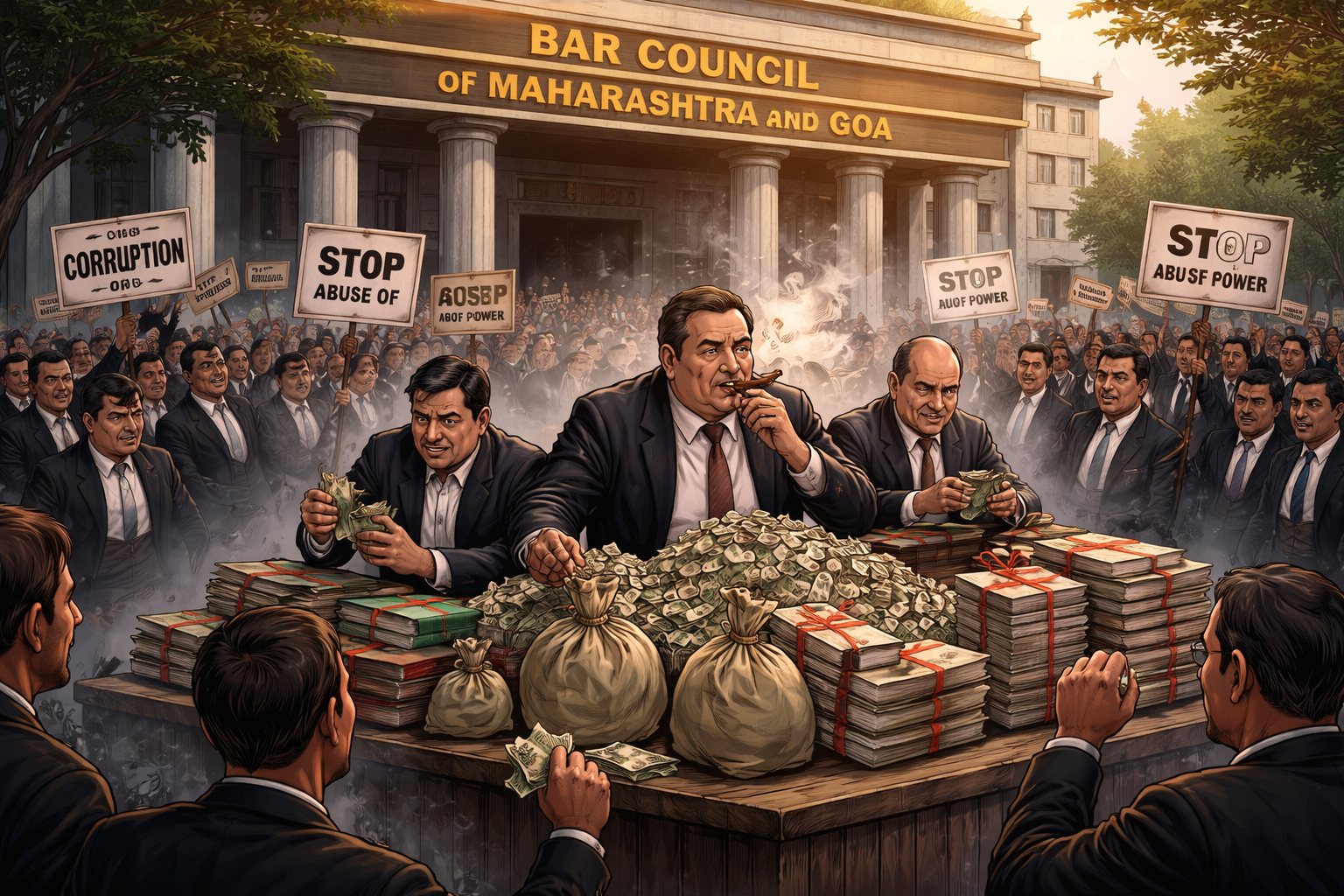
Some current members of the Bar Council of Maharashtra and Goa and the Bar Council of India are alleged to be involved in actions amounting to professional misconduct. According to sources, strong documentary evidence—including Bar Association resolutions and video recordings—has been collected showing instances where advocates were allegedly pressured not to accept vakalatnamas of certain victims. It is reported that a few Bar Council members may use this material in ongoing internal disputes or proceedings against their rivals.
In a series of significant judicial pronouncements, both the Supreme Court and various High Courts have taken a firm stand against the unethical practice of advocates collectively or individually preventing parties from securing legal representation. It is ruled that any formal or informal resolution by a Bar Association preventing advocates from appearing in particular cases is wholly illegal and unconstitutional. Reiterating the constitutional mandate under Articles 21 and 22 of the Constitution of India, the High Court emphasized that every accused has a fundamental right to be defended by a lawyer of his or her choice.
Law is clear that any advocate found indulging in such conduct—whether through formal resolutions, informal pressure, or intimidation—now faces serious disciplinary action. Such action may even result in permanent removal from the Bar Council roll and disqualification from holding membership of any Bar Council body, including removal from elected positions.
The judiciary has made it clear that denial of legal representation strikes at the very foundation of justice delivery and cannot be tolerated under any circumstances.
Supreme Court Grants Compensation for Denial of Legal Aid
In landmark judgments in the cases of Sovaran Singh Prajapati v. State of U.P., 2025 SCC OnLine SC 351 and Mahabir v. State, 2025 SCC OnLine SC 184, the Hon’ble Supreme Court strongly condemned incidents where accused persons were deprived of proper and effective legal assistance. The Court took serious note of the failure of State law officers to discharge their duties in a responsible and diligent manner, resulting in grave prejudice to the constitutional rights of the accused.
Recognizing that denial of legal aid constitutes a serious violation of fundamental constitutional guarantees, the Supreme Court passed severe strictures against the concerned government advocates and awarded compensation of ₹5 lakh to each affected accused. Through this decision, the Court once again reaffirmed that the right to legal representation is an essential and inseparable component of a fair trial under the Constitution of India.
High Court Directs Strict Action Against Errant Advocates
In another recent and crucial judgment, the Madras High Court in Manikandan Nair v. State (2025 MHC 2517) dealt with allegations that advocates were unwilling to appear for certain accused persons due to informal pressures and organized boycotts.
The High Court relied on the Supreme Court judgment in the case of A.S. Mohammed Rafi v. State of Tamil Nadu, (2011) 1 SCC 688, where it is explicitly held that it is the duty of a lawyer to defend even the vilest and most unpopular accused, and that any attempt to prevent or discourage such defense is unconstitutional and against the traditions of the Bar.
Taking serious note of these allegations, the High Court directed the Bar Council of Tamil Nadu and Puducherry to initiate disciplinary proceedings against any advocate found involved in such unethical practices. The Court categorically held that collective refusal to defend an accused is illegal, unconstitutional, and amounts to professional misconduct.
Right to Counsel a Fundamental Constitutional Guarantee
Reiterating the constitutional mandate under Articles 21 and 22 of the Constitution of India, the High Court emphasized that every accused has a fundamental right to be defended by a lawyer of his or her choice. Relying upon settled Supreme Court precedents, the Court declared that any formal or informal resolution by a Bar Association preventing advocates from appearing in particular cases is wholly illegal and unconstitutional.
The judgment further ruled that collective refusal to defend an accused violates professional ethics and directly attacks the rule of law. Trial courts were directed to ensure that accused persons receive effective legal representation without intimidation, obstruction, or interference from any quarters.
CB-CID Probe Ordered into Alleged Collusion
In the same case, the High Court also ordered transfer of investigation to the CB-CID after allegations surfaced that local police had ignored complaints and acted in collusion with certain individuals and advocates. The Court observed that such conduct not only jeopardizes the rights of litigants but also damages the credibility of the justice system.
Strong Message to the Legal Fraternity
These recent judgments collectively send a powerful message to the legal fraternity across the country: the right to legal representation is inviolable. No Bar Association, group of advocates, or individual lawyer has the authority to dictate who should or should not be represented in court.
With strict judicial monitoring and the possibility of severe disciplinary consequences, advocates engaging in boycotts or intimidation now face unprecedented accountability.
Legal analysts believe these rulings will go a long way in protecting the dignity of the profession and ensuring that access to justice remains free, fair, and fearless for every citizen.