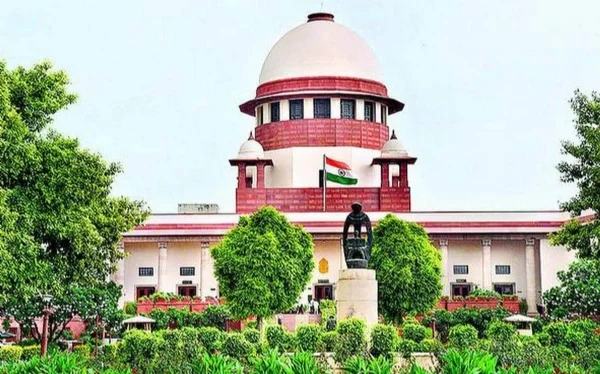
Practical Application of Order LV Rule 6 of the Supreme Court Rules, 2013 and Articles 32, 136, 142, and 129 of the Constitution of India and the Available Remedies Including Recall, Appeal, Review, Curative Petition, and Writ Jurisdiction
Enforcement of Rights under Articles 14, 19, 20, 21, 22, and 39-A of the Constitution, read with the Universal Declaration of Human Rights, 1948 and the International Covenant on Civil and Political Rights (ICCPR) against injustice done by the Supreme Court.
Authored by Adv. Nilesh Ojha, National President, Indian Bar Association; along with the Research Team of the IBA and the ‘Junior Advocates and Law Students Association of India’.
- In Ram Deo Chauhan v. Bani Kanta Das, (2010) 14 SCC 209, the Supreme Court candidly acknowledged that even orders of the Supreme Court can, result in violation of the fundamental or human rights of a citizen. The Court held that whenever an allegation is made that a judicial order has infringed fundamental or human rights, an inquiry into such grievance is both permissible and necessary.
- It was further observed that the National Human Rights Commission (NHRC) possesses the jurisdiction to examine violations of fundamental or human rights arising from orders of the Supreme Court and, where appropriate, to approach the Supreme Court itself for suitable redress and corrective measures.
- The Court categorically ruled that although instances of Supreme Court judgments violating human rights may be extremely rare, such a possibility cannot be ruled out altogether.
- It was declared that if a person is guaranteed certain rights under the Constitution, an international covenant, or any law, and is denied access to those rights, it amounts to a clear violation of human rights. In such situations, the NHRC has the authority to intervene for their protection.
- The jurisdiction of the NHRC stands enlarged by Section 12(j) of the Protection of Human Rights Act, 1993, empowering it to inquire into cases where any person has been denied the protection of law—whether by a private party, a public institution, the government, or even by courts of law. Significantly, the judgment referred to the majority decision in ADM, Jabalpur v. Shivakant Shukla, (1976) 2 SCC 521, acknowledging that it had resulted in violation of the fundamental rights of a large number of citizens.
- The legal position declared in Ram Deo Chauhan (supra) has been emphatically reaffirmed by the Nine-Judge Constitution Bench in S. Puttaswamy v. Union of India, (2017) 10 SCC 1. The Constitution Bench has unequivocally held that the rights and protections recognised under the Universal Declaration of Human Rights, 1948 and the International Covenant on Civil and Political Rights (ICCPR) are available to all Indian citizens and are enforceable within the constitutional framework of India. The constitutional process in India permits every citizen to file writ petition to claim damages from state when their rights are violated due to mistake of the Judges of the Supreme Court as the Judiciary is the executive arm of the state. [Ramesh Lawrence Maharaj vs Attorney Generel of Trinidad and Tobago (1978) 2 WLR 902, Walmik Bobde vs State of Maharashtra 2001 ALL MR (Cri.)1731]
- Under the Universal Declaration of Human Rights, 1948, which is applicable to India and forms part of universally accepted human rights norms, every citizen is guaranteed the right to an effective remedy before competent national tribunals for acts violating the fundamental rights granted by the Constitution or by law. The Declaration further mandates that every person is entitled, in full equality, to a fair and public hearing by an independent and impartial tribunal in the determination of his rights and obligations and of any criminal charge against him. In consonance with these principles, Indian constitutional jurisprudence recognises that even orders passed by the Supreme Court can, in rare and exceptional situations, result in violation of fundamental rights, and that effective remedial measures must therefore be available to correct such injustice.
- The Supreme Court has repeatedly affirmed that correction of judicial error is an essential duty of a constitutional court. The guiding principle remains that “To perpetuate an error is no heroism. To rectify it is the compulsion of judicial conscience.” A court should not remain consciously wrong today merely because it was unconsciously wrong yesterday. Whenever the Supreme Court realises that it has taken an erroneous course, it is constitutionally bound to return to the correct path and rectify the mistake. This doctrine has been firmly established by Constitution Bench decisions in Synthetics and Chemicals Ltd. v. State of U.P., (1990) 1 SCC 109 (Seven-Judge Bench) and Distributors (Baroda) (P) Ltd. v. Union of India, (1986) 1 SCC 43 (Five-Judge Bench), Anita Kushwaha v. Pushap Sudan, (2016) 8 SCC 509 (Five-Judge Bench) , S. Ahlawat v. State of Haryana, (2000) 1 SCC 278, Ram Deo Chauhan v. Bani Kanta Das, (2010) 14 SCC 209.
- These authoritative pronouncements unequivocally recognise that unlawful or unjust orders of the Supreme Court must be corrected in the interests of justice, and that an aggrieved person cannot be left without an effective legal remedy.
- The Supreme Court of India is the highest constitutional court of the land and its decisions ordinarily attain finality. Yet, constitutional finality does not mean constitutional infallibility. The rule of law demands that even the orders of the Supreme Court must conform to constitutional principles of fairness, natural justice, and fundamental rights. Whenever a judicial order violates these basic norms, the legal system must necessarily provide effective remedies.
- Recent jurisprudence of the Supreme Court has clearly established that unlawful or null orders—even those passed by the Supreme Court itself—are not beyond correction. The law has evolved to recognize that justice cannot be sacrificed at the altar of technical finality.
- Duty of the Supreme Court, as a Court of Record, to Correct Mistakes and Set Aside Unlawful Orders. Order LV, Rule 6 of the Supreme Court Rules, 2013.- [Vishnu Vardhan v. State, 2025 SCC OnLine SC 1501; M.P. v. Narmada Bachao Andolan, (2011) 7 SCC 639(3-J)] :-
- Recently, a Three-Judge Bench of the Supreme Court in Vishnu Vardhan v. State, 2025 SCC OnLine SC 1501, authoritatively reaffirmed the jurisdiction of the Supreme Court to reconsider and revisit its own earlier orders. Especially when the order is product of fraud such as order based on misrepresentation or false and misleading foundation causing serious prejudice to other party. The Court held that under Order LV, Rule 6 of the Supreme Court Rules, 2013, the Supreme Court possesses inherent powers to secure complete justice. It was emphasized that procedural laws cannot be permitted to tie the hands of the Court in a manner that defeats the rights and interests of affected parties. The Bench categorically observed that the ends of justice demand that grossly unlawful or fraudulent orders must not be allowed to remain on the record of a Court of Record.
- Order LV, Rule 6 of the Supreme Court Rules, 2013, expressly provides:
“Nothing in these rules shall be deemed to limit or otherwise affect the inherent powers of the Court to make such orders as may be necessary for the ends of justice or to prevent abuse of the process of the Court.”
- In Nagaraj v. State of Karnataka, 1993 Supp (4) SCC 595, observed as under:
“ Even when there was no statutory provision and no rules were framed by the highest court indicating the circumstances in which it could rectify its order, the courts culled out such power to avoid abuse of process or miscarriage of justice.”
- The inherent powers and constitutional responsibility of a Court of Record were further explained in Municipal Corporation of Greater Mumbai v. Pratibha Industries Ltd., (2019) 3 SCC 203, where the Supreme Court held that a Court of Record not only has the authority but also the affirmative duty to correct patent errors in its own orders. This judgment underscores that the Supreme Court, as the highest constitutional court, is duty-bound to ensure that its orders conform to law, fairness, and justice, and to set aside any order that is demonstrably illegal or unjust.
- In State of P. v. Narmada Bachao Andolan, (2011) 7 SCC 639(3-J), it is ruled that;
“67. Thus, “per incuriam” are those decisions given in ignorance or forgetfulness of some statutory provision or authority binding on the court concerned, or a statement of law caused by inadvertence or conclusion that has been arrived at without application of mind or proceeded without any reason so that in such a case some part of the decision or some step in the reasoning on which it is based, is found, on that account to be demonstrably wrong.
The courts are not to perpetuate an illegality, rather it is the duty of the courts to rectify mistakes. …. … To perpetuate an error is no heroism. To rectify it is the compulsion of judicial conscience. In this we derive comfort and strength from the wise and inspiring words of Justice Bronson in Pierce v. Delameter [1 NY 3 (1847)] , AMY at p. 18: “a Judge ought to be wise enough to know that he is fallible and therefore ever ready to learn : great and honest enough to discard all mere pride of opinion and follow truth wherever it may lead : and courageous enough to acknowledge his errors.”’ [Ed. : As observed in Distributors (Baroda) (P) Ltd. v. Union of India, (1986) 1 SCC 43, p. 46, para 2.] ””
In Harbans Singh v. State of Uttar Pradesh & Ors., (1982) 2 SCC 101, the Supreme Court held as under:
“Apart from the very wide jurisdiction and powers conferred on this Court under Articles 32 and 136 of the Constitution, this Court retains — and must retain — an inherent power and jurisdiction for dealing with any extraordinary situation in the larger interests of the administration of justice and for preventing manifest injustice.”
This judgment affirms that the Supreme Court, as the ultimate constitutional court, possesses inherent powers beyond express statutory provisions to intervene in exceptional circumstances where strict adherence to procedural rules would result in grave or manifest injustice. Such inherent jurisdiction exists to safeguard the rule of law, ensure fairness, and uphold the constitutional promise of justice.
Constitution Bench in Roopa Hoora Vs. Ashok Hoora (200) 4 SCC 388 ruled that to prevent abuse of its process and to cure a gross miscarriage of justice, Supreme Court can reconsider its own judgement under Art 129, 142 of the Constitution. It is ruled as under;
-
- The upshot of the discussion in our view is that this Court, to prevent abuse of its process and to cure a gross miscarriage of justice, may re-consider its judgments in exercise of its inherent power.
- In the cases discussed above this Court reconsidered its earlier judgments, inter alia, under Articles 129 and 142 which confer very wide powers on this Court to do complete justice between the parties. We have already indicated above the scope of the power of this Court under Article 129 as a court of record and also adverted to the extent of power under Article 142 of the Constitution.
- In spite of the width of power conferred by Article 142, the Constitution Bench took the view that suspending the advocate from practice and suspending his licence was not within the sweep of the power under the said Article and overruled the judgment in Re V.C.Mishra’s case (supra).
- In M.S.Ahlwat’s case (supra), the petitioner, who was found guilty of forging signatures and making false statements at different stages before this Court, was inflicted punishment under Section 193 IPC in Afzal vs. State of Haryana MANU/SC/0590/1996 : 1996CriLJ1679 . He filed an application under Article 32 of the Constitution assailing the validity of that order. Taking note of the complaint of miscarriage of justice by the Supreme Court in ordering his incarceration which ruined his career, acting without jurisdiction or without following the due procedure, it was observed that to perpetuate an error was no virtue but to correct it was a compulsion of judicial conscience. The correctness of the judgment was examined and the error was rectified.
- In the cases discussed above this Court reconsidered its earlier judgments, inter alia, under Articles 129 and 142 which confer very wide powers on this Court to do complete justice between the parties. We have already indicated above that the scope of the power of this Court under Article 129 as a court of record and also adverted to the extent of power under Article142 of the Constitution.
- Access to Justice – A Human and Fundamental Right aggrieved person cannot be left without remedy. [Tamilnad Mercantile Bank Share Holders Welfare Association v. S.C. Sekar, (2009) 2 SCC 784; Anita Kushwaha v. Pushap Sudan, (2016) 8 SCC 509]
13.1. In Tamilnad Mercantile Bank Share Holders Welfare Association v. S.C. Sekar, (2009) 2 SCC 784, the Supreme Court clearly ruled that:
- An aggrieved person cannot be left without remedy;
- Access to justice is a human right; and
- In appropriate situations, it is also a fundamental right.
- The Court further held that even in contempt matters, if no statutory appeal is available, the Supreme Court can exercise its powers under Article 142 to ensure that injustice is not allowed to prevail.
- This principle was expressly approved and elevated to constitutional doctrine by the Constitution Bench in Anita Kushwaha v. Pushap Sudan, (2016) 8 SCC 509, which authoritatively declared:
“25. In Tamilnad Mercantile Bank Shareholders Welfare Assn. (2) v. S.C. Sekar (2009) 2 SCC 784] , this Court declared that an aggrieved person cannot be left without the remedy and that access to justice is a human right and in certain situations even a fundamental right.
- To the same effect is clause (3) of Article 2 of the International Covenant on Civil and Political Rights, 1966 which provides that each State party to the Covenant shall undertake that every person whose rights or freedom as recognised is violated, shall have an effective remedy and to ensure that any person claiming such a remedy shall have his right thereto determined by competent judicial, administrative or legislative authorities, and the State should also ensure to develop the possibilities of judicial remedies.
[…] We need only add that access to justice may as well be the facet of the right guaranteed under Article 14 of the Constitution, which guarantees equality before law and equal protection of laws to not only citizens but non-citizens also.
[..] . Effective access to justice can thus be seen as the most basic requirement—the most “basic human right”—of a system which purports to guarantee legal right.”
Absence of any adjudicatory mechanism or the inadequacy of such mechanism, needless to say, is bound to prevent those looking for enforcement of their right to equality before laws and equal protection of the laws from seeking redress and thereby negate the guarantee of equality before laws or equal protection of laws and reduce it to a mere teasing illusion. Article 21 of the Constitution apart, access to justice can be said to be part of the guarantee contained in Article 14 as well.
Bose, J. emphasised the importance of the right of any person to apply to the court and demand that he be dealt with according to law. He said: (Prabhakar Kesheo case [Prabhakar Kesheo Tare v. Emperor, AIR 1943 Nag 26 : 1942 SCC OnLine MP 78] , SCC OnLine MP para 1)
“1. … The right is prized in India no less highly than in England, or indeed any other part of the Empire, perhaps even more highly here than elsewhere; and it is zealously guarded by the courts.”
- The decisions of this Court too have unequivocally recognised the right of a citizen to move the Court as a valuable constitutional right recognised by Article 32 of the Constitution as fundamental right by itself.
“11. The Universal Declaration of Rights drafted in the year 1948 gave recognition to two rights pertaining to “access to justice” in the following words:
“8.Everyone has the right to an effective remedy by the competent national tribunals for acts violating the fundamental rights granted him by the Constitution or by law.
***
10.Everyone is entitled in full equality to a fair and public hearing by an independent and impartial tribunal, in the determination of his rights and obligations, and of any criminal charge against him.”
(emphasis supplied)
- The Court further observed that absence of any adjudicatory mechanism to correct injustice would render the guarantees under Articles 14 and 21 illusory. It was held that where fundamental rights are violated and no other remedy exists, a writ petition under Article 32 is clearly maintainable. The Bench approvingly referred to Article 2(3) of the ICCPR which mandates that every State must ensure an “effective remedy” for violation of rights.
- Landmark Cases Where the larger benches of the Supreme Court Set Aside Earlier Orders by its Smaller Benches in Writ and appellette jurisdiction under art 32, 136 of the constitution when such orders were found to be ex facie without jurisdiction, contrary to statutory provisions, or violative of fundamental rights.
- In S. Ahlawat v. State of Haryana, (2000) 1 SCC 278, a Three-Judge Bench of the Supreme Court entertained a writ petition and set aside a conviction for contempt that had earlier been imposed by a Two-Judge Bench, holding that the earlier order was passed without jurisdiction and contrary to statutory provisions and it had violated fundamental rights of the litigant. This judgment authoritatively established that even orders of the Supreme Court can be corrected when they suffer from jurisdictional or procedural illegality.
- Similarly, in Supreme Court Bar Association v. Union of India, (1998) 4 SCC 409, a Five-Judge Constitution Bench set aside an order passed by a Three-Judge Bench of the Supreme Court in a writ jurisdiction, after finding that the earlier Bench had acted beyond its jurisdiction and in violation of statutory limitations governing contempt jurisdiction.
- Further, in the landmark decision of R. Antulay v. R.S. Nayak, (1988) 2 SCC 602, a Seven-Judge Bench set aside an earlier order passed by a Five-Judge Bench of the Supreme Court, in an Appeal under art 136 of the constitution, upon finding that the previous order had violated the petitioner’s constitutional rights under Articles 14 and 21. The Court held that the earlier order had unlawfully deprived the petitioner of his statutory right of appeal and had treated him differently from other similarly situated persons, thereby offending the guarantee of equality and fair procedure. It was further held that the basic principle is that the rules are made for justice and they should not be interpreted to obstruct justice. it was further ruled that Supreme Court has inherent power to set aside its wrong orders. It is ruled that ;
- ” 48……We are of the opinion that this Court is not powerless to correct its error which has the effect of depriving a citizen of his fundamental rights and more so, the right to life and liberty. It can do so in exercise of its inherent jurisdiction in any proceeding pending before it without insisting on the formalities of a review application. Powers of review can be exercised in a petition filed under Article 136 or Article 32 or under any other provision of the Constitution if the court is satisfied that its directions have resulted in the deprivation of the fundamental rights of a citizen or any legal right of the petitioner. See the observations in Prem Chand Garg v. Excise Commissioner [AIR 1963 SC 996 : 1963 Supp (1) SCR 885] .”
- It was specifically ruled That
-
” But the superior court can always correct its own error brought to its notice either by way of petition or ex debito justitiae. See Rubinstein’s Jurisdiction and Illegality).”
-
- International Judgments :-
- In many constitutional systems, including the United Kingdom, intra-court appellate remedies are recognized, especially in contempt and human rights matters. The UK Supreme Court in Her Majesty’s Attorney General v. Crosland [2021] UKSC 58 recognized the necessity one appeal before larger bench must be provided from orders of the Supreme Court itself.
- Importantly, even at the international level, the United Nations Human Rights Committee (UNHRC)—comprising 17 members including eminent jurists such as former Chief Justice of India Justice P.N. Bhagwati—has repeatedly criticized legal systems that fail to provide effective remedies against violations committed by the highest courts. The UNHRC has, in multiple cases, directed states to compensate citizens where no adequate remedy was available against unjust orders of Supreme Courts. It also clarified that the remedy of review is different than Appeal and remedy should not be dependant upon discretion of the Judge when there is conviction or adverse findings by the Supreme Court in cases like contempt. [Anthony Michael Emmanuel Fernando v. Sri Lanka, 2005 SCC OnLine HRC 22, Luis Hens Serena v. Spain, 2008 SCC OnLine HRC 20, Chota Ratiani Vs. Georgia 2005 SCC OnLine HRC 25 (Para 11.3 & 12), Luis Olivero Capellades Vs. Spain 2006 SCC OnLine HRC 42 (Para 7 & 8),]. Said law is binding to India and enforceable in courts including Supreme Court by way of writ petition under Art 32 of the constitution.
- India, however, is not without such remedies. On numerous occasions, the Supreme Court itself has corrected its own mistakes, either through recall or through intervention by larger benches.
- International Judgments :-
- Two Supreme Court Judges Committed Gravest Error by awarding Death Sentence Against Innocent Persons; After Ten Years a Larger Bench Corrected the Mistake, Acquitted Them, and Awarded ₹50 Lakhs Compensation – [ Ankush Maruti Shinde v. State of Maharashtra, (2019) 15 SCC 470] :-
In Ankush Maruti Shinde v. State of Maharashtra, (2009) 6 SCC 667, a Two-Judge Bench comprising Justice Dr. Arijit Pasayat and Justice Dr. Mukundakam Sharma allowed the State’s appeal, upheld the conviction of the accused, and awarded the death sentence. The Bench concluded that the accused were guilty of rape and murder, describing their conduct as cruel, brutal, and diabolical. The appeals filed by the accused challenging their conviction were accordingly dismissed. Nearly ten years later, in Ankush Maruti Shinde v. State of Maharashtra, (2019) 15 SCC 470 (3-Judge Bench), comprising Hon’ble Justices Sh. M.R. Shah, Sh. A.K. Sikri and Sh. S. Abdul Nazeer, realised that earlier judgment by two judge bench had resulted in a grave miscarriage of justice. The larger Bench recalled the previous decision, reopened the matter, and, upon a fresh and comprehensive re-appraisal of the entire evidence, acquitted all the accused, holding that they had been falsely implicated. Recognising the immense and irreversible harm caused by this wrongful prosecution, the three judge bench further directed payment of ₹50 lakhs as compensation to the victims of the miscarriage of justice and also ordered an inquiry and appropriate action against the concerned police officials responsible for the false implication.
- This case stands as a powerful reminder that even the highest court can, at times, commit serious judicial errors, including the gravest error of confirming a death sentence against innocent persons. At the same time, it also demonstrates the corrective strength of the judicial system, where larger Benches of the Supreme Court have not hesitated to acknowledge mistakes and restore justice by setting aside earlier erroneous orders.
- These decisions conclusively demonstrate that even orders of the Supreme Court are not immune from correction, and that whenever an earlier Bench acts without jurisdiction, contrary to law, or in violation of fundamental rights, a larger Bench of the Supreme Court is constitutionally empowered—and indeed duty-bound—to set aside such unlawful orders.
- Practical Reality: Review and Curative Petitions Do Not Offer Meaningful and Effective Remedies to the Common Man.
- There exists a widespread misconception within the legal fraternity regarding the remedies available against unlawful or unjust orders passed by the Supreme Court of India. Most advocates believe that only two remedies are available: Review Petitions and Curative Petitions. This limited understanding has created an impression that once an order of the Supreme Court is passed, it is practically impossible to obtain meaningful relief. In reality, this belief is both incomplete and legally incorrect.
- Limitations of Review and Curative Petitions :- A Review Petition, in practice, has proved to be neither fair nor effective for the common citizen. Under the existing procedure, review petitions are ordinarily decided in chambers without any oral hearing, and only in extremely rare cases is a hearing granted at the discretion of the concerned judge. Statistically, the chances of securing relief through review are minuscule—perhaps one in several thousand—and even those rare successes are largely confined to high-profile matters.
- The Curative Petition, which is often projected as the final and ultimate remedy, suffers from serious practical as well as constitutional limitations. It mandatorily requires a certificate from a designated senior advocate affirming the existence of grounds for curative relief. This procedural requirement, in effect, places the remedy beyond the reach of ordinary litigants, poor citizens, and parties-in-person. Making access to justice dependent upon the endorsement of a select and privileged class of lawyers is fundamentally inconsistent with the constitutional guarantees of equality, fairness, and equal access to legal remedies. Such a requirement is legally unsustainable and per incuriam, being contrary to the law laid down by the Constitution Bench in Prem Chand Garg v. Excise Commissioner, AIR 1963 SC 996, which categorically held that procedural rules framed by the Supreme Court cannot impose conditions that restrict or impair the exercise of fundamental rights. Any rule that effectively denies a citizen the ability to seek judicial redress unless certified by an elite advocate directly offends Articles 14, 21, and 32 of the Constitution, and therefore cannot be treated as a valid or effective constitutional remedy.
- Thus, both Review and Curative Petitions, as currently structured, fail to provide an effective, accessible, and realistic remedy for correcting serious judicial errors.
- EXISTENCE OF EFFECTIVE AND LAWFUL REMEDIES
- Contrary to popular belief, Indian constitutional jurisprudence and binding judicial precedents have consistently affirmed the existence of several powerful and effective remedies to correct injustice caused by unlawful orders of the Supreme Court. Law-abiding and constitutionally conscious Judges of the Supreme Court have, on numerous occasions, clarified that no judicial order is beyond correction when it violates fundamental principles of law or natural justice. These remedies, when pursued with proper legal strategy, diligence, and a balanced approach, have repeatedly demonstrated a meaningful and realistic success rate.
- RECALL OF AN ORDER – DISTINCT FROM REVIEW :-
- The most powerful yet least understood remedy is Recall of the Order. ;- Recall is fundamentally different from review. While review is confined to narrow statutory grounds and is usually decided without hearing, recall is based on jurisdictional errors, fraud, violation of natural justice, or absence of notice, and must be heard in open court.a
19.2. Where an order has been passed without jurisdiction, without hearing a necessary party, or on the basis of misrepresentation, the proper remedy is recall, not review.
19.3. The Supreme Court in National Fertilizers Limited v. Tuncay Alankus, (2013) 9 SCC 600, recalled its own order of conviction for contempt upon finding that the conviction had been passed on an erroneous premise. This judgment clearly establishes that when an order of the Supreme Court is found to be based on incorrect assumptions or mistaken facts, the Court possesses both the jurisdiction and the duty to recall and rectify such an order in the interest of justice.
19.4. A three judges bench of this Hon’ble Court in the case of New India Assurance Ltd. Vs. Krishna Kumar Pandey 2019 SCC OnLine SC 1786, has ruled that the category of cases when order can be recalled by the same bench.
It is ruled as under;
“11.[…….] In paragraph 46 in particular, this Court held in Davinder Pal Singh as follows:
“46. If a judgment has been pronounced without jurisdiction or in violation of principles of natural justice or where the order has been pronounced without giving an opportunity of being heard to a party affected by it or where an order was obtained by abuse of the process of court which would really amount to its being without jurisdiction, inherent powers can be exercised to recall such order for the reason that in such an eventuality the order becomes a nullity and the provisions of Section 362 Cr.P.C. would not operate.
In such an eventuality, the judgment is manifestly contrary to the audi alteram partem rule of natural justice. The power of recall is different from the power of altering/reviewing the judgment.”
- Indian law clearly recognizes recall of an order as a distinct and powerful remedy, separate from review. In Budhia Swain v. Gopinath Deb, (1999) 4 SCC 396, the Supreme Court held that a court has inherent power to recall its order when:
- it is obtained by fraud or misrepresentation,
- the court is misled by a party,
- the court itself commits a mistake prejudicing a party,
- the order is passed without notice to a necessary party, or
- the proceedings suffer from patent lack of jurisdiction.
- Similarly, in Indian Bank v. Satyam Fibres (India) (P) Ltd., (1996) 5 SCC 550, the Court affirmed that when a party is prejudiced due to the court’s own mistake or misrepresentation by the opposite side, the order must be recalled in the interest of justice.
- The distinction between recall and review was reiterated in Vishnu Agarwal v. State of U.P., (2011) 14 SCC 813, where it was held that recall is appropriate when an order is passed without granting a fair opportunity of hearing, whereas review concerns correction of errors on merits.
- In Ravindra Narayan Joglekar vs. Encon Exports Pvt. Ltd. (2008 ALL MR (Cri.) 2032), it is ruled that any order patently contrary to legal provisions must not be allowed to remain in force. The orders causing irreparable harm or undue prejudice must be recalled to uphold the principles of justice.
- Recently, in Confederation of Real Estate Developers of India v. Vanashakti, 2025 SCC OnLine SC 2474, a wrongful and per incuriam order passed by a Two-Judge Bench of the Hon’ble Supreme Court was set aside by a Three-Judge Bench. This decision once again reaffirms the settled legal position that orders of smaller Benches, if found to be contrary to binding precedents or passed in disregard of established law, are liable to be corrected by larger Benches in the interest of justice.
- The principle that courts must always correct their own errors and steer the law back onto the correct path has been emphatically recognized by the Supreme Court of India in several authoritative pronouncements. A Seven-Judge Constitution Bench of the Supreme Court in Synthetics and Chemicals Ltd. v. State of U.P., (1990) 1 SCC 109, while dealing with the necessity of rectifying judicial mistakes, approvingly relied upon the celebrated observations of Lord Denning in Ostime v. Australian Mutual Provident Society, (1959) 3 All ER 245 : 1960 AC 459, as well as the dissenting note of Justice Jackson in Commonwealth of Massachusetts v. United States, 92 L Ed 968. In those decisions, it was observed in substance that when a court realizes that it has embarked upon a wrong course, it must make every effort to return to the correct direction, for courts of law are duty-bound to proceed on the right path rather than perpetuate an error merely in the name of finality.
- These observations make it abundantly clear that the doctrine of finality cannot override the paramount consideration of justice. The Supreme Court has consistently recognized that where a judicial order results in manifest injustice, or where its continuance would amount to an abuse of the process of the Court, inherent powers must be exercised to recall, review, or rectify such orders. The jurisprudential foundation of this power lies in the universal acknowledgment of human fallibility and the corresponding duty of constitutional courts to ensure that the law ultimately operates in the service of justice
- In Vikram Singh v. State of Punjab (2017) 8 SCC 518 a Three-Judge Bench of the Supreme Court reaffirmed the broad and inherent power of the Court to review and correct its own criminal judgments in order to prevent injustice. The Court illustrated this principle with a compelling example taken in an earlier decision : if an accused has been sentenced to death by the Supreme Court and it is later discovered that the person alleged to be deceased is actually alive, thereby exposing the falsity of the evidence, would the Court be helpless to review and set aside the sentence? The Bench emphatically answered in the negative, observing that the Supreme Court cannot remain powerless in the face of such manifest injustice and must possess the authority to rectify its own erroneous orders.
- Scope of Article 136 of the Constitution – An Unexplored Constitutional Dimension:- Appeal “Against Any Court or Tribunal” – Including the Supreme Court Itself . R. Antulay v. R.S. Nayak, (1988) 2 SCC 602 (7-J).
- Article 136 of the Constitution of India confers upon the Supreme Court an extraordinary and plenary appellate jurisdiction. The language of the provision is clear, broad, and unqualified. It reads as follows:
“Article 136(1): Notwithstanding anything in this Chapter, the Supreme Court may, in its discretion, grant special leave to appeal from any judgment, decree, determination, sentence or order in any cause or matter passed or made by any court or tribunal in the territory of India.”
- A plain and literal reading of Article 136 leaves no room for ambiguity. The provision authorizes an appeal against “any judgment or order passed by any court or tribunal in the territory of India.” The phrase “any court” is comprehensive and inclusive. The Supreme Court is undoubtedly a “court in the territory of India.” Therefore, by necessary implication, the constitutional text does not exclude orders of the Supreme Court itself from the sweep of Article 136.
- Textual Interpretation – No Express Exclusion :- Constitutional interpretation must begin with the text. When the language of a constitutional provision is clear and unambiguous, courts are not permitted to read into it limitations or prohibitions that do not exist. Article 136 does not state:
- “any court except the Supreme Court,” or
- “any subordinate court,” or
- “any court other than this Court.”
- No such restrictive expression is found anywhere in the Article 136 .Therefore, as a matter of pure constitutional construction, there exists no textual bar against entertaining a Special Leave Petition even from an order passed by a smaller Bench of the Supreme Court before a larger Bench of the same Court.
- Constitutional Principle: Courts Cannot Add Words to the Constitution :- It is a settled principle of constitutional law that:
- When the Constitution uses broad and general words,
- Courts must give them their natural meaning, and
- Courts cannot supply words of limitation which the framers deliberately chose not to include.
- If Article 136 had intended to exclude orders of the Supreme Court, the framers could easily have said so. The deliberate use of the expression “any court” demonstrates a conscious decision to confer the widest possible appellate discretion on the Supreme Court.
- Therefore, reading an implied bar into Article 136—so as to exclude orders of the Supreme Court itself—would amount to judicial legislation, which is impermissible.
- This issue was raised, before a Seven-Judge Bench in R. Antulay v. R.S. Nayak, (1988) 2 SCC 602. Senior Advocate Shri Ram Jethmalani had argued that the doctrine of per incuriam could not be invoked within the same proceedings. The Court rejected this contention and made important observations regarding the inherent powers of the Supreme Court to correct its own errors: These observations are of great constitutional significance. They clearly recognise that the Supreme Court possesses inherent jurisdiction to correct its own orders whenever such orders result in violation of fundamental rights, and that such power can be exercised even in proceedings under Article 136. Although the precise question of intra-court appeal under Article 136 was not conclusively determined, the reasoning in Antulay strongly supports the proposition that the Supreme Court cannot be rendered powerless to remedy its own unlawful orders merely because of procedural technicalities.
- The Seven-Judge Benchin R. Antuley’s case (1988) 2 SCC 602, observed as under;
“48. According to Shri Jethmalani, the doctrine of per incuriam has no application in the same proceedings. We are unable to accept this contention. We are of the opinion that this Court is not powerless to correct its error which has the effect of depriving a citizen of his fundamental rights and more so, the right to life and liberty.
It can do so in exercise of its inherent jurisdiction in any proceeding pending before it without insisting on the formalities of a review application. Powers of review can be exercised in a petition filed under Article 136 or Article 32 or under any other provision of the Constitution if the court is satisfied that its directions have resulted in the deprivation of the fundamental rights of a citizen or any legal right of the petitioner. See the observations in Prem Chand Garg v. Excise Commissioner [AIR 1963 SC 996 : 1963 Supp (1) SCR 885] .”
It was specifically ruled That
” But the superior court can always correct its own error brought to its notice either by way of petition or ex debito justitiae. See Rubinstein’s Jurisdiction and Illegality).”
24.10. Compatibility with Larger Constitutional Scheme :- Interpreting Article 136 to include orders of the Supreme Court is not only textually sound but also constitutionally logical.
24.11. The Constitution and also Supreme Court itself recognizes that:
- Smaller Benches can commit errors,
- Orders can be passed without jurisdiction,
- Principles of natural justice can be violated, and
- Grave injustice can occur even at the highest level.
- To remedy such situations, the Constitution must necessarily contain an internal corrective mechanism. Article 136 can legitimately serve as that mechanism.
- This interpretation also aligns with established jurisprudence that:
- Larger Benches can correct errors of smaller Benches;
- Orders passed without jurisdiction are nullities; and
- Finality cannot protect illegality.
- The interpretation of Article 136 of the Constitution as providing a remedy even against unlawful orders of the Supreme Court is not only textually and constitutionally sound, but is also fully consistent with India’s obligations under international human rights law.
- Universal Right to Effective Remedy :- The Universal Declaration of Human Rights, 1948, which forms the foundation of modern international human rights jurisprudence, expressly recognises the right of every individual to access effective judicial remedies for acts violating the fundamental rights granted him by the Constitution or by law and in the determination of his rights and obligations, and of any criminal charge against him.
- These provisions embody the principle that no legal system can claim to be just unless it provides a meaningful mechanism to correct violations of fundamental rights. An interpretation of Article 136 that excludes any remedy against unlawful orders of the Supreme Court would run directly contrary to this universally accepted norm.
- Right to Review by a Higher Tribunal under ICCPRFurther, Article 14(5) of the International Covenant on Civil and Political Rights (ICCPR) guarantees that: “Every person convicted of a crime shall have the right to have his conviction and sentence reviewed by a higher tribunal according to law.”
- This provision recognises a fundamental human right to at least one effective appellate remedy. Contempt convictions and other orders having penal consequences passed by the Supreme Court cannot logically be exempt from this universal guarantee. Hence, a constitutional interpretation that permits intra-court appellate scrutiny is entirely in harmony with India’s international commitments.
- The constitutional status of international human rights instruments was emphatically affirmed by the Nine-Judge Constitution Bench in S. Puttaswamy v. Union of India, (2017) 10 SCC 1, wherein it was held that rights recognised under the ICCPR and other international conventions are part of the constitutional framework in India. The Court declared that in the absence of any domestic law to the contrary, international human rights standards must be followed to protect the rights of citizens.
- Thus, denying any effective remedy against unlawful orders of the Supreme Court would be incompatible with India’s constitutional and international law obligations.
- Supreme Court Recognition of Right to Appeal as Part of Article 21 :-
- The Supreme Court itself has recognised that the right to at least one appeal is an integral component of fair procedure.
- In Dilip S. Dahanukar v. Kotak Mahindra Co. Ltd., (2007) 6 SCC 528, the Court held that the right of appeal flows from the concept of fair, just and reasonable procedure under Article 21 of the Constitution, and is further strengthened by international conventions to which India is a party.
- Such comparative reasoning supports a liberal and rights-oriented interpretation of Article 136.
- CONCLUSION :-
- The notion that orders of the Supreme Court are beyond correction is a misconception inconsistent with constitutional principles. The Constitution of India, read with binding judicial precedents and international human rights norms, clearly recognises that no citizen can be left without an effective remedy when fundamental rights are violated. Remedies such as recall, writ jurisdiction, larger bench review, and appellate scrutiny under Article 136,142 remain constitutionally available to correct unlawful or unjust orders, even when they emanate from the highest court.
- Finality of judicial orders is essential for stability, but finality cannot be allowed to shield illegality or injustice. The Supreme Court, as a Court of Record and the ultimate guardian of fundamental rights, has both the inherent power and the constitutional duty to rectify its own errors whenever they are brought to light. Access to justice is a basic human right, and the constitutional scheme ensures that the doors of justice remain open even at the highest level.
- Therefore, citizens and members of the Bar must be aware that practical, lawful, and effective remedies do exist against unlawful Supreme Court orders. What is required is informed legal strategy, persistence, and faith in constitutional processes. Justice demands that errors be corrected, rights be protected, and that no individual be left remediless in the face of judicial wrong.
Download the complete copy of article here
Research Input from:-
- Adv. Ghanshyam Upadhyay
- Adv. Ishwarlal Agarwal
- Adv. Omkar Kakde
- Adv. Vivek Ramteke
- Adv. Shailesh Narnaware
- Adv. Dipali Ojha
- Adv. Vijay Kurle 8.
- Adv. Tanveer Nizam
- Adv. Partho Sarkar
- Adv. Jayram Yadav
- Adv. Abhishek Mishra
- Adv. Gopal Karhale
- Adv. Pravin Chawre
- Sh. Rashid Khan Pathan
- Adv. Nicky Pokar
- Adv. Shivchand Mishra
- Adv. Pratik Sarkar
- Adv. Mariam Nizam
- Adv. Meena Thakur
- Adv. Ashish Ingle
- Adv. Vikas Pawar
- Adv. Anushka Sonawane
- Adv. Chandrakant Rohankar
- Adv. Shivam Gupta
- Adv. Devkrishna Bhambri
- Ms. Payal Padwale
- Mr. Ayush Tiwari
- Sh. Ambar Koiri
- Mr. Prabhmeet Singh Chabra
- Adv. Priyanka Sharma
- Sh. Mursalin Shaikh
- Adv. Jayendra Manchekar
- Adv. Sonal Manchekar
- Adv. Rahul Yadav
- Adv. Sagar Ugale
- Mr. Sumer Singh
- Adv Ghulam Ahmad Khan
- Sh. Kaushal Ojha
- Sh. Naumesh Ojha
- Sh. Durgesh Ojha
- Sh. Prashant Bhatt
- Ms. Nikita Mishra
- Mrs. Asha Ojha