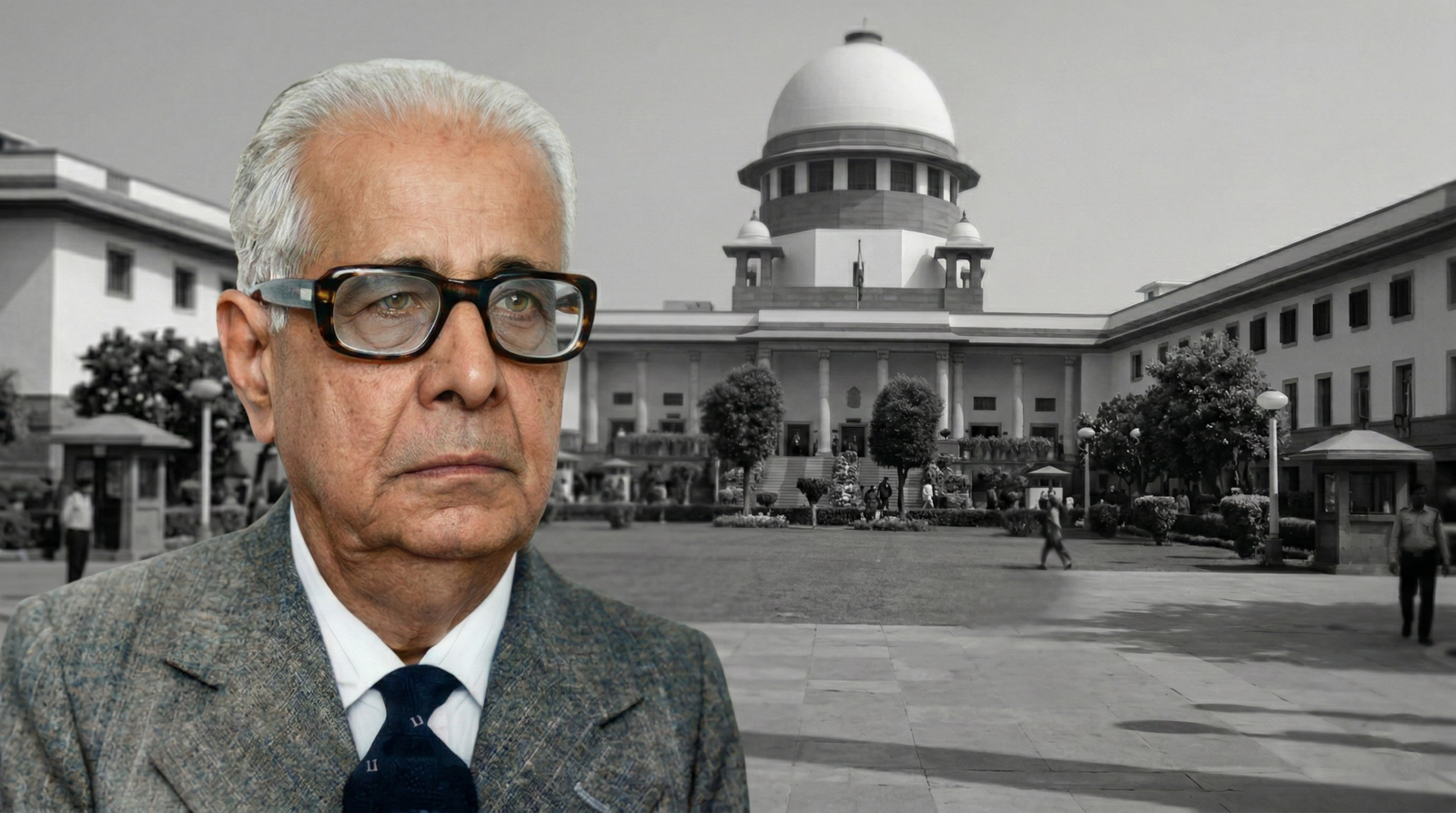
Supreme Court Judgment in Nirbhay Singh Suliya v. State of M.P., 2026 SCC OnLine SC 8 on Action Against Judges and Advocates Demonstrates the Lack of Basic Legal Understanding in the Resolution Passed by BBA Members
The Full Bench overruled the earlier order passed by Justice (Retd.) A.S. Oka and declined to continue the contempt proceedings against Google, YouTube and others, holding that no contempt had been committed by them. This decision has opened the way for consideration of appropriate legal remedies, including possible initiation of proceedings under Sections 219, 220, 409, 120-B and 34 of the IPC against Adv. Nitin Thakkar and other members of BBA, as well as Retd. Judges Shri Abhay Oka and Smt. Anuja Prabhudesai.
- First Setbacke due to recent order in Nirbhay Singh Suliya v. State of M.P., 2026 SCC OnLine SC 8:-
- By order dated 12th March 2019, Hon’ble Justice Rohinton Fali Nariman and Hon’ble Justice Vineet Saran held Advocate Mathews Nedumpara guilty of contempt without framing any charge or conducting a trial. The conviction was contrary to settled law laid down by Full Benches of the Supreme Court in Sukhdev Singh Sodhi (1954 SCR 454), Dr. L.P. Mishra (1998) 7 SCC 379, Pallav Seth (2001) 7 SCC 549, Re: Pollard LR 2 PC 106, and Vinay Chandra Mishra (1995) 2 SCC 584.
- Vijay Kurle, President, Indian Bar Association (Maharashtra & Goa), filed a complaint before the Hon’ble President of India on 20th March 2019 against the said order, acting in discharge of his constitutional duty under Article 51-A(h) and in accordance with the judgments in R. Muthukrishnan (AIR 2019 SC 849) and Indirect Tax Practitioners Association (2010) 8 SCC 281.
- The Bombay Bar Association (BBA) and the Bombay Incorporated Law Society (BILS), evidently with the intention of shielding Justice Rohinton Nariman from any legal scrutiny, addressed a joint letter dated 23rd March 2019 seeking action against Adv. Vijay Kurle and others. In the said letter, they asserted that no complaint could be made against judges even if they were found to have committed wrongdoing, and further contended that criminal prosecution could never be initiated against a judicial officer under any circumstances. This stand was fundamentally contrary to the Constitution of India and to well-established judicial precedents. The request contained in the letter was accordingly rejected by the Hon’ble Chief Justice of India as being legally untenable and inconsistent with settled principles of accountability and rule of law.
- The recent Supreme Court judgment in Nirbhay Singh Suliya v. State of M.P., 2026 SCC OnLine SC 8 has now clarified in unequivocal terms that when allegations of misconduct against judicial officers, made in a complaint, are found to be true, prompt disciplinary action and even criminal prosecution must necessarily follow. This authoritative pronouncement has once again reaffirmed the constitutional principle that judges are not above the law and are fully accountable for proven misconduct.
- The ruling clearly exposes the absence of any sound legal foundation in the resolutions earlier passed by members of the Bombay Bar Association, and also reflects the misplaced and unwarranted approach adopted by them in opposing legitimate complaints against judicial wrongdoing.
- Second setback by the order dated 22.09.2022 passed by the Full bench of the Bombay High Court:-
- In 2017, following the publication of a sting operation video allegedly exposing corrupt practices of Justice (Retd.) S.J. Kathawalla, the Bombay Bar Association (BBA) decided to initiate contempt proceedings against several respondents, including Google, YouTube and other digital platforms.
- As mandatorily required under law, the BBA first approached the Advocate General of Maharashtra seeking sanction to file contempt proceedings. The Advocate General, however, partly refused sanction, specifically declining permission against Google, YouTube and four additional respondents. Despite this categorical refusal, the BBA proceeded to file a contempt petition before the Bombay High Court on the basis of incomplete and defective sanction. Even in the case of one respondent, Advocate Nilesh Ojha, sanction was obtained only after the first hearing had already taken place.
- Such a procedure was directly contrary to settled law. The Supreme Court in the Full Bench judgment of Bal Thackrey v. Harish Pimpalkhute, (2005) 1 SCC 254 has clearly held that a contempt petition filed without complete and valid sanction is incompetent from inception, cannot be entertained on the judicial side, and must first be placed before the Chief Justice on the administrative side. It has further been ruled that subsequent sanction cannot cure the original defect and that if such an incompetent petition is heard on the judicial side, all orders passed therein stand legally vitiated. The same principle has been reiterated in State of Kerala v. M.S. Mani, (2001) 8 SCC 82, Antonio Sequeira Coutinho Pereira v. Prakash Fadte, 2008 SCC OnLine Bom 911, and Narendra D.V. Gowda v. Vineet Jain, 2012 SCC OnLine Kar 8662.
- In disregard of these binding precedents, the then office-bearers of the BBA pursued the contempt petition and got it listed before a Division Bench presided over by Justice Abhay Oka. By order dated 17th February 2017, the Bench of Justice Abhay Oka and Justice Anuja Prabhudesai also acted against the Bombay High Court Rules issued notices to Google, YouTube and others, disagreeing with the refusal of sanction by the Advocate General and recording a prima facie view that the said platforms had committed contempt.
- Apart from these fundamental illegalities, the notices issued to all the respondents, including Google, were also not in accordance with the mandatory High Court Rules and prescribed procedure. The notices were not issued in Form–I, nor were any specific charges framed and reproduced in the notice, as is mandatorily required in contempt proceedings. This procedure has been consistently followed by the Hon’ble Supreme Court, including in Perry Kansagra, In re, 2022 SCC OnLine SC 968.
- Non-compliance with this basic procedural requirement renders the entire proceedings legally defective and vitiated and several contempt matters have been dropped on this very ground. [Suo Moto Vs. Nandlal Thakkar 2012 SCC Guj 470].
- Google, through its authorized representatives, filed detailed affidavits pointing out the illegality in taking cognizance and the complete non-compliance with mandatory procedure. The matter was placed before a Full Bench of the Bombay High Court comprising Justice Gautam Patel, Justice M.S. Karnik and Justice Bharati Dangare.
- On behalf of the BBA, senior counsel argued for continuation of contempt proceedings, while Google was represented by Senior Advocate Virag Tulzapurkar who highlighted the lack of jurisdiction and procedural illegality. After detailed consideration, the Full Bench, by order dated 22.09.2022, accepted the legal position advanced by Google and the view of Advocate General and dismissed the contempt proceedings against Google, YouTube and other respondents, holding in clear terms that no contempt had been committed by them.
- The BBA was not in a position to challenge this Full Bench judgment, and hence it had attained finality. The order dated 22.09.2022 and dismissal of the contempt case has consequently opened the door for the affected respondents to explore appropriate legal remedies, including claims for damages and other lawful proceedings for having been subjected to unwarranted litigation.
- The Supreme Court has consistently held, particularly in Sama Aruna v. State of Telangana, (2018) 12 SCC 150, that judges are presumed to know the law and cannot take the defence of ignorance or inadvertent error when their actions cause legal injury, and that acting contrary to law amounts to legal malice. Similar principles have been reiterated in Priya Gupta v. Additional Secretary, (2013) 11 SCC 404, State Bank of Travancore v. Mathew K.C., (2018) 3 SCC 85, R. Parekh v. High Court of Gujarat, (2016) 14 SCC 1, Prominent Hotels v. NDMC, 2015 SCC OnLine Del 11910, and Re: M.P. Dwivedi, (1996) 4 SCC 152.
- The entire episode demonstrates how the contempt jurisdiction was invoked in a manner contrary to binding legal procedure and how the Full Bench ultimately restored the correct legal position. The earlier order passed by Justice A.S. Oka against Google and YouTube, which was subsequently set aside, resulted in considerable adverse publicity and criticism of the Indian judicial process at the international level. The intervention of the Larger Bench effectively corrected the legal error and reaffirmed adherence to established procedure and rule of law. With the judgment dated 22.09.2022 having attained finality, it is now learnt that the affected parties are in the process of initiating appropriate legal action. A petition seeking prosecution of Adv. Nitin Thakkar and claiming damages of Rs.100 crores has already been filed by Respondent No.1, Adv. Nilesh Ojha, and similar legal proceedings by other respondents are expected to follow.
- Historically, the Bombay Bar Association (BBA) was regarded as one of the most prestigious and principled institutions of the Indian legal fraternity.
- Under the past leadership of eminent jurists such as Senior Advocate Iqbal Chhagla, the BBA played a constructive and courageous role in strengthening judicial accountability and upholding the independence of the Bar. One of its most notable contributions was its initiative that ultimately led the Hon’ble Supreme Court to frame the “In-House Procedure” for dealing with complaints against judges. This development was recognized in the judgment of Ravichandran Iyer v. Justice A.M. Bhattacharjee (1995), which was later reaffirmed by the Supreme Court in Additional District and Sessions Judge ‘X’ v. High Court of M.P., (2015) 4 SCC 91. These interventions reflected the BBA’s earlier commitment to constitutional values and institutional integrity.
- However, in recent years there has been a perceptible shift in the functioning and approach of the Association. Since the entry of certain office-bearers including Adv. Nitin Thakkar and Adv. Vishal Kanade, the BBA is widely perceived to have departed from its traditional role as a fearless guardian of the rights of advocates and the justice delivery system. Instead of encouraging accountability and transparency, the Association has increasingly adopted positions that appear more aligned with protecting individual interests rather than upholding established legal principles. This change in institutional culture has drawn serious criticism from within the legal fraternity.
- Recently, Justice M.S. Sonak publicly cautioned that when a judicial bench commits an error, the failure of the Bar to raise its voice amounts to a dereliction of duty. It is an offence and a serious lapse that cannot be forgotten. The Bar Council Rules, as well as several authoritative pronouncements of the Hon’ble Supreme Court, clearly recognize that advocates have not only the right but also the duty to bring instances of judicial misconduct to the notice of the appropriate authorities through lawful and institutional mechanisms. It is equally well settled that members of the Bar must remain independent, fearless and dignified in the discharge of their professional obligations. In High Court of Karnataka v. Jai Chaitanya Dasa, 2015 SCC OnLine Kar 549, it was held that respect owed by counsel is to the office of the judge, not to the individual, and that courtesy does not imply servility. The Court warned that an over-subservient Bar would be one of the greatest misfortunes that could happen to the administration of justice.
- A “yes-man” culture or judge-pampering approach within the Bar can never strengthen the judiciary; on the contrary, it weakens both the institution and the quality of justice delivered.
- The Bar Council of India Rules, under Part VI, Chapter II, Section I – Duty to the Court, provide in Rule 1 that:
“An advocate shall, during the presentation of his case and while otherwise acting before a court, conduct himself with dignity and self-respect. He shall not be servile and whenever there is proper ground for serious complaint against a judicial officer, it shall be his right and duty to submit his grievance to proper authorities.” - This principle has long been recognized in respected legal literature. In LexisNexis Borrie & Lowe: The Law of Contempt, it is observed that the interest of an efficient judiciary calls for a strong and efficient Bar, independent in outlook and not afraid to respectfully and boldly present the controversy before the court. A sycophantic Bar acting as a “yes-man” to an erring judge only contributes to further judicial error, whereas robust and reasoned opposition assists the judge in arriving at the correct decision.
- A weak and subservient Bar is described as one of the greatest enemies of the administration of justice, while a strong and independent Bar contributes to the intellectual growth and judicial discipline of the Bench.
- In Muthukrishnan v. High Court of Madras, (2019) 16 SCC 407, the Hon’ble Supreme Court reiterated that it is the duty of a lawyer to lodge an appropriate complaint before the concerned authorities where required and at the same time to protect honest Judges. The Court cautioned against making the Bar fearful or sycophantic, observing that such an approach would not be conducive to fair administration of justice. It was further held that fair criticism of judgments and their analysis is permissible, and that fearlessness, independence, uprightness, honesty and equality are virtues of the profession which cannot be sacrificed. The Court emphasized that it is the duty of the Bar to protect honest judges and ensure that corrupt judges are not spared.
- Similarly, in Oswald’s Contempt of Court (III Edition, by Robertson), it is observed that an advocate is at liberty, while addressing the court in the regular course, to strongly contest adverse views of the judge, object to irregular procedures, and protect the interests of the client. Respect for the court does not mean surrender of independence. The text emphasizes that freedom and latitude in speech are essential attributes of advocacy.
- In Latief Ahmad Rather v. Shafeeqa Bhat, 2022 SCC OnLine J&K 249, the Court reiterated that advocates are officers of the court and deserve the same respect and dignity as judicial officers, recognizing that the Bench and Bar are two wheels of the chariot of justice.
- Taken together, these authorities affirm a consistent and well-settled principle: the independence of the Bar is indispensable to the integrity of the judiciary, and fearless yet respectful advocacy is not misconduct but a constitutional obligation essential for preserving the rule of law. However, the conduct of the Bombay Bar Association in recent episodes appears to run contrary to these established legal obligations and the high traditions historically associated with the Bar and the BBA itself. Instead of upholding the independence and dignity of advocates discharging their lawful duties, the Association has, in certain instances, adopted positions that have been perceived as inconsistent with its foundational principles.
- As a result, the image and credibility of the Bombay Bar Association—once regarded as a symbol of professional excellence and principled advocacy—have suffered a noticeable decline. The recent judicial setbacks faced by the BBA have further reinforced the perception that the Association has moved away from its noble traditions and from its primary responsibility of protecting the rights of advocates and strengthening the justice delivery system.