The Government paid this amount from public funds—that is, from the money belonging to the people and the farmers. The question now is: when will those ₹10 lakh be recovered from the Congress Party and the persons responsible for this illegal decision?
The present Government has a golden opportunity to earn the confidence of farmers and citizens who believe in the Constitution. It should immediately initiate proceedings to recover this amount from the Congress Party and the persons responsible.
In the Disha Salian case as well, the registration of an FIR was prevented through abuse of governmental power. Therefore, a demand is also being made for similar action against the then Minister Shri Uddhav Thackeray and other concerned persons in the Mahavikas Aghadi Government.
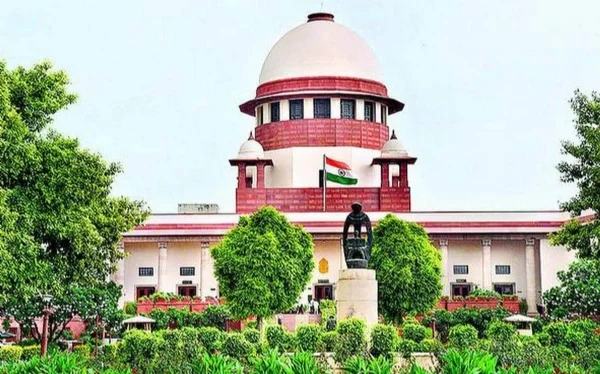
When Shri Vilasrao Deshmukh of the Congress Party was the Chief Minister of Maharashtra, he blatantly abused the powers of his constitutional office by issuing an illegal executive order in direct violation of the spirit of Article 14 of the Constitution, solely to shield Congress MLA Shri Dilip Sananda from criminal prosecution initiated by aggrieved farmers. Pursuant to that illegal order, the police were prohibited from registering an FIR against the said Congress MLA on the complaints lodged by the farmers. The Supreme Court unequivocally declared the order unconstitutional, held that the Chief Minister had abused his office and committed official misconduct, struck down the illegal order, and imposed costs of ₹10 lakh upon the State of Maharashtra.
In that case, the Supreme Court specifically directed that Shri Vilasrao Deshmukh be impleaded as a personal Respondent, called upon him to file an affidavit, and judicially examined his conduct before passing appropriate orders.
The Supreme Court has laid down a clear principle of law that where a court imposes costs upon the Government on account of the illegal, arbitrary or unconstitutional acts of a Minister, public servant or other public authority, the Government may initially pay the amount, but it must thereafter recover the same from the guilty Minister or officer personally. This is because government money is, in reality, the money of the people and the taxpayers. The financial burden arising from the wrongdoing of a guilty individual cannot be allowed to fall upon innocent citizens or taxpayers. [Directions in the Matter of Demolition of Structures, In re, (2025) 5 SCC 1; Lucknow Development Authority v. M.K. Gupta, AIR 1994 SC 787; S. Nambi Narayanan v. Siby Mathews & Ors., (2018) 10 SCC 804]
However, the then Congress Government deposited the ₹10 lakh in the Supreme Court from public funds belonging to the people and the farmers, but failed to recover that amount from the Minister who took the alleged illegal decision or from the officers who assisted him in implementing it. The question, therefore, remains: when will the Congress Party and the persons responsible for this illegal decision be made to reimburse the people by repaying those ₹10 lakh together with the interest accrued thereon?
It is significant that in Shiv Sagar Tiwari v. Union of India, (1996) 6 SCC 558, the Supreme Court applied the principle of personal financial liability in relation to the alleged illegal acts of a Minister in the Congress Government of Delhi and directed that the entire financial loss caused by corruption be recovered personally from the Minister concerned.
Likewise, in T.N. Godavarman Thirumulpa vs. Ashok Khot, (2006) 5 SCC 1, the then Congress Minister Shri Swaroopsingh Naik was sentenced to one month’s imprisonment for unconstitutional and illegal acts and for committing contempt of court by disobeying the orders of the Supreme Court.
Today, not only Maharashtra but the entire nation is watching to see when the people’s and the farmers’ ₹10 lakh will be recovered, and when effective and personal action will finally be taken against those who acted against the Constitution and against the interests of the farmers.