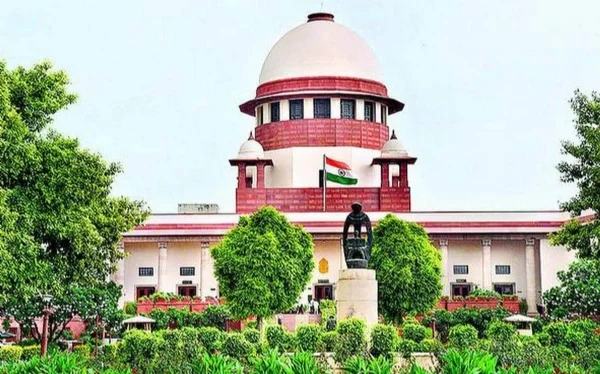
Apart from disciplinary proceedings, erring judges may, depending on the facts and applicable law, also face criminal prosecution, civil suits for damages, and proceedings for criminal contempt. In various cases, judges have also faced imprisonment, suspension, removal from service, and other penal and disciplinary consequences.
The most prominent example is In Re: C.S. Karnan, (2017) 7 SCC 1, where a seven-Judge Constitution Bench of the Supreme Court convicted Justice C.S. Karnan, then a Judge of the Calcutta High Court, of criminal contempt and sentenced him to six months’ simple imprisonment. The judgment reaffirmed the principle that judicial independence does not mean judicial impunity, and that judges too remain subject to the Constitution and the law.
Mohammed Nazer M.P., 2022 SCC OnLine Ker 7434; In Re M.P. Dwivedi, (1996) 4 SCC 152; Nirbhay Singh Suliya v. State of Madhya Pradesh, 2026 INSC 7, Raman Lal vs. State of Rajasthan 2001 CRI. L. J. 800, Barad Kanta Mishra v. State of Orissa, (1973) 1 SCC 446; Supdt. of Central Excise v. Somabhai Ranchhodhbhai Patel, (2001) 5 SCC 65; R.R. Parekh v. High Court of Gujarat, (2016) 14 SCC 1; Shrirang Waghmare v. State of Maharashtra, (2019) 9 SCC 144; and Yogesh Waman Athavale v. Vikram Abasaheb Jadhav, 2020 SCC OnLine Bom 3443, among several other decisions, have reinforced the principles of judicial accountability, disciplinary action, and the Rule of Law.
[ Address by Adv. Nilesh Ojha, Chairman, Indian Bar Association, to Lawyers and Human Rights Activists ]
For decades, there has been a widespread perception that when an innocent person is falsely implicated, illegally arrested, wrongfully prosecuted, or unlawfully imprisoned, accountability rests only with the police or investigating agencies. However, constitutional jurisprudence has evolved significantly. Today, judicial precedents demonstrate that every public authority involved in the administration of justice—including investigating officers, public prosecutors, and, in appropriate cases, judicial officers—is accountable under the rule of law.
“It has long been believed that if an innocent person is falsely implicated in a criminal case, only the police can be held accountable. However, recent judicial decisions clearly indicate that where a judicial officer, in disregard of the law, takes cognizance against a person who is not legally prosecutable or fails to discharge a person who ought to have been discharged and instead compels him to undergo a criminal trial, the question of the judge’s personal accountability may also arise.
In an important judgment on judicial accountability, the Patna High Court has clarified that where an innocent person is subjected to a criminal prosecution contrary to law, the personal responsibility of the concerned judicial officers may also be determined.
In Sunil Pandit v. State of Bihar, 2024 SCC OnLine Pat 959, Justice Bibek Chaudhuri directed the Judicial Magistrate, who had illegally taken cognizance, and the Additional Sessions Judge, who had affirmed that order in revision, to personally pay the petitioner ₹100 each as token compensation.
The petitioner had been prosecuted under Section 498-A of the Indian Penal Code and Section 4 of the Dowry Prohibition Act. However, the complaint itself admitted that he was not a relative of the husband but merely an ‘advisor’ to the other accused persons. Despite this, cognizance was taken against him, he was subjected to trial, and he was imprisoned on different occasions.
The High Court held that the petitioner had suffered the agony, social stigma, and detention arising out of a criminal prosecution which was not maintainable against him in law.
The Court clarified that the award of ₹100 each was not intended as actual compensation but as token compensation, meant to remind judicial officers that before taking cognizance they have a mandatory duty to carefully examine the complaint and the material on record.
The most significant historical example is McLeod v. St. Aubyn, [1899] AC 549. In that case, the Acting Chief Justice of the Supreme Court of St. Vincent, St. Aubyn, sentenced Advocate McLeod to fourteen days’ imprisonment for alleged contempt. The Privy Council set aside that order and allowed the appeal. Significantly, the Acting Chief Justice himself was a respondent in the proceedings, and the Privy Council directed that the costs of the appeal be paid against him. The decision underscores the historic principle that even a judge occupying the highest judicial office is not above the law and may, in appropriate circumstances, be subjected to personal financial liability for an unlawful judicial order.
Adv. Nilesh Ojha further stated that in Ramesh Lawrence Maharaj v. Attorney General of Trinidad & Tobago, (1978) 2 WLR 902, and Walmik Bobde v. State of Maharashtra, 2001 ALL MR (Cri) 1731, the courts recognised that where an unlawful judicial order results in the violation of a citizen’s fundamental rights, the State may be held liable. These decisions recognised that judges form an integral part of the State’s judicial machinery and that where their official acts result in the infringement of fundamental rights, the State cannot avoid its constitutional obligation to compensate the victim. Accordingly, compensation was directed to be paid.
He stated that the fundamental principle emerging from these decisions is that under the Rule of Law, every innocent citizen who suffers because of an unlawful judicial order, illegal detention, malicious prosecution, or violation of fundamental rights must have an effective remedy. After the State pays constitutional compensation, the issue of the personal liability of the erring officials may also arise in accordance with the remedies available under law.
Adv. Nilesh Ojha stated that Ankush Maruti Shinde v. State of Maharashtra, (2019) 15 SCC 470 is another significant example of grave injustice caused to innocent persons due to judicial error and false prosecution. In that case, six poor labourers were falsely implicated in a murder case. Initially, a two-Judge Bench of the Supreme Court affirmed their conviction and death sentence. Subsequently, a three-Judge Bench reappreciated the entire evidence, held that the prosecution had failed to prove the charges, set aside both the conviction and the death sentence, and acquitted all six accused.
Recognising that the innocent persons had suffered years of imprisonment, the agony of living under a sentence of death, and a grave violation of their fundamental rights, the Supreme Court directed the State of Maharashtra to pay ₹50 lakh as compensation to each of them. The Court observed that where innocent citizens suffer extraordinary injustice because of failures in the criminal justice system, it is the constitutional duty of the Court to award appropriate constitutional compensation to protect their rights under Article 21 of the Constitution.
Adv. Nilesh Ojha further stated that the decision in Mahabir v. State of Haryana, 2025 SCC OnLine SC 184 makes it clear that even mistakes committed by Public Prosecutors are not legally excusable. The Supreme Court held that the duty of a Public Prosecutor is not merely to secure a conviction but to fairly assist the Court by placing the correct and binding law before it. Because of the Public Prosecutor’s failure to bring the applicable legal position to the Court’s notice, innocent persons suffered wrongful conviction and imprisonment. Accordingly, the Supreme Court directed the State of Haryana to pay ₹5 lakh each to the three innocent appellants, holding that the State is responsible for the acts and omissions of the Public Prosecutors appointed by it.
Adv. Nilesh Ojha further pointed out that the Supreme Court, in Nirbhay Singh Suliya v. State of Madhya Pradesh, 2026 INSC 7, has reaffirmed that judicial accountability is an integral part of the rule of law. The Court held that where a complaint of misconduct against a judicial officer is found to be prima facie true, prompt disciplinary proceedings must be initiated and no leniency should be shown if the charges are ultimately established. The Supreme Court further observed that, in appropriate cases, where criminal prosecution of a judicial officer is warranted, the High Court should not hesitate to initiate such prosecution. The Court emphasized that this is necessary to weed out the “black sheep” who tarnish the reputation of the judiciary.
This Is Not an Isolated Decision
This is not an isolated judgment. The Supreme Court and various High Courts have repeatedly held that where a citizen suffers illegal arrest, unlawful detention, malicious prosecution, or violation of fundamental rights on account of unlawful judicial proceedings, constitutional courts may award compensation under public law.
Adv. Nilesh Ojha stated that numerous decisions of the Supreme Court and various High Courts have established that a person subjected to illegal arrest, false prosecution, unlawful detention, or criminal proceedings contrary to law is entitled not only to public law compensation from constitutional courts but may also institute a civil suit for damages.
He referred to S. Nambi Narayanan v. Siby Mathews, (2018) 10 SCC 804, in which the Supreme Court directed the State of Kerala to pay ₹50 lakh to former ISRO scientist Dr. Nambi Narayanan for the violation of his rights under Article 21. The Court also clarified that this compensation was not final and that the petitioner remained free to pursue a separate civil suit for additional compensation, without the Supreme Court expressing any opinion on the merits of such suit.
The Bombay High Court reiterated the same principle in Veena Sippy v. Narayan Dumbre, 2012 SCC OnLine Bom 339. In that case, the Court directed the State of Maharashtra to pay the petitioner ₹2.50 lakh as compensation, together with 8% annual interest and ₹25,000 as costs.
Significantly, the Bombay High Court also clarified that:
- After paying compensation, the State Government would be at liberty, if so advised, to recover the amount from the officers responsible.
- The victim would also remain free to institute a regular civil suit claiming additional compensation and damages for actual financial loss, mental agony, reputational harm, and other losses.
Victims May Claim Damages Running into Lakhs or Crores
Constitutional compensation awarded in writ proceedings is not the final remedy. If an innocent person suffers serious financial loss, mental trauma, social stigma, unlawful detention, malicious prosecution, judicial error, or violation of fundamental rights, he remains free to institute an independent civil action for damages and claim compensation running into lakhs or even crores of rupees, depending upon the facts and the applicable law.
These decisions further reinforce the principle that where innocent citizens suffer because of judicial negligence, disregard of law, or violation of rights, not only may the State be held liable, but in appropriate cases the issue of the personal accountability of the concerned officials may also arise. Constitutional compensation and civil damages are independent remedies and may coexist.
Adv. Nilesh Ojha further stated that under no circumstances should anyone seek to malign or weaken the judiciary, the police, the prosecution, or any other public institution. Even today, India has a large number of honest, impartial, dedicated, and Constitution-abiding judges, police officers, and Public Prosecutors who discharge their duties with integrity. Strengthening these institutions is in the interest of the nation, the justice delivery system, and every citizen. Therefore, all stakeholders must work together to make these institutions stronger, more transparent, and more accountable so that public confidence in them continues to grow.
Quoting one of his well-known principles, Adv. Ojha said, “Do not see who is right; see what is right.” He emphasized that public discourse must never be driven by personalities, positions, or institutions, but by constitutional values, facts, and the rule of law.
At the same time, it must be equally clear that every public functionary—whether a judge, a Public Prosecutor, a police officer, or any other public official—is subject to the Constitution and the law. Just as an ordinary citizen is liable for violating the law, any public official who acts in breach of the law must also face fair, effective, and time-bound legal action and, where misconduct or criminal liability is established in accordance with law, be subjected to appropriate punishment.
Judicial independence is one of the cornerstones of constitutional democracy. However, judicial independence cannot be equated with judicial impunity. The dignity, credibility, and public confidence in the judiciary can be preserved only when judicial independence is accompanied by effective judicial accountability.
If an innocent citizen is forced to suffer years of imprisonment, social stigma, and mental trauma because of a defective investigation, malicious prosecution, an unlawful judicial order, or judicial misconduct, and no one is held accountable, it would strike at the very heart of the guarantees of equality before law and the right to life and personal liberty under Articles 14 and 21 of the Constitution.
Adv. Ojha called upon lawyers, human rights activists, and citizens to work collectively towards building a justice system in which the innocent are protected, the guilty are punished in accordance with law, victims receive effective justice and adequate compensation, and every public functionary remains fully accountable to the Constitution, the law, and the Rule of Law.
In conclusion, he said that justice is not merely about punishing the guilty; it is equally about ensuring that no innocent person suffers injustice. When the guilty escape punishment, the deterrent effect of law is weakened. Equally, when an innocent person suffers injustice and no one is held accountable, public confidence in the justice system is seriously undermined. Preserving the delicate balance between judicial independence and judicial accountability is, therefore, the true hallmark of constitutional democracy and the Rule of Law.