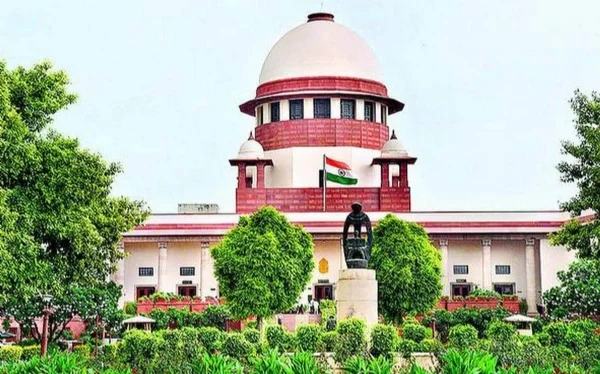
The Supreme Court has clarified that compensation is payable to all citizens who have suffered any side effects following COVID vaccination, even in the absence of conclusive proof of direct causation.
The Court further recognised that affected individuals are entitled to pursue additional claims for damages under law.
A Nagpur Court has already ordered criminal prosecution against Adar Poonawalla, the Serum Institute, and its directors and employees. Additionally, notices have been issued in three high-value civil compensation claims totalling ₹10,000 crore, ₹1 lakh crore, and ₹12 lakh crore.
₹1000 CRORE CLAIM – COURTS HAVE TAKEN COGNIZANCE A major and unprecedented development has taken place where Dr. Snehal Lunawat has filed a compensation claim of ₹1000 crores against Adar Poonawalla, Bill Gates, Serum Institute of India, and the Union of India, and the petition has already been admitted by the Division Bench of Hon’ble High Court. This is not a mere allegation in public discourse. It is a matter of judicial record now under active consideration.
₹100 CRORE CLAIM IN VACCINE MURDER CASE – In another serious case, relating to the vaccine-related death (vaccine murder as alleged) of Hitesh Kadwe, a compensation claim of ₹100 crores has been filed by Smt. Kiran Yadav. This case directly raises the issue of: • Liability for death post vaccination • Accountability of authorities and involved entities • Possible criminal culpability.
WAVE OF LITIGATION BUILDING ACROSS INDIA These are not isolated cases. Across the country: • Multiple petitions are being prepared and filed • Compensation is being sought from: o The State o Vaccine manufacturers o Decision-makers and officials • Criminal prosecution is also being demanded in appropriate cases. This marks the beginning of a nationwide legal reckoning
Victims are not required to establish strict or direct causation between the vaccine and the adverse effect, thereby removing a major evidentiary burden that would otherwise defeat legitimate claims.
Any abnormal condition arising post-vaccination—such as severe and unexplained headache, neurological complications, joint pain, diabetes, paralysis, blood clotting disorders, heart attacks, cardiac arrest, vision impairment, hearing impairment, or any other unusual or sudden medical condition—acquires legal relevance within the framework of Adverse Events Following Immunization (AEFI) and cannot be dismissed merely on the ground that definitive or conclusive proof of causation is not available.
The burden, in such cases, shifts onto the State to ensure compensation, reflecting a no-fault liability regime grounded in constitutional principles of fairness and protection of life under Article 21.
On similar lines, the High Court, in Devilal v. State of M.P., 2017 SCC OnLine MP 2322, granted compensation of ₹25 lakh to a victim who developed paralysis following vaccination (polio vaccine). Notably, the Court extended relief even though the victim was unable to conclusively establish a direct causal link between the vaccine and the adverse condition, thereby reinforcing the principle that absence of strict proof cannot be a ground to deny compensation in such cases.
Affected citizens may also initiate independent legal proceedings—both civil and criminal—against vaccine manufacturers, including Serum Institute and its directors such as Adar Poonawalla and Cyrus Poonawalla, among others, on allegations of suppression of serious side effects, including fatalities, as well as misrepresentation by portraying the vaccines as completely safe.
Importantly, there is no statutory upper limit on compensation, and affected individuals are entitled to seek full and proportionate damages corresponding to the harm suffered. In Amerika (USA) compensation of Hundreds of crores were granted. In India also petitions with claims of Hundreds of crores are admitted. In addition, they may also pursue criminal prosecution and seek appropriate punishment against those found responsible.
Personal Liability of Public Officials
Even the Government, in its affidavits, has acknowledged a critical legal principle:
Officers guilty of misfeasance and malfeasance can be held personally liable.
The settled legal position is that public officials cannot take shelter behind their office when their actions or omissions cause harm to citizens. Where conduct amounts to:
- Misfeasance — wrongful exercise of lawful authority, or
- Malfeasance — intentional unlawful acts or abuse of power,
such officers may be held accountable both civilly and criminally in their personal capacity.
When Personal Liability Arises
Personal liability may arise where an officer has:
- Knowingly suppressed or failed to disclose material facts relating to risks or side effects
• Approved, promoted, or continued policies despite awareness of potential harm
• Failed to exercise due diligence, care, and caution expected in public duty
• Acted negligently, recklessly, or with conscious disregard for public safety
Such acts are no longer protected administrative decisions—they constitute actionable personal wrongdoing attracting legal consequences.
A Shift Towards Accountability
This evolving legal position signals a significant shift towards greater accountability in public health governance, ensuring that neither corporations nor public officials can evade responsibility where citizens suffer harm.
Symptoms That Must Be Carefully Documented for Additional Claims
Citizens are strongly advised to meticulously document and preserve evidence of any health condition that has developed or worsened following COVID-19 vaccination, in order to pursue additional compensation beyond the no-fault relief provided by the Government. Proper medical documentation can play a decisive role in securing further legal remedies.
This includes, but is not limited to:
- Paralysis or partial loss of bodily movement
• Persistent headaches, neurological disturbances, seizures, or brain fog
• Heart-related conditions such as heart attacks, myocarditis, arrhythmia, or cardiac arrest
• Blood clotting disorders, stroke, or vascular complications
• Cancer or any abnormal or sudden growths
• Autoimmune disorders affecting any organ system
• New onset of diabetes or sudden worsening of existing diabetes
• Chronic joint pain, muscle weakness, fatigue, or unexplained body pain
• Menstrual irregularities, hormonal disturbances, or reproductive health issues
• Dental complications, nerve pain, or unexplained oral conditions
• Any other unexplained or unusual medical condition arising post-vaccination
Call to Citizens: Preserve Evidence Without Delay
Public organisations, including:
• Rashtriya Sanvidhan Raksha Samiti
• Indian Bar Association
• Awaken India Movement
have urged citizens to immediately collect, record, and preserve all relevant medical records, prescriptions, diagnostic reports, hospital documents, and expert opinions in cases where any abnormal health condition is observed post-vaccination.
Important Legal Note
Every adverse condition arising after vaccination carries legal relevance and must be properly documented, irrespective of whether a direct causal link is immediately accepted or certified by medical authorities.
The legal framework governing Adverse Events Following Immunization (AEFI) does not require strict proof of causation at the initial stage. Consequently, even where doctors are unable to confirm or deny a direct link with the vaccine, such conditions remain critical evidence for the purpose of claiming compensation and pursuing further legal remedies.
Conclusion: A Critical Window for Legal Action
This evolving legal position underscores a crucial reality—citizens must act with vigilance. The timely preservation of medical evidence and documentation is not merely advisable but essential.
As the law increasingly recognises the rights of affected individuals under a no-fault liability framework, those who have suffered post-vaccination health complications now have a meaningful opportunity to seek justice, accountability, and enhanced compensation through appropriate legal action.
Beyond Public Health: A Question of Constitutional Accountability
What began as a public health initiative is now raising larger constitutional questions. Legal experts increasingly emphasise that the issue is no longer confined to medicine alone—it directly engages constitutional accountability, public trust, and the right to life under Article 21.
Every affected citizen, it is argued, has a clear legal entitlement to:
• Compensation
• Effective legal remedies
• Accountability of authorities and responsible entities
Citizens who have suffered adverse effects following COVID vaccination are being advised not to ignore symptoms, but to document and preserve all medical records and seek appropriate legal guidance.
State Liability Cannot Be Denied
The vaccination programme was:
• State-sponsored
• Widely promoted through official channels
• In several instances, implemented in a manner perceived as coercive
In such circumstances, legal principles indicate that:
• The State cannot deny responsibility
• Citizens cannot be left without remedy
• Constitutional protections under Article 21 are directly implicated
Courts have consistently held that where State action results in harm, compensation becomes a constitutional obligation.
Unlimited Legal Remedies: Beyond Government Compensation
Importantly, citizens are not confined to government compensation schemes. The law permits full-scale legal action against:
• Vaccine manufacturers
• Policy-makers
• Public officials
• Any entity involved in approval, promotion, or enforcement
Grounds for Legal Action May Include:
- Alleged suppression of side effects
• Misrepresentation of safety
• Failure to disclose material risks
• Coercive or mandatory vaccination practices
• Continuation of policies despite emerging concerns
Legal Consequences and Personal Liability
Legal doctrine makes it clear that public office does not provide absolute immunity.
Where acts involve negligence, suppression, or abuse of authority:
• Officers may be directed to pay compensation personally
• Criminal prosecution may be initiated in appropriate cases
• Immunity may not apply where actions are arbitrary or mala fide
The principle of public accountability ensures that liability does not stop at the State level. Where harm arises from acts or omissions, affected individuals may proceed not only against institutions but also against responsible decision-makers.
In essence: authority carries responsibility—and misuse may attract personal liability.
Growing Legal Momentum Across the Country
Legal developments indicate that this may be the beginning of a significant phase of public liability litigation in India.
Across jurisdictions:
- Multiple petitions are being filed and prepared
• Compensation claims are being pursued against both State and private entities
• Criminal liability is being examined in select cases
Importance of Documentation: Every Symptom Matters
Legal experts emphasise that documentation is critical. Any abnormal condition arising post-vaccination may carry evidentiary value, including:
• Neurological issues or paralysis
• Cardiac conditions such as heart attack or arrest
• Blood clotting disorders
• Autoimmune conditions
• Sudden onset or worsening of chronic diseases
• Any unexplained medical condition
Even where medical causation is disputed, such records may remain legally relevant under the framework of Adverse Events Following Immunization (AEFI).
A Larger Question for the Legal System
The unfolding situation raises broader questions:
• Were risks adequately disclosed?
• Were citizens fully informed?
• How should long-term consequences be addressed?
• Where does accountability ultimately lie?
These are issues that may increasingly come under judicial scrutiny.
Conclusion: An Evolving Legal Landscape
The emerging legal position suggests that affected citizens are not without remedies. The framework of constitutional law, tort liability, and public accountability provides multiple avenues for redress.
As legal proceedings continue to develop across the country, this phase may mark a significant evolution in how public health decisions intersect with constitutional rights, liability, and accountability.
The message is clear: access to justice remains open—and accountability remains a central pillar of the rule of law.
Download the copy of Supreme Court order
