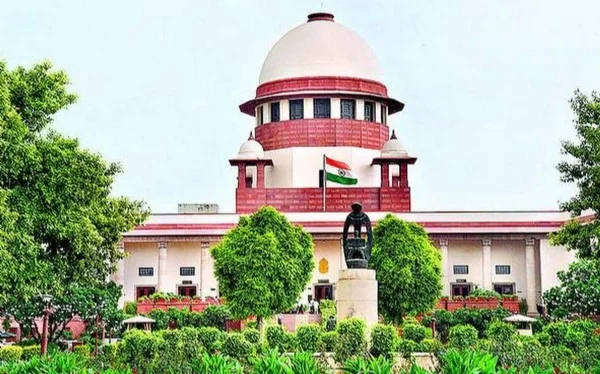
High Court also directs that the conduct of judicial officers who failed to protect the citizen’s fundamental rights be placed before its Administrative Committee for appropriate action!
Major Blow to Police High-Handedness! High Court Comes Down Heavily on Abuse of Police Powers, Illegal Arrest and 26 Days of Wrongful Detention
Indian Bar Association National President Adv. Nilesh C. Ojha and Supreme Court Lawyers Association President Adv. Ishwarlal Agarwal Welcome Landmark Judgment
A Stern Warning to Corrupt Police Officers Who Falsely Implicate Innocent Citizens for Extortion, Financial Gain or at the Instance of Influential Persons — Adv. Nilesh Ojha
Mumbai | Special Correspondent | October 27, 2026
In a significant judgment striking at the misuse of police powers and the failure of judicial safeguards, the Bombay High Court has directed the immediate suspension and stringent action against police officers responsible for illegally arresting a businessman to advance the interests of a private builder. The Court has further ordered the Maharashtra Government to pay ₹5 lakh in compensation to the victim and permitted the State to recover the amount proportionately from the salaries of the delinquent police officers.
In an equally significant development, the High Court has taken serious exception to the conduct of the judicial officers who failed to discharge their duty of protecting the citizen’s fundamental right to personal liberty. The Court has directed that the matter be placed before the High Court’s Administrative Committee for consideration of appropriate action against the concerned judicial officers.
The judgment was delivered on October 22, 2026, by a Division Bench comprising Justice A. S. Gadkari and Justice Kamal Khata in a criminal writ petition filed by Mumbai businessman Bipin Satish Chandra Agrawal, who was arrested on August 4, 2017, and remained in custody for a total of 26 days.
The judgment is significant not merely because it holds the police accountable for an unlawful arrest, but also because it highlights the independent constitutional responsibility of judicial officers to protect citizens against arbitrary deprivation of liberty.
The Indian Bar Association’s National President, Advocate Nilesh C. Ojha, and the President of the Supreme Court Lawyers Association, Advocate Ishwarlal Agarwal, have welcomed the decision.
Police Machinery Misused to Benefit Builder; Businessman Falsely Implicated in Extortion CaseThe controversy arose from a redevelopment transaction involving a housing society in Andheri East, Mumbai.
Bipin Agrawal was acting as the power-of-attorney holder of his elderly mother-in-law in connection with negotiations concerning a property involved in the redevelopment transaction.
The dispute concerned a flat valued at approximately ₹1.64 crore and dealings with the developer, Seth & Sonal Developers.
During the negotiations, an advance amount of ₹2 lakh was paid to Agrawal. Subsequently, differences arose between the parties, following which an extortion case under Section 384 of the Indian Penal Code was registered against him.
On August 4, 2017, Agrawal was arrested and subsequently kept in police custody for six days and judicial custody for another 20 days.
Upon examining the material on record, the High Court found serious irregularities in the manner in which the arrest had been effected.
The Court found that the police officer had failed to properly investigate the nature of the financial transaction and had instead used his official position in a manner that advanced the private interests of the developer.
The judgment exposes the grave consequences of allowing police machinery, entrusted with protecting citizens, to be misused for settling private commercial disputes and depriving individuals of their liberty.
Arrest First, Notice Later! High Court Exposes Serious Violations of Arrest Procedures
The High Court found serious deficiencies in the arrest procedure and the records maintained by the investigating officers.
The irregularities included discrepancies in the arrest documents, questionable alterations in dates, inconsistencies in station diary entries and non-compliance with the safeguards prescribed under Sections 41 and 41A of the Code of Criminal Procedure.
Of particular concern was the issuance of a notice under Section 41A after the arrest.
The statutory safeguards under these provisions are intended to prevent unnecessary arrests and ensure that the power of arrest is exercised only when justified by law.
The Court reiterated the distinction between the existence of a power to arrest and the necessity of exercising that power.
Merely because the police possess the authority to arrest an individual does not mean that an arrest can be made mechanically or without satisfying the legal requirements.
The Court also scrutinised the attempt to portray Agrawal as a habitual offender or a person likely to abscond without adequate supporting material.
The findings demonstrate that an arrest cannot be justified merely by repeating allegations or making unsupported assertions about the accused.
Judicial Officers Also Failed to Protect Personal Liberty; High Court Directs Consideration of Action
One of the most significant aspects of the judgment concerns the conduct of the Magistrates who authorised Agrawal’s continued detention.
Whenever an arrested person is produced before a Magistrate, the judicial officer is required to independently examine the legality of the arrest and whether further detention is justified.
The Magistrate is not expected to act as a mere approving authority for police requests.
However, in the present case, the High Court found that the remand orders did not reflect adequate independent judicial consideration or sufficient reasons for authorising continued custody.
The Court examined the remand proceedings dated August 5, 8 and 10, 2017, as well as subsequent proceedings dated August 16 and 22, 2017.
The High Court expressed serious concern over the failure to apply the required judicial scrutiny to the deprivation of a citizen’s liberty.
Taking a serious view of these lapses, the High Court directed that the judgment be placed before its Administrative Committee for consideration of appropriate action concerning the judicial officers involved.
This aspect of the ruling is particularly important because it reinforces that judicial officers have an independent duty to protect fundamental rights and cannot mechanically approve detention merely because the police have requested it.
Immediate Suspension of Police Officers, ₹5 Lakh Compensation and Recovery from Delinquent Officials
The High Court declared Agrawal’s arrest of August 4, 2017, illegal.
It directed the Maharashtra Government to pay him compensation of ₹5 lakh within two weeks of the judgment being uploaded on the High Court’s website.
The Court further directed immediate suspension and stringent action against Police Sub-Inspector Mahesh Lamkhade and other responsible officers.
Significantly, the High Court also permitted the State Government, if it considers appropriate, to recover the compensation amount proportionately from the salaries of the delinquent police officers.
The decision recognises that an unlawful arrest can cause serious injury to an individual’s liberty, reputation, dignity and financial interests.
It also highlights an important principle of public accountability: where officers abuse their statutory powers, personal financial responsibility may follow, subject to the applicable legal process.
The ruling is expected to provide an important legal basis for citizens challenging arbitrary arrests and the misuse of police powers.
‘A Major Blow to Corrupt Police Officers Who Take Money or Contracts to Falsely Implicate Innocent Citizens’ — Adv. Nilesh Ojha
Advocate Nilesh C. Ojha, National President of the Indian Bar Association, has welcomed the judgment.
In his proposed statement on the significance of the ruling, Advocate Ojha said:
“In numerous cases across the country, certain corrupt police officers misuse their powers to extort money, obtain unlawful financial benefits or act at the instance of influential persons who engage them to falsely implicate innocent citizens in criminal cases.
Such officers frequently arrest citizens even when there is no legal necessity for arrest, subject them to police custody and violate their fundamental rights. The machinery established for the protection of the public is thereby misused as an instrument of harassment and oppression.
What is even more disturbing is that, in some cases, judicial officers also fail to prevent such illegal actions. Instead of independently examining the legality and necessity of the arrest, remand orders are passed mechanically. There are also allegations in certain cases that judicial officers act under police pressure or in a manner that assists the police in perpetuating unlawful detention.
Such practices seriously undermine public confidence in the administration of justice.
The foremost duty of a judicial officer is to protect the life, liberty and fundamental rights of citizens. Merely because the police produce a person before a court does not mean that the person should automatically be sent to police or judicial custody.
The legality and necessity of every arrest must be independently examined. This is not merely a procedural requirement but an essential constitutional responsibility.
The Bombay High Court has, in the present judgment, directed immediate suspension and stringent action against the police officers responsible for the illegal arrest. It has ordered compensation of ₹5 lakh and permitted recovery from the delinquent officers.
Equally importantly, the High Court has directed that the conduct of the concerned judicial officers be placed before the Administrative Committee for consideration of appropriate action.
This is an extremely important judgment because it reinforces the constitutional accountability not only of police officers but also of judicial officers.
Nobody is above the law, whether a police officer, a minister or a judge. Every public authority entrusted with constitutional or statutory powers must exercise those powers lawfully and remain accountable for violations of citizens’ fundamental rights.”
‘Whether Police Uniform or Judicial Office, Everyone Is Equal Before the Law’ — Adv. Ojha
Elaborating on the constitutional importance of the decision, Advocate Ojha further stated:
“Article 14 of the Constitution of India guarantees equality before the law and equal protection of the laws. Article 21 guarantees the fundamental right to life and personal liberty.
These constitutional guarantees are not empty declarations. They impose binding obligations upon every organ of the State, including the police and the judiciary.
When police officers falsely implicate a citizen and illegally deprive him of liberty, and judicial officers fail to discharge their duty of protecting that liberty, the citizen is left exposed to serious injustice.
In such circumstances, it is essential that the delinquent police officers face stringent action and that the conduct of judicial officers who failed to discharge their legal duties is examined through the appropriate disciplinary mechanism.
The present judgment will strengthen the hands of ordinary citizens who are compelled to fight against unlawful arrests and abuse of authority.
Police officers contemplating illegal arrests must understand that such conduct may expose them not only to departmental proceedings and suspension but also to personal financial liability.
Similarly, judicial officers must remember that their duty is not to mechanically approve police demands. Their responsibility is to uphold the Constitution, enforce the law and protect the fundamental rights of citizens.
The true strength of the justice system lies in its willingness to hold every person accountable, irrespective of position, influence or official status.”
Indian Bar Association and Supreme Court Lawyers Association Welcome the Judgment
The judgment has been welcomed by Advocate Nilesh C. Ojha, National President of the Indian Bar Association, and Advocate Ishwarlal Agarwal, President of the Supreme Court Lawyers Association.
The decision is considered significant for strengthening constitutional safeguards against arbitrary arrest, preventing misuse of police powers and reinforcing the responsibility of judicial officers to independently examine the legality of detention.
It also serves as an important reminder that public office does not confer immunity from accountability.
Police officers are required to comply strictly with statutory conditions governing arrest, while Magistrates must independently examine whether the deprivation of a person’s liberty is justified.
The principle underlying the judgment is that the rule of law must prevail over official authority, private influence and arbitrary exercise of power.
Justice After Nine Years: Landmark Ruling Strengthens Citizens’ Right to Personal Liberty
Agrawal had approached the Bombay High Court under Article 226 of the Constitution, challenging his arrest and seeking action against the responsible officers along with compensation for the violation of his fundamental rights.
After nearly nine years of litigation, the High Court declared the arrest illegal and awarded compensation of ₹5 lakh.
The judgment is an important authority for citizens challenging unlawful arrests, misuse of police powers and mechanical remand orders.
It also reinforces the need for effective judicial scrutiny whenever the State seeks to deprive an individual of personal liberty.
The central message of the judgment is unmistakable: the police cannot misuse their powers to serve private interests, and judicial officers cannot abdicate their responsibility to protect citizens’ fundamental rights.
The rule of law applies equally to everyone, whether the person wears a police uniform, occupies public office or exercises judicial authority.
—
Case Reference
Bipin Satish Chandra Agrwal v. State of Maharashtra & Anr.
Criminal Writ Petition No. 4458 of 2017
Bombay High Court
Coram: Justice A. S. Gadkari and Justice Kamal Khata
Judgment dated: October 22, 2026
Citation: 2026:BHC-AS:43036-DB