He Sent a Public Message to All Judges That They Must Stop Using the Prefix “Justice” Before Their Names and Replace It With “Dalal” — Meaning Broker or Agent
Scandalous Attack on Sitting and Former Chief Justices of India — Including Justice B.R. Gavai, Justice Sanjiv Khanna, Justice U.U. Lalit, Justice Dr. D.Y. Chandrachud and Present CJI Justice Surya Kant — All Five Branded as “Dalals” Who Have “Surrendered”, With Raut Declaring That Each Successive Chief Justice Has Been More Worthless, More Spineless and More Bogus Than His Predecessor — Shocks and Outrages the Entire Legal Fraternity
Kapil Sibal also co accused as he Urges Public Not to Expect Justice from Courts as they will pass orders in favor of government only, Calls for Taking the Fight to the Streets; People Ask What Judicial Reforms He Pursued as Union Law Minister. Kapil Sibal’s remarks suggesting that people should not expect justice from courts and should instead take their fight to the streets have triggered strong reactions from sections of the public and the legal fraternity. Many critics have accused him of adopting an opportunistic stance, arguing that while he remained silent on judicial reforms during his years in power, he is now questioning the justice delivery system after failing to secure favourable outcomes in matters he has been associated with.
Indian Bar Association Seeks Attorney General’s Sanction to File Criminal Contempt Petition Against Uddhav Thackeray’s Spokesperson
Raut a Habitual Offender: Contempt Proceedings Already Pending Against Sanjay Raut and Uddhav Thackeray — Earlier Scandalous Editorials Had Declared That “Courts Are Like Sulabh Toilets Where Justice Is Available Only After Paying Money”; That “The Entire Judiciary Functions Under the Shoes of the Ruling Government”; That “The Scales of Lady Justicia at the Bombay High Court Were Purchased From the Scrapyard — Bhangar”; and That Judges Across Maharashtra Run a Systematic “Bail Scam” — Granting Bail to Ruling Party Leaders as a Matter of Course, Keeping All Other Applications Indefinitely Pending While Awaiting Money Offers, and Granting Relief to Others Only After Receiving Bribes.
Adv. Nilesh Ojha, Chairman of the Indian Bar Association, stated in unequivocal terms that making allegations against a particular judge on the basis of cogent evidence, judicial records, or other credible material, and seeking an inquiry or appropriate action against such judge, does not amount to contempt of court; rather, it is an integral part of judicial accountability in a constitutional democracy. However, branding the entire judiciary and all judges as corrupt, purchasable, “dalals” (brokers), agents of those in power, or as having “surrendered” is a direct attack on the institution of justice itself and a deliberate attempt to undermine public confidence in the judicial system. Such reckless and baseless allegations are intended to create distrust in the minds of citizens and foster an atmosphere of lawlessness and cynicism towards the rule of law. It is for this reason that sweeping, unsubstantiated and deliberate attempts to malign the entire judiciary are regarded as among the gravest forms of criminal contempt and cannot be tolerated under any circumstances.
Mumbai: In what is being universally condemned by the legal fraternity as the most audacious, scandalous and constitutionally reprehensible attack on the Indian judiciary by a sitting Member of Parliament in living memory, Rajya Sabha MP and Shiv Sena (Uddhav Balasaheb Thackeray) spokesperson Sanjay Raut has publicly issued a provocative and contemptuous message to every judge in India — from the Chief Justice of India down to every sitting judge of every High Court in the country — declaring that they have no right to use the honorific prefix “Justice” before their names, and that they must henceforth replace it with the word “Dalal” — a term that in Marathi and Hindi unmistakably means a broker, agent, tout or middleman who acts not on principle but for personal gain and at the behest of those who pay him.
Raut, who is also the executive editor of the Shiv Sena (UBT) mouthpiece Saamna, made this explosive demand not as a private whisper or an offhand remark but as a deliberate, public and published declaration — broadcast through his platform to a mass audience — that the judges of India’s constitutional courts have so thoroughly compromised themselves, so completely abandoned their oath of office and so utterly surrendered their independence that the very word “Justice” has become a lie when affixed to their names. In his characterisation, the title “Dalal” is not an insult but an accurate description — a statement of fact about what, in his view, the judges of India have made of themselves.
Scandalous Attack on Sitting and Former Chief Justices of India — Including Justice B.R. Gavai and Justice U.U. Lalit — Branded as “Dalals” Who Have “Surrendered” — Shocks and Outrages the Entire Legal Fraternity
Raut did not confine his attack to anonymous generalisations. He directed his fire with specific and deliberate force at the highest occupants of India’s constitutional judiciary — sitting and former Chief Justices of India — publicly branding them as “Dalals” who have “शेपटी घातली“ — a deeply contemptuous Marathi expression meaning that they have tucked their tails between their legs, surrendered completely, and submitted themselves to powers beyond the court.
Among those specifically targeted were five sitting and former Chief Justices of India, including the present Chief Justice of India, Justice Surya Kant, and four distinguished former Chief Justices — among them Justice Bhushan Ramkrishna Gavai and Justice U.U. Lalit — all of whom Raut accused, by name and by unmistakable implication, of having wilfully surrendered the independence of the Supreme Court of India and reduced themselves from constitutional guardians of justice to mere agents of the powerful. In a single sweeping and contemptuous indictment, Raut placed the sitting Chief Justice of India and four of his predecessors in the same bracket — that of “Dalals” who had capitulated, submitted and betrayed the trust of the nation and the Constitution.
The allegation that these five occupants — present and former — of the highest judicial office in the land had “surrendered” was not an ambiguous or accidental choice of language. The word, and the contemptuous Marathi expression “शेपटी घातली“ used to amplify it, were carefully and deliberately chosen for maximum degradation — to convey not merely that these judges had made errors of judgment, not merely that their decisions were controversial, but that they had, as a matter of conscious choice, abandoned their oath, prostrated themselves before power and made themselves instruments of those they were constitutionally obligated to hold accountable. The allegation was made without a shred of evidence, without any qualification or reservation, without any attempt to substantiate it through fact or reasoning.
The reaction from the legal fraternity was immediate, unanimous and furious. Senior advocates, bar association leaders and legal scholars across the country expressed their profound shock and outrage — not merely at the content of the remarks but at the calculated, premeditated and escalating nature of the attack.
Indian Bar Association and Other Bar Bodies Seek Attorney General’s Sanction to File Criminal Contempt Petition Against Uddhav Thackeray’s Spokesperson
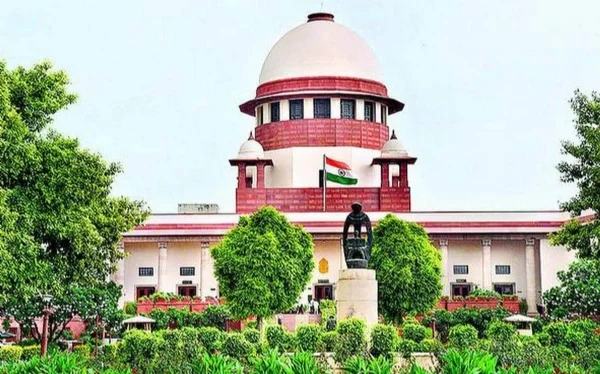
Moving swiftly and decisively in the face of what they have collectively described as an unprecedented and wholly unacceptable assault on the dignity of the constitutional judiciary, the Indian Bar Association and other Bar bodies have formally initiated the process of seeking the sanction of the Attorney General of India — as mandated under Section 15 of the Contempt of Courts Act, 1971 — to file a criminal contempt petition before the Supreme Court of India against Sanjay Raut, Uddhav Thackeray’s foremost spokesperson and the most prominent public face of the Shiv Sena (UBT) in its ongoing legal and political battles.
Adv. Nilesh Ojha, Chairman of the Indian Bar Association, has been at the forefront of this legal offensive, spearheading the demand for criminal contempt action against Raut for his repeated, escalating and wholly unretracted derogatory and defamatory statements targeting the judiciary at its highest levels.
In a significant and independent development on 10th June 2026, Adv. Ishwarlal Agarwal, Chairman of the Indian Lawyers and Human Rights Activists Association, filed a formal complaint and sanction application before the Attorney General of India, setting out in meticulous and comprehensive detail the legal grounds on which Raut’s utterances constitute criminal contempt of court under Section 2(c) of the Contempt of Courts Act, 1971 — which defines criminal contempt to include any act, publication or statement that scandalises or tends to scandalise, or lowers or tends to lower, the authority of any court of law.
The complaints and sanction applications filed by both bodies converge on a common and compelling legal position: that Raut’s conduct does not merely satisfy the ingredients of criminal contempt — it fulfils each and every one of them in the most aggravated form imaginable. Publicly demanding that every judge in India — from the Chief Justice of India downward — must stop using the prefix “Justice” and replace it with “Dalal”; branding sitting and former Chief Justices of India as having “surrendered” and deploying the contumacious Marathi expression “शेपटी घातली“ to describe their conduct; making sweeping, baseless and publicly broadcast allegations of corruption, subservience and dishonesty against the entire constitutional judiciary — all of this, the Bar bodies jointly contend, constitutes not a single isolated act of contempt but a sustained, calculated, deliberate and progressively escalating campaign to scandalise the Supreme Court of India, to systematically lower its authority in the eyes of the public, and to destroy — brick by brick — the public’s faith in the administration of justice in this country.
Both Adv. Ojha and Adv. Agarwal have further urged the Attorney General to take full and careful note of the pattern, history and trajectory of such conduct — the prior editorials, the pending contempt proceedings and the total absence of any retraction or remorse — and to treat the present applications not as routine matters but as a constitutional emergency requiring the most urgent and unequivocal response that the law permits.
Raut a Habitual Offender: Contempt Proceedings Already Pending Against Sanjay Raut and Uddhav Thackeray
Earlier Scandalous Editorials Had Declared That “Courts Are Like Sulabh Toilets Where Justice Is Available Only After Paying Money”; That “The Entire Judiciary Functions Under the Shoes of the Ruling Government”; That “The Scales of Lady Justicia at the Bombay High Court Were Purchased From the Scrapyard — Bhangar”; and That Judges Across Maharashtra Run a Systematic “Bail Scam” — Granting Bail to Ruling Party Leaders as a Matter of Course, Keeping All Other Applications Indefinitely Pending While Awaiting Money Offers, and Granting Relief to Others Only After Receiving Bribes
It must be clearly understood that the “Dalal” demand and the “शेपटी घातली” allegation do not represent a first offence, a momentary lapse of judgment or an isolated outburst by a politician caught in the heat of political battle. They represent the latest — and most extreme — escalation in a long, documented and deeply troubling pattern of contemptuous conduct directed at the Indian judiciary by Sanjay Raut and, through the platform of Saamna, by the Uddhav Thackeray-led Shiv Sena (UBT). Contempt petitions are already pending before both the High Court and the Supreme Court against Raut and Uddhav Thackeray for their prior acts of defaming the judiciary — a fact that makes the present conduct not merely a fresh offence but a wilful repetition and deliberate escalation by persons who have already been put on notice by the law.
In earlier editorials and public statements, Raut had:
Compared Courts to Sulabh Toilets: In one of the most vulgar and contemptuous comparisons ever publicly made against a constitutional court by a sitting Member of Parliament, Raut openly declared that India’s courts have become no different from Sulabh Shauchalays — the public pay-and-use toilet facilities — asserting, with deliberate crudeness, that just as entry to a public toilet is conditional on payment, justice from India’s courts is available only to those who pay. The remark was not an angry aside — it was a published editorial statement, placed before Saamna‘s large and politically engaged readership as a considered political and journalistic position.
Declared the Judiciary Under the Government’s Shoes: In a sweeping and unsubstantiated allegation that struck at the very foundation of judicial independence, Raut publicly proclaimed that the entire judiciary of India — from the Supreme Court downward — was functioning not as an independent constitutional organ but under the shoes, under the heel, of the ruling government. The imagery was deliberate and degrading — the shoe being, in Indian cultural context, a symbol of the most abject subjugation and humiliation — and was deployed with the full intent of conveying that India’s judges had been reduced to subordinates of the executive, stripped of all independence and dignity.
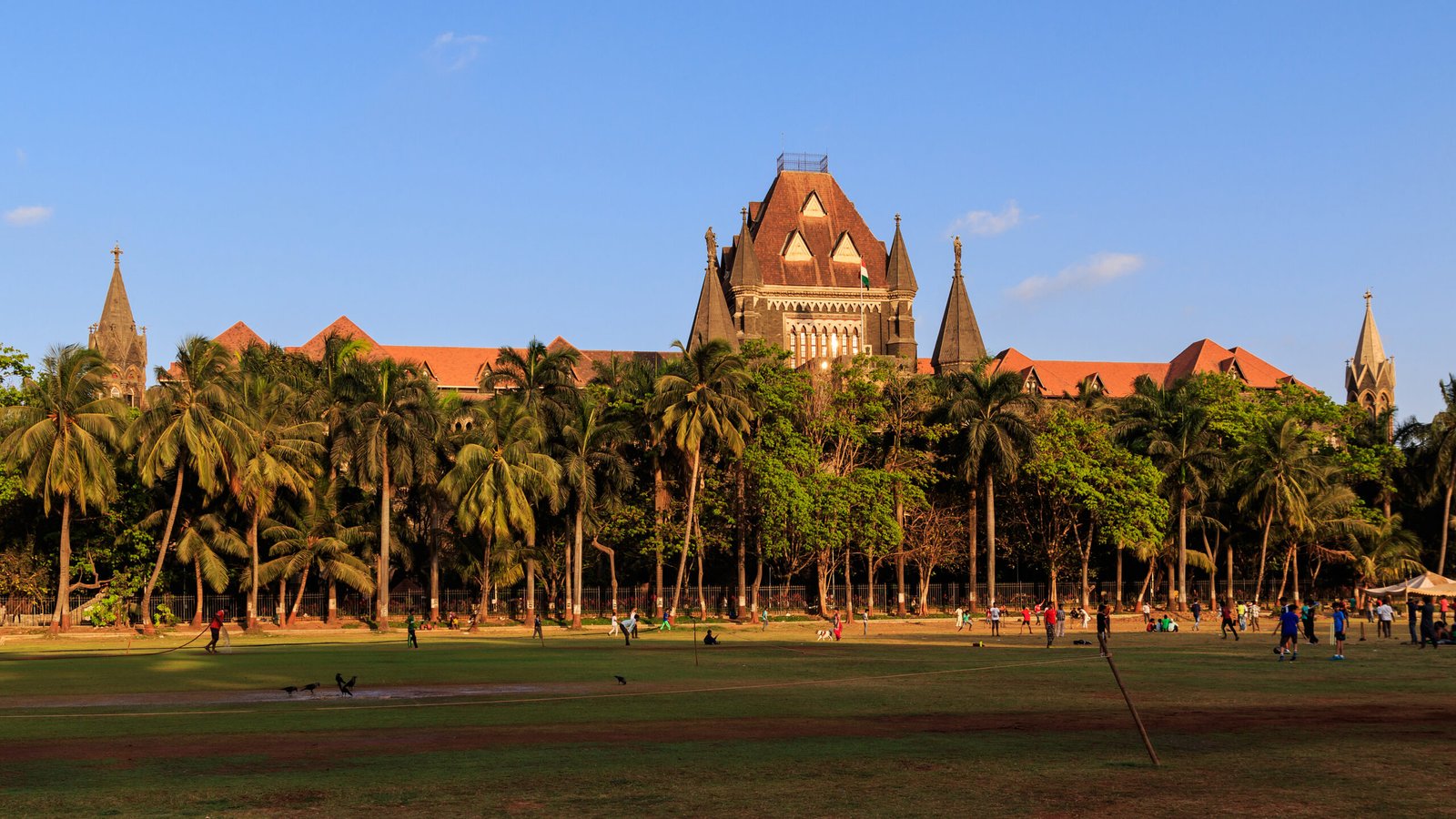
Mocked the Scales of Lady Justicia as Scrapyard Junk: Targeting the Bombay High Court with particular contempt and derision, Raut publicly declared that the scales held by the figure of Lady Justicia — the ancient and universal symbol of impartial, balanced and equal justice — at the Bombay High Court were not the scales of genuine justice but had been purchased from bhangar — the scrapyard, the junkyard, the dump — implying with calculated contempt that justice at that court was not merely compromised but was counterfeit, discarded, worthless — fit only for the garbage heap from which it had been retrieved. He went further, dismissing the courts of Maharashtra as bogus and bakwas — fake, hollow, fraudulent institutions that had made a mockery of the very concept of justice and deserved no public confidence or respect.
Alleged a Systematic Bail Scam Across Maharashtra’s Courts: Raut went so far as to publicly allege the existence of a deep-rooted, systematic and institutionalised “Bail Scam” operating across the courts of Maharashtra, painting a picture of wholesale judicial corruption in the matter of granting and refusing bail. According to his published allegations, the scam operates on a brazenly two-tiered basis: accused persons belonging to or politically connected with the ruling party are granted bail swiftly, readily and as a matter of course — without scrutiny, without delay and without any genuine application of legal principles — while all other accused persons, irrespective of the merits of their cases, are made to wait indefinitely, their bail applications kept in a state of deliberate and calculated suspension. This enforced waiting, Raut alleged, is not a product of judicial workload or procedural necessity but is itself a corrupt mechanism — a deliberate strategy employed by judges to signal to the applicant and their family that relief will not come through law and merit, but only through money. The bail application, on this account, becomes not a legal proceeding but an auction — with the applicant left to make a money offer, and the judge waiting to receive it. It is only upon the payment of a bribe, Raut alleged, that the scales of justice — already, in his words, purchased from the scrapyard — are made to tilt, and bail is finally granted. The allegation, sweeping in its scope, specific in its mechanism and wholly unsubstantiated by any evidence, targets not one judge or one court but the entire bail-granting machinery of Maharashtra’s judiciary — and constitutes, in the considered opinion of the Bar Association, one of the gravest acts of scandalisation of the court committed by any public figure in recent times.
Taken together, this body of conduct — each episode more extreme than the last, each one committed in full knowledge of the pending legal consequences of the earlier ones — presents the portrait not of a politician who occasionally speaks out of turn but of a habitual, wilful and unrepentant contemner of the highest constitutional courts of India. The Indian Bar Association has made clear that this pattern will be placed in its entirety before the Attorney General and, thereafter, before the Supreme Court, so that the full gravity of what has been done — and the full measure of the damage it has caused to public confidence in the judiciary — may receive the response that the Constitution and the law demand.
KAPIL SIBAL’S PARALLEL REMARKS ADD TO THE CONTROVERSY
The controversy is further deepened by the fact that Senior Advocate and former Union Minister Kapil Sibal — who serves as counsel for Sanjay Raut, Uddhav Thackeray and the Shiv Sena (UBT) group in various court proceedings — has himself made public remarks of a strikingly similar tenor. Sibal has publicly stated that there is no hope of justice from the courts for the Uddhav Thackeray camp, and has virtually pre-judged pending proceedings by declaring that courts would pass orders against them and in favour of the ruling parties.
Kapil Sibal Urges People Not to Expect Justice from Courts; Citizens Question His Record as Law Minister
Kapil Sibal’s remarks suggesting that people should not expect justice from courts and should instead take their fight to the streets have triggered strong reactions from sections of the public and the legal fraternity. Many critics have accused him of adopting an opportunistic stance, arguing that while he remained silent on judicial reforms during his years in power, he is now questioning the justice delivery system after failing to secure favourable outcomes in matters he has been associated with.
According to these critics, if the judiciary was allegedly so compromised, the obvious question is: what reforms did Mr. Sibal pursue when he served as Union Law Minister? What steps were taken to bring transparency in judicial appointments, strengthen accountability, tackle corruption, reduce delays, and improve access to justice for ordinary citizens?
Several commentators have argued that instead of encouraging faith in constitutional remedies and institutional reform, statements asking people not to expect justice from courts risk weakening public confidence in the justice delivery system. They contend that portraying the entire judicial system as incapable of delivering justice, while simultaneously urging people to take their grievances to the streets, amounts to a dangerous and irresponsible narrative that could undermine respect for the rule of law.
Critics further contend that constitutional institutions cannot be praised when they deliver favourable outcomes and dismissed when they do not. According to them, public figures who have occupied high constitutional offices carry a special responsibility to strengthen institutions through reform and accountability, rather than erode public confidence in them through sweeping generalisations.
THE CUMULATIVE PICTURE
Taken together, the pattern of conduct — spanning multiple editorials, public speeches and statements — presents a picture of a calculated, sustained and systematic campaign to delegitimise the Indian judiciary in the eyes of the public. Legal experts and Bar Association leaders have stressed that the law of contempt exists precisely to meet such a pattern of conduct, and that courts have in the past treated the cumulative effect of repeated contemptuous conduct as a serious aggravating factor in awarding punishment.
It bears emphasis that even before the latest outburst, two contempt petitions were already pending before the High Court and Supreme Court against Raut and others for prior acts of defaming the judiciary — a fact that lends the present conduct the character not of a first offence but of wilful, deliberate and repeat contempt, deserving of the most serious response as per law.