Pahuja maintains that his affidavit-backed complaint is founded on court records, documentary evidence, and digital proof, which, cannot be contradicted by any court. He states that if any allegation in the complaint is found to be false, fabricated, or unsupported by the record, he is prepared to face any action or penalty prescribed by law. Conversely, if the allegations are established to be true, he contends that strict action must be taken against the concerned judges and all other responsible persons in accordance with law.
He prayed for a CBI investigation, initiation of criminal prosecution, and directions to the Attorney General for India to institute contempt proceedings against the concerned judges for alleged deliberate violation of settled law and binding judicial precedents.
The representation further seeks withdrawal of judicial work under the In-House Procedure (on the lines of the action taken in the case of Justice Yashwant Varma), sanction for prosecution under applicable provisions of law, and monetary compensation for the alleged violation of fundamental and constitutional rights.
The complaint has been filed against Justice Navin Chawla, Justice Ravinder Dudeja, and Justice Chandra Dhari Singh.
[Case No. :- PRSEC/ E/ 2026/ ]
Earlier Delhi High Court Judge Justice Shameet Mukherjee was arrested by the CBI in a corruption case involving allegations that judicial orders were passed in consideration of illegal gratification. The judicial record itself reportedly described the alleged inducements in the phrase “money, women and wine.” [Shameet Mukherjee v. CBI, 2003 (70) DRJ 327]
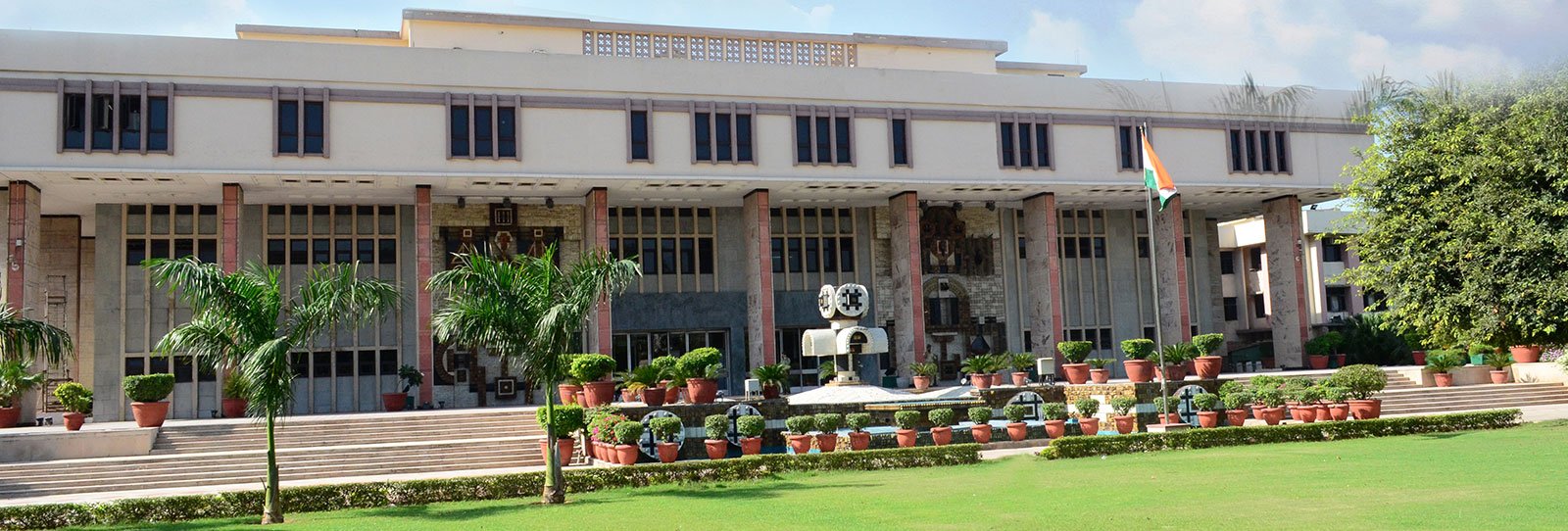
New Delhi. In what legal experts are describing as one of the most extraordinary and far-reaching complaints ever filed against sitting High Court judges of Delhi High Court, Delhi-based social activist and judicial reform campaigner Gulshan Pahuja has addressed a detailed, multi-ground complaint to the President of India against three judges of the Delhi High Court — Justice Navin Chawla, Justice Ravinder Dudeja, and Justice Chandra Dhari Singh — levelling charges of deliberate abuse of judicial authority, criminal conspiracy, fabrication and distortion of judicial records, wilful and repeated disobedience of binding Supreme Court precedents, and unlawful deprivation of personal liberty through the imposition of the maximum sentence of six months’ simple imprisonment. The complaint seeks four crucial reliefs from the President: first, sanction for CBI prosecution under multiple provisions of the Bharatiya Nyaya Sanhita 2023 carrying up to seven years’ imprisonment; second, directions to the Attorney General or Solicitor General to file a contempt petition against the three judges before the Supreme Court; third, immediate withdrawal of all judicial work from the three judges on the lines of the Justice Yashwant Varma precedent and constitution of an “In-House Inquiry”; and fourth, constitutional compensation from the State for violation of fundamental rights.
THE FOUR DEMANDS FROM THE HON’BLE PRESIDENT OF INDIA
First Demand — CBI Prosecution Sanction: Based on K. Veeraswami v. Union of India, (1991) 3 SCC 655 and the recent Nirbhay Singh Suliya v. State of M.P., 2026 SCC OnLine SC 8 — where the Supreme Court itself said that if misconduct is prima facie established, criminal prosecution of a judicial officer must be ordered— Pahuja seeks presidential sanction for CBI prosecution under BNS Sections 198, 199, 201, 228, 229, 255, 256, 257, 258, 336, 337, and 340, carrying sentences of up to seven years.
Second Demand — Attorney General’s Contempt Action: Based on C.S. Karnan, In re, (2017) 7 SCC 1 and Baradakanta Mishra v. Registrar, (1973) 1 SCC 374, Pahuja seeks presidential directions to the Attorney General or Solicitor General to file a formal contempt petition before the Supreme Court against the three judges under Sections 2(b), 12, and 16 of the Contempt of Courts Act 1971 — which carry up to six months’ imprisonment — for their wilful, deliberate, and repeated disobedience of binding Supreme Court precedents. The complaint based on Supreme Court judgments specifically argues that ignorance of settled law is no defence for a Judge — it amounts to Legal Malice.
Third Demand — Withdrawal of Judicial Work on Justice Yashwant Varma Lines: Drawing a direct parallel with the Justice Yashwant Varma episode — where upon serious allegations arising, his entire judicial work was withdrawn and he was restricted to administrative duties pending an In-House Inquiry — Pahuja demands the same treatment for all three judges through the Chief Justice. Relying on Additional District and Sessions Judge ‘X’ v. Registrar General, High Court of M.P., (2015) 4 SCC 91, which gives constitutional recognition to the In-House Procedure, the complaint requests the President to communicate to the Chief Justice of India that all judicial work be withdrawn from the three judges pending inquiry. Going further, the complaint invokes K. Veeraswami (1991) to argue that if the charges are so grave as to endanger the institutional credibility of the judiciary, the concerned judges should voluntarily resign — and if they decline, Rajya Sabha impeachment proceedings should be initiated.
Fourth Demand — Constitutional Compensation from the State: Building on Rudul Sah v. State of Bihar (1983), Bhim Singh v. State of J&K (1985), Nilabati Behera v. State of Orissa (1993), D.K. Basu v. State of West Bengal (1997), and Mahabir v. State of Haryana, 2025 SCC OnLine SC 184 — in which the Supreme Court granted Rs. 5 Lakhs compensation for unlawful conviction because the court was not properly assisted by the state law officers with the correct legal position — Pahuja seeks constitutional compensation from the State. He argues that his case is far graver than Mahabir: in that case, the court was not informed of the correct law; in his case, the correct law was specifically and repeatedly placed before the court and was consciously ignored. He additionally claims civil damages in a civil suit against the concerned judges and government counsel personally for misfeasance in public office, abuse of judicial authority, and unlawful deprivation of liberty — fortified by the Privy Council decisions in Ramesh Maharaj v. Attorney General, (1978) 2 WLR 902 and McLeod v. St. Aubyn, (1899) AC 549, which established that where a judge sentences a citizen in contempt case without following due process, and in violation of his rights under law, the government must compensate and the amount may be recovered from the erring judicial officer personally.
The case arose from Pahuja’s YouTube channel “Fight 4 Judicial Reforms” launched in October 2024, through which he conducted interviews of lawyers and litigants discussing their court experiences and the merits of audio-video recording of court proceedings. The Delhi High Court took suo motu cognizance of the channel’s videos, initiated criminal contempt proceedings, found him guilty on 21 April 2026, and on 16 May 2026, a Division Bench of Justice Navin Chawla and Justice Ravinder Dudeja sentenced him to the maximum punishment of six months’ simple imprisonment and a fine of Rs. 2,000 in each of the two connected contempt cases. The sentence has been suspended for 60 days and Pahuja intends to appeal to the Supreme Court.
WHO IS GULSHAN PAHUJA — THE MAN AT THE CENTRE OF THIS STORM
Gulshan Pahuja, aged 56, has been a social activist since 2014, campaigning for greater transparency and accountability in the judiciary — specifically advocating for audio-video recording of court proceedings and a time-bound judiciary system. He has organised demonstrations at Jantar Mantar, distributed pamphlets, stood outside court complexes carrying posters, and interacted extensively with litigants and victims about systemic challenges in the justice delivery system. His YouTube channel, launched in October 2024, had within three to four months attracted allegations that some of its content had lowered the dignity of the judiciary. The videos included interviews of two lawyers who described their experiences with three magistrates. Additionally, certain statements on the channel were alleged to contain contemptuous allegations against the Supreme Court of India — a charge that became central to one of the most explosive legal arguments in his appeal.
Significantly, the two lawyers whose interviews formed the basis of the proceedings were discharged after their apologies were accepted. Pahuja, who is a common citizen and does not appear in any court, received the maximum sentence — a stark disproportion that his complaint highlights as further evidence of institutional bias.
GROUND 1 — HIGH COURT HAD NO JURISDICTION TO PUNISH CONTEMPT OF THE SUPREME COURT
The first and most fundamental ground in the complaint and the forthcoming Supreme Court appeal is that the Delhi High Court simply had no jurisdiction to punish Pahuja for contempt of the Supreme Court. The Supreme Court itself in Vitusah Oberoi v. Court of Its Own Motion, (2017) 2 SCC 314 — a binding precedent under Article 141 of the Constitution — unequivocally held: “If the Supreme Court itself does not act for its own contempt, no subordinate court can do so. Article 215 empowers a High Court only to punish contempt of itself or courts subordinate to it — not of the Supreme Court.”
The charges against Pahuja specifically included alleged contempt of the Supreme Court. Yet the Supreme Court itself took no cognizance of the videos, issued no notice, and initiated no action. The complaint argues that this omission could only mean one of two things: either the Supreme Court did not consider its contempt to have occurred, or it consciously determined that action was unnecessary. In either situation, the High Court had absolutely no jurisdiction to proceed. Despite this crystal-clear binding law, the accused judges proceeded to take cognizance, convict, and sentence Pahuja — which the complaint characterises as knowing and wilful disobedience of the law by public servants with intent to cause injury, squarely attracting BNS Section 198 (IPC Section 166) and BNS Section 257 (IPC Section 219).
The appeal also pointedly asks: the videos in question were widely available in the public domain and remained viral for a long period. If they truly contained material scandalising the Supreme Court, the Supreme Court could itself have exercised its contempt jurisdiction under Article 129. It chose not to. How then did the Delhi High Court assume the authority the Supreme Court itself declined to exercise?
GROUND 2 — THE SAME JUDGE WAS INVESTIGATOR, RECOMMENDER, AND ADJUDICATOR
The second explosive ground concerns Justice Chandra Dhari Singh. The complaint discloses, on the basis of the High Court’s own records, that when the matter was first placed before the Chief Justice, the Chief Justice directed that it be referred to Justice Chandra Dhari Singh — in his capacity as Judge In-Charge, Building Maintenance and Construction Committee, Karkardooma Court Complex — for the purpose of obtaining comments and report. Justice Chandra Dhari Singh examined the material, including the YouTube videos, and submitted a formal report to the Chief Justice stating: “On a careful examination of the matter, it is found that the videos contain manifestly defamatory and derogatory content… prima facie, criminal contempt under the Contempt of Courts Act, 1971 is made out.”
The Chief Justice accepted this report and directed listing before the Roster Bench. Thereafter, the very same Justice Chandra Dhari Singh presided over the Bench that passed the Cognizance Order dated 28.03.2025.
In other words, one and the same judicial personality first examined the material as investigator, then submitted a recommendation for contempt action as recommender, and finally sat in judgment as adjudicator — a course that is wholly impermissible in any constitutional democracy. The complaint invokes the principle of Nemo Judex in Causa Sua and a catena of binding authorities including State of Punjab v. Davinder Pal Singh Bhullar, (2011) 14 SCC 770, A.K. Kraipak v. Union of India, AIR 1970 SC 150, and Court on its Own Motion v. Nilesh Chandrabhushan Ojha, 2019 SCC OnLine Bom 3908 to establish that such proceedings are coram non judice and the order is void ab initio — null, non est, and legally inexistent from its very inception.
The complaint further argues that a Bench receiving a contempt reference is not bound to proceed — it retains full authority to dismiss the reference at the threshold if it finds it legally unwarranted or the product of hypersensitivity, as demonstrated in numerous cases including Chetak Constructions Ltd. v. Om Prakash, (1998) 4 SCC 577 and P.K. Ghosh v. J.G. Rajput, (1995) 6 SCC 744. This vital safeguard was entirely negated when the very judge who recommended initiation of proceedings assumed the role of adjudicator — transforming what should have been an independent threshold scrutiny into a foregone conclusion.
GROUND 3 — Four mandatory procedural requirements violated; no charges framed and no procedure of Form I and II was followed which makes the conviction void from inception
The complaint and appeal allege that four mandatory procedural steps required under the Contempt of Courts Act, the Delhi High Court Contempt Rules 2025, and binding Supreme Court judgments were entirely bypassed. Not a single one was followed:
No specific charge was framed in the cognizance order of 28 March 2025. No valid notice in Form-II was issued. Charges were never read out or explained to Pahuja under Form-I. And the Recording of Plea — whether the alleged contemnor accepts or denies the charge — was never done.
The Supreme Court has quashed contempt sentences on identical procedural failures in R.S. Sherawat v. Rajeev Malhotra, (2018) 10 SCC 574, Bal Thackrey v. Harish Pimpalkhute, (2005) 1 SCC 254, R.S. Sujatha v. State of Karnataka, (2011) 5 SCC 689, Suo Motu v. Nandlal Thakkar, 2013 Cri LJ 3391, and S. Tirupathi Rao v. M. Lingamaiah, 2024 SCC OnLine SC 1764. The complaint submits that the accused judges, being fully aware of these requirements, deliberately chose not to follow them — attracting BNS Section 201 (IPC Section 167) and BNS Section 258 (IPC Section 220).
GROUND 4 — DISTORTION OF FACTS AND FALSE RECORDING IN JUDICIAL ORDERS
The complaint alleges that the orders of 21 April 2026 and 16 May 2026 contain distorted facts and misrepresented the proceedings. Critical legal arguments placed before the court were not mentioned in the orders. Binding Supreme Court judgments cited by Pahuja were not acknowledged, let alone distinguished or overruled — they were simply ignored as if they had never been placed on record. The American Supreme Court judgment in Mayberry v. Pennsylvania, 400 U.S. 455 (1971) — on the accused’s right to effective legal assistance in quasi-criminal proceedings — was specifically placed on record and specifically cited before the court, which neither distinguished it nor overruled it but simply ignored it entirely.
The complaint characterises the recording of false facts in judicial orders and omission of material arguments as attracting BNS Section 336 (Forgery of Court Record), BNS Section 340(2) (Using Forged Document as Genuine), BNS Section 228 (Fabricating False Evidence), and BNS Section 229 (Giving False Evidence) — all carrying up to seven years’ imprisonment.
GROUND 5 — VIOLATION OF ARTICLE 20(3): RIGHT AGAINST SELF-INCRIMINATION
The appeal raises the important constitutional ground that Pahuja was asked to file a reply affidavit and disclose his defence before any charge was even framed against him. This, the appeal argues, effectively compelled him to reveal his entire defence strategy at the preliminary stage itself — violating Article 20(3) of the Constitution which guarantees protection against self-incrimination and encompasses the right to silence. In quasi-criminal proceedings where imprisonment is possible, the prosecution must prove its case on its own evidence. Requiring the alleged contemnor to disclose his defence before charges are framed effectively transferred the burden of proof onto him — contrary to the Constitution and established criminal jurisprudence.
GROUND 6 — DENIAL OF RIGHT TO CROSS-EXAMINE AND ADDUCE DEFENCE EVIDENCE
Pahuja had specifically sought permission to adduce defence evidence, summon witnesses, and cross-examine witnesses to effectively rebut the charges against him. This opportunity was denied and he was convicted without a full trial. The appeal relies on Rajiv Dawar v. High Court of Delhi, (2018) 12 SCC 437, where the Supreme Court set aside a Delhi High Court contempt conviction on this very ground, holding that an alleged contemnor must be given a real and effective opportunity to rebut charges, establish his innocence, and present necessary evidence. Conviction without this opportunity violates the principles of natural justice and fair trial.
GROUND 7 — RECALL APPLICATION NOT DECIDED INDEPENDENTLY BEFORE SENTENCING
After the conviction order, Pahuja filed a Recall Application raising serious constitutional and jurisdictional grounds. The law required the court to first determine whether the conviction order was legally sound. Instead, the High Court clubbed the Recall Application with the sentencing hearing — giving the distinct impression that the sentence was decided before the Recall Application was even considered. Had the Recall Application been allowed, the question of sentence would not have arisen at all. The failure to decide the Recall Application independently and with reasons rendered the entire sentencing proceedings procedurally infirm.
GROUND 8 — RECALL APPLICATION DISMISSED WITHOUT REASONS
The Recall Application contained detailed references to binding Supreme Court judgments, constitutional provisions, and jurisdictional objections. The High Court dismissed the application without meaningfully engaging with any of these arguments — recording conclusions without reasons. The Supreme Court has consistently held that reasons are the heartbeat of judicial conclusions, and an order that dismisses serious legal objections without reasons is arbitrary and unsustainable in judicial review.
GROUND 9 — RIGHT OF APPEAL AGAINST ORDER OF CONVICTION RENDERED ILLUSORY
After the conviction on 21 April 2026, Pahuja had a statutory right to challenge the order before the Supreme Court. However, the Recall Application was dismissed and sentence immediately pronounced without giving him any reasonable opportunity to approach a higher court to challenge the order of conviction first. The appeal argues that this judicial haste effectively rendered his right of appeal meaningless — depriving him of a real opportunity to challenge the conv iction before his liberty was taken away, in violation of Articles 14 and 21.
GROUND 10 — STATEMENTS DURING PROCEEDINGS USED AS BASIS FOR ENHANCED SENTENCE WITHOUT SEPARATE PROCEEDINGS
The appeal alleges that the court used certain statements made by Pahuja during the hearing itself — beyond the original charges — as a basis for sentencing. If those statements were themselves contemptuous, separate contempt proceedings ought to have been initiated, separate charges framed, and separate opportunity to respond given. The Supreme Court in J.R. Parashar, Advocate v. Prashant Bhushan, Advocate, AIR 2001 SC 3395 has held that a person cannot be punished for statements in respect of which he was never charged. Punishing on uncharged statements without notice and hearing is contrary to natural justice.
GROUND 11 — MAXIMUM SENTENCE DISPROPORTIONATE AND CONTRARY TO CONSTITUTION BENCH JUDGMENTS
Even assuming some technical case of contempt existed, the appeal argues that the maximum sentence of six months’ imprisonment is legally unsustainable. In Prashant Bhushan, In Re, (2021) 3 SCC 160, the Supreme Court — despite serious, widespread, and sharp criticism of the institution and of the Chief Justice personally, and despite the absence of an apology — declined to impose imprisonment and considered a fine sufficient. In Vishal Tiwari v. Union of India, 2025 INSC 647, where statements held the Chief Justice responsible for a “civil war,” the Supreme Court said: “Courts are not so fragile as to wilt under such statements” and declined contempt action entirely.
The appeal contrasts these cases with Pahuja’s — where no witness was influenced, no judicial proceeding was obstructed, and no concrete interference with the administration of justice was demonstrated — and yet the maximum sentence was imposed. Neither the prosecution nor the Amicus Curiae had sought the maximum sentence. The imposition of the most severe punishment in such circumstances is, the appeal argues, not only disproportionate but directly contrary to binding Constitution Bench authority on the nature and purpose of contempt law.
GROUND 12 — COURT TREATED PAHUJA AS AN ENEMY, NOT A LITIGANT
One of the most powerful passages in the complaint and appeal addresses the fundamental character of the proceedings themselves. The appeal argues that a civilised justice system’s most basic test is how it treats a citizen who challenges it — as an aggrieved person seeking justice, or as a threat to be crushed. In Pahuja’s case, the Delhi High Court chose the latter course, and in doing so transformed the proceedings from a judicial process into institutional retribution.
Pahuja was a common citizen speaking about corruption, arbitrariness, and the suffering of ordinary people in the justice system. His language was harsh — but it was the language of a man broken by a system he believed was failing him, not the language of a criminal. The Supreme Court in In Re: S. Mulgaokar, AIR 1978 SC 727 had said that a judge, when confronted with criticism, should take a liberal and restrained view — asking whether it is a cry for reform. In P.N. Duda v. V.P. Shiv Shankar, (1988) 3 SCC 167, the Supreme Court recognised that criticism of the judiciary is the lifeblood of democracy and suppressing it weakens, not strengthens, the institution.
The Delhi High Court, the appeal argues, read Pahuja’s anguish not as a call for reform but as an attack to be punished. The roles of judge, prosecutor, complainant, and sentencing authority collapsed into one — and when that happens, what results is not justice but institutional anger dressed in judicial robes. The Constitution, the appeal concludes, has no room for retribution — from any chair.
THE JUSTICE PARDIWALA BENCH PRECEDENT AGAINST JUDGES: Shikhar Chemicals v. State of U.P., 2025 SCC OnLine SC 1653
The appeal also places reliance upon the landmark decision of the Hon’ble Supreme Court in Shikhar Chemicals v. State of U.P., 2025 SCC OnLine SC 1653, rendered by a Bench led by Hon’ble Mr. Justice J.B. Pardiwala. In that case, the Supreme Court expressed serious dissatisfaction with orders passed by a Judge of the Allahabad High Court, questioned the Judge’s legal competence and judicial suitability, and directed the Hon’ble Chief Justice of the Allahabad High Court not to assign any judicial work to the concerned Judge.
In his complaint, Gulshan Pahuja contends that the allegations raised against the three Delhi High Court Judges are of an even graver nature. According to the complaint, the Judges deliberately disregarded binding Supreme Court precedents, manipulated judicial records, violated mandatory procedural safeguards, and acted in a manner contrary to the rule of law and constitutional guarantees.
Pahuja argues that if the Supreme Court considered it appropriate in Shikhar Chemicals to direct withdrawal of judicial work on concerns relating to judicial competence and the administration of justice, then similar or stronger action is warranted where there are allegations of wilful violation of binding law, manipulation of court records, and abuse of judicial authority affecting a citizen’s fundamental rights.
On that basis, Pahuja has requested the President of India to ensure that, pending an independent investigation, the three concerned Judges are immediately divested of judicial work, subjected to proceedings under the In-House Procedure, and, where warranted, subjected to prosecution, contempt proceedings, and other actions permissible under law.
Pahuja’s complaint further relies upon the Constitution Bench judgment of the Hon’ble Supreme Court in Supreme Court of India v. Subhash Chandra Agarwal, (2020) 5 SCC 481, which authoritatively held that judicial independence and judicial accountability are complementary constitutional values and not mutually exclusive concepts.
Referring to paragraphs 221, 227, 228 and 230 of the judgment, Pahuja contends that the Constitution does not envisage judicial independence as a shield against scrutiny, accountability, or investigation. On the contrary, the Constitution Bench expressly recognized that the judiciary, like every other constitutional institution, remains accountable for the manner in which constitutional power is exercised. The judgment further emphasizes that judicial power is conferred solely for the administration of justice and cannot be employed for extraneous purposes or private ends.
Relying upon the Constitution Bench observations that “the shield of the institution cannot be entitled to protect those actions from scrutiny” and that “the institution cannot be called upon to insulate and protect a Judge from actions which have no bearing on the discharge of official duty,” Pahuja asserts that judges accused of personal criminal wrongdoing cannot claim institutional protection merely because they hold judicial office.
According to the complaint, judicial independence exists to protect honest and fearless decision-making, not to provide immunity for deliberate violations of law, manipulation of judicial records, abuse of judicial authority, or acts amounting to criminal misconduct. Where allegations concern personal wrongdoing, abuse of power, or conduct having no nexus with the bona fide discharge of judicial functions, the Constitution Bench has made it clear that the institutional shield of the judiciary cannot be invoked to prevent scrutiny, investigation, prosecution, or accountability.
Pahuja therefore submits that extending institutional protection to judges accused of serious criminal misconduct would be contrary to the principles laid down by the Constitution Bench itself and would undermine the rule of law, which, as held by the Supreme Court, requires compliance with the law without exception and protects citizens against unfettered exercise of official power.
THE COMPREHENSIVE CONSTITUTIONAL VIOLATION
The appeal concludes that when viewed holistically, the entire proceedings constitute a comprehensive violation of Articles 14, 19(1)(a), 20(3), and 21 of the Constitution: no charges were framed; mandatory procedure was not followed; the right against self-incrimination was violated; the right to adduce defence evidence and cross-examine was denied; effective legal assistance was not provided; the right of appeal was rendered illusory; criticism was equated with contempt; the maximum sentence was imposed without demonstration of real interference with justice administration; and statements made during proceedings were used as sentencing grounds without separate charges. Each of these violations is independently sufficient to vitiate the proceedings; their cumulative effect is a complete failure of constitutional due process.
WHAT HAPPENS NEXT
Pahuja’s sentence stands suspended for 60 days. The Supreme Court appeal is being prepared with extensive documentation. The case has already attracted significant attention in legal circles because it raises simultaneously almost every major question in Indian contempt jurisprudence — the jurisdictional limits of High Courts in Supreme Court contempt matters, the mandatory procedural requirements for criminal contempt, the doctrine of Nemo Judex in Causa Sua, the right to fair trial in quasi-criminal proceedings, the proportionality of contempt sentences, and the accountability of judicial officers under criminal law.
The Supreme Court’s decision in this matter — on judicial accountability, rule of law, and the constitutional rights of an ordinary citizen against the might of an institution — has the potential to become one of the most significant judgments in the history of Indian contempt jurisprudence.