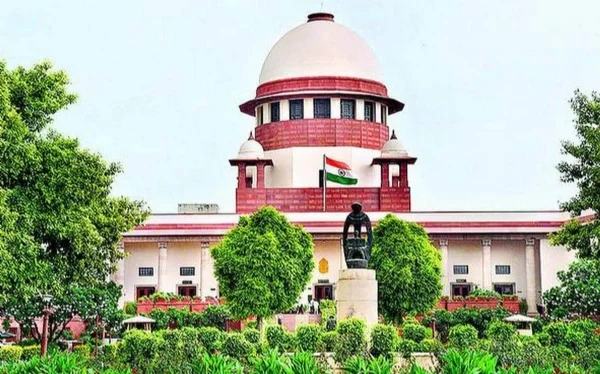
A Critical and Important Principle of Natural Justice and Judicial Impartiality Often Overlooked, Misunderstood, or Insufficiently Addressed in Judicial Proceedings
An Analysis of Blondine Surratt, et al. v. Prince George’s County, Maryland, 320 Md. 439; Krishnadatt Awasthy v. State of M.P., (2025) 7 SCC 545; Bharti Arora v. State of Haryana, (2024) 20 SCC 103; and State of Punjab v. Davinder Pal Singh Bhullar, (2011) 14 SCC 770.
Adv. Nilesh Ojha-Sanvidhani, Chairman Indian Bar Association.
- This article examines a fundamental principle of natural justice: every litigant is entitled to have his or her case heard by an impartial and unbiased Judge. The crucial question, however, arises as to the remedies available when circumstances create a reasonable apprehension of bias, lack of impartiality, conflict of interest, or a genuine possibility of injustice. The primary safeguard provided by law is the remedy of recusal, whereby a litigant may seek withdrawal of the concerned Judge from the proceedings in order to preserve the fairness and integrity of the adjudicatory process.
- The article analyses the circumstances in which a recusal application may be filed and, more importantly, when the Judge concerned becomes disqualified from hearing and deciding that very application. While ordinary recusal requests are generally decided by the Judge whose recusal is sought, a different and more stringent principle applies where the application contains specific allegations concerning the Judge’s own conduct, personal bias, conflict of interest, family relationship, personal involvement, or other disqualifying circumstances. In such cases, the principle of nemo judex in causa sua—that no person can be a Judge in his own cause—comes into operation.
- Relying upon authorities including Blondine Surratt v. Prince George’s County, Krishnadatt Awasthy v. State of M.P., Bharti Arora v. State of Haryana, State of Punjab v. Davinder Pal Singh Bhullar, Indore Development Authority (Recusal Matter) and In Re: Justice C.S. Karnan, the article argues that where substantial allegations of bias, conflict of interest, personal misconduct, or judicial disqualification are raised and supported by objective material, the recusal application ought to be placed before and decided by another Judge. The article therefore seeks to clarify an important but often overlooked distinction between ordinary recusal requests and cases in which the Judge concerned is himself the subject matter of the disqualification challenge.
- Right to an Impartial Judge and a Fair Adjudicatory Environment: Every citizen is constitutionally entitled to have his or her case heard by a competent, impartial and unbiased Judge in an atmosphere of judicial calm, fairness and objectivity. The right to a fair hearing before an independent and impartial tribunal is not merely a procedural safeguard but a foundational component of the rule of law and the constitutional guarantee of fair administration of justice. Courts have repeatedly emphasized that public confidence in the judicial process depends as much upon the appearance of impartiality as upon actual impartiality. A litigant is entitled not only to justice but to the assurance that justice is being administered by a tribunal free from prejudice, predisposition, personal interest, conflict of interest, or any circumstance giving rise to a reasonable apprehension of bias. These principles are reflected in, inter alia, Sovaran Singh Prajapati v. State of U.P., 2025 SCC OnLine SC 351; Asha Ranjan v. State of Bihar, 2017 (2) SCALE 709; National Human Rights Commission v. State of Gujarat, (2009) 6 SCC 767; Viswanathan v. Rukn-ul-Mulk Syed Abdul Wajid, 1962 SCC OnLine SC 112; and Aureliano Fernandes v. State of Goa, (2024) 1 SCC 632.
- Constitution bench in the case of Supreme Court Advocates-on-Record assn. V. Union of India (recusal matter) (2016) 5 SCC 808 ,it is ruled as under;
“10. It is one of the settled principles of a civilised legal system that a Judge is required to be impartial. It is said that the hallmark of a democracy is the existence of an impartial Judge.”
- In Asha Ranjan v. State of Bihar, 2017 (2) SCALE 709; it is ruled as under;
“Fair trial – Right to a fair trial what is enshrined in Article 21 of our Constitution. Denial of fair trial is crucifixion of human right.
Fair Trial necessarily requires a trial before an impartial Judge, a fair prosecutor and an atmosphere of judicial calm. Therefore, any hindrance in a fair trial could be violative of Article 14 of the Constitution
– The courts have a duty to maintain public confidence in the administration of justice and such duty is to vindicate and uphold the “majesty of the law” and the courts cannot turn a blind eye to vexatious or oppressive conduct that occurs in relation to the proceedings.
Denial of a fair trial is as much injustice to the Accused as is to the victim and the society. It necessarily requires a trial before an impartial Judge, a fair prosecutor and an atmosphere of judicial calm. Since the object of the trial is to mete out justice and to convict the guilty and protect the innocent, the trial should be a search for the truth and not about over technicalities and must be conducted under such Rules as will protect the innocent and punish the guilty. Justice should not only be done but should be seen to have been done. Therefore, free and fair trial is a sine qua non of Article 21 of the Constitution. Right to get a fair trial is not only a basic fundamental right, but a human right also. Therefore, any hindrance in a fair trial could be violative of Article 14 of the Constitution.”
- Three Judge Bench in the case of Sovaran Singh Prajapati v. State of U.P., 2025 SCC OnLine SC 351,it is ruled as under;
“33. The Indian Constitution enjoins a responsibility upon all persons to foster respect for international law.47 The Universal Declaration of Human Rights 1948, which is considered the foremost document in International Human Rights Law, records guarantees for fairness in criminal procedure on two occasions, i.e., Articles 10 and 11. They read:
“Article 10
Everyone is entitled in full equality to a fair and public hearing by an independent and impartial tribunal, in the determination of his rights and obligations and of any criminal charge against him.”
- A three Judge Bench of Hon’ble Supreme Court in National Human Rights Commission Vs. State (2009) 6 SCC 767, had ruled as under;
‘‘Failure to accord fair hearing either to the accused or the prosecution violates even minimum standards of due process of law. It is inherent in the concept of due process of law, that condemnation should be rendered only after the trial in which the hearing is a real one, not sham or a mere farce and pretence. Since the fair hearing requires an opportunity to preserve the process, it may be vitiated and violated by an over hasty stage- managed, tailored and partisan trial.
“In Zahira Habibullah Sheikh (5) and Anr. v. State of Gujarat and Ors. MANU/SC/1344/2006: 2006 CriLJ 1694 it was observed as under:
If the court acts contrary to the role it is expected to play, it will be destruction of the fundamental edifice on which the justice delivery system stands. People for whose benefit the courts exist shall start doubting the efficacy of the system. “Justice must be rooted in confidence; and confidence is destroyed when right-minded people go away thinking: `The Judge was biased.
The perception may be wrong about the Judge’s bias, but the Judge concerned must be careful to see that no such impression gains ground. Judges like Caesar’s wife should be above suspicion.
[…]
The fair trial for a criminal offence consists not only in technical observance of the frame, and forms of law, but also in recognition and just application of its principles in substance, to find out the truth and prevent miscarriage of justice.
It was significantly said that law, to be just and fair has to be seen devoid of flaw. It has to keep the promise to justice and it cannot stay petrified and sit nonchalantly. The law should not be seen to sit by limply, while those who defy it go free and those who seek its protection lose hope (see Jennison v. Baker). ”
- The Twin Safeguards Against Judicial Bias and Disqualification: Recognizing that judicial impartiality lies at the heart of the rule of law and the constitutional guarantee of a fair hearing, the law provides two complementary safeguards whenever circumstances exist giving rise to a reasonable apprehension of bias, conflict of interest, personal involvement, prior association, familial relationship, pecuniary interest, predisposition, or any other circumstance capable of affecting, or appearing to affect, the impartial adjudication of a dispute.
- The first safeguard operates at the level of judicial duty. A Judge who becomes aware of circumstances giving rise to a reasonable apprehension of bias, conflict of interest, or disqualification is under a duty to recuse himself or herself from the proceedings so as to preserve the integrity, impartiality, and public credibility of the adjudicatory process.
- The second safeguard operates at the level of litigant protection. Where a party reasonably believes that circumstances exist which may affect, or appear to affect, the impartial adjudication of the matter, the party is entitled to seek recusal of the concerned Judge through an appropriate application. The right to seek recusal is an integral facet of the constitutional guarantee of a fair hearing before an independent and impartial tribunal.
- These principles are firmly embedded in Indian jurisprudence and stand authoritatively recognized in Krishnadatt Awasthy v. State of M.P., (2025) 7 SCC 545; Bharti Arora v. State of Haryana, (2024) 20 SCC 103; State of Punjab v. Davinder Pal Singh Bhullar, (2011) 14 SCC 770; K. Ghosh v. J.G. Rajput, (1995) 6 SCC 744; Chetak Construction Ltd. v. Om Prakash, (1998) 4 SCC 577; Gullapalli Nageswara Rao v. A.P. State Road Transport Corporation, 1958 SCC OnLine SC 49; and High Court of Karnataka v. Jai Chaitanya Dasa, 2015 SCC OnLine Kar 549.
- The law is equally well settled that where circumstances exist giving rise to a reasonable apprehension or appearance of bias, the Judge concerned ought not to hear or decide the matter. The test is not whether actual bias is established but whether a reasonable and informed person would entertain a legitimate apprehension that the matter may not receive impartial consideration. If a disqualified Judge nevertheless proceeds to hear the matter and renders a decision, the proceedings stand vitiated for violation of the principles of natural justice, and the resultant order is liable to be treated as a nullity. (Krishnadatt Awasthy v. State of M.P., (2025) 7 SCC 545; State of Punjab v. Davinder Pal Singh Bhullar, (2011) 14 SCC 770; Gullapalli Nageswara Rao v. A.P. State Road Transport Corporation, 1958 SCC OnLine SC 49).
- Three Judge Bench in the case of Krishnadatt Awasthy v. State of M.P., (2025) 7 SCC 545 it is rule as under;
“ 27. The principle of nemo judex causa sua found its origin in English law. In Dimes v. Grand Junction Canal (1852) 3 HLC 759 , the House of Lords in a case concerning pecuniary interest observed that the rule against bias extends not only to actual bias but also to the appearance of bias. This principle was later extended to other forms of interest in R v. Sussex Justices [R v. Sussex Justices, (1924) 1 KB 256] where it was held that “even a suspicion that there has been improper interference with the course of justice”, would lead to the vitiation of proceedings. Lord Hewart noted that it is of fundamental importance that justice should not only be done, but should manifestly and undoubtedly be seen to be done. Lord Denning in Metropolitan Properties Co. (FGC) Ltd. v. Lannon (1969) 1 QB 577 noted that, “if right-minded, in the circumstances, there was a real likelihood of bias on his part, he should not sit. And if he does sit, his decision does not stand”. It was further held that:
“… there must be circumstances from which a reasonable man would think it likely or probable that the Justice, or Chairman as the case may be, would, or did, favour one side at the expense of the other.”
- The governing consideration is not merely whether justice has in fact been done, but whether justice appears to have been done. Preservation of public confidence in the administration of justice requires that even a reasonable likelihood, appearance, or apprehension of bias be avoided, for the legitimacy of the judicial process rests as much upon perceived impartiality as upon actual impartiality.
- A litigant confronted with circumstances giving rise to a reasonable apprehension of bias, conflict of interest, or want of impartiality is not required to suffer continued proceedings before a potentially disqualified forum. To avoid further prejudice, harassment, and the risk of an unfair adjudication, the litigant may pursue either of two recognized remedies: (i) by filing a transfer petition before a superior forum vested with jurisdiction to transfer the proceedings; or (ii) by filing a recusal application before the Court in which the matter is pending. The present discussion is confined to the latter category, namely, recusal applications presented before the very Court in which the concerned Judge is sitting and hearing the matter.
- The present discussion is confined to the latter category, namely, recusal applications filed before the very Court in which the concerned Judge is sitting and hearing the matter.
- A Recusal Application Is Primarily a Matter Between the Applicant and the Judge Concerned: The Constitution Bench in Indore Development Authority (Recusal Matter-5 J.) v. Manohar Lal, (2020) 6 SCC 304, expressly recognized that a recusal application is essentially a matter between the applicant and the Judge whose recusal is sought. Referring to the observations of Lokur, J. in Supreme Court Advocates-on-Record Assn. (Recusal Matter) v. Union of India, (2016) 5 SCC 808, the Court noted that a recusal application is made to the Judge concerned and that the decision whether to recuse is ordinarily that Judge’s alone. The opposite party has no vested right to influence that decision or insist that the Judge continue hearing the matter.
- However, the Constitution Bench was dealing with ordinary recusal requests and did not specifically consider a situation where the recusal application itself contains detailed allegations concerning the personal conduct, conflict of interest, family relationships, or other disqualifying circumstances of the Judge.
- Therefore, while recusal is ordinarily a matter between the applicant and the Judge concerned, where the application raises specific and substantiated allegations concerning the Judge’s personal conduct or disqualification, a strong argument exists that the application should be placed before and decided by another Judge in order to preserve both actual impartiality and public confidence in the administration of justice.
- Constitution Bench in the case of Indore Development Authority (Recusal Matter-5 J.) v. Manohar Lal, (2020) 6 SCC 304 , ruled as under;
“37.3. Lokur, J. in his opinion, has observed : [Supreme Court Advocates-on-Record Assn. (Recusal Matter) case [Supreme Court Advocates-on-Record Assn. (Recusal Matter) v. Union of India, (2016) 5 SCC 808 ] , SCC pp. 839-40, paras 60 & 65]
“60. In my respectful opinion, when an application is made for the recusal of a Judge from hearing a case, the application is made to the Judge concerned and not to the Bench as a whole. Therefore, my learned Brother Khehar, J. is absolutely correct in stating that the decision is entirely his, and I respect his decision.
*
- 65. The issue of recusal from hearing a case is not as simple as it appears. The questions thrown up are quite significant and since it appears that such applications are gaining frequency, it is time that some procedural and substantive rules are framed in this regard. If appropriate rules are framed, then, in a given case, it would avoid embarrassment to other Judges on the Bench.”
23. Where the Recusal Application Alleges Personal Bias, Conflict of Interest, or Personal Misconduct of the Judge, the Judge is disqualified to hear it and It Must Be Decided by Another Judge.
24. Once the recusal application contains specific allegations concerning the personal conduct, conflict of interest, family relationships, personal involvement, or other disqualifying circumstances of the Judge concerned, the issue ceases to be one of ordinary recusal. The principle of nemo judex in causa sua—no person can be a judge in his or her own cause—immediately comes into operation.
25. This question is no longer res integra. The law is well settled regarding the distinction between ordinary recusal applications, which may be considered by the Judge concerned, and applications which contain specific and substantiated allegations relating to the Judge’s own conduct or disqualification. In the latter category, the application ought to be decided by another Judge.
26. The clearest statement of this principle is found in Blondine Surratt v. Prince George’s County, Maryland, 320 Md. 439, where the Court held that when the basis of recusal consists of allegations concerning the personal conduct of the trial Judge generating serious questions regarding personal misconduct, the Judge must permit another Judge to decide the recusal motion. The Court further held that such applications must be supported by specific facts and objective material and cannot rest upon vague or conclusory allegations.
27. The Hon’ble Supreme Court in Chetak Construction Ltd. v. Om Prakash, (1998) 4 SCC 577, has authoritatively held that where facts are brought to the notice of the Court which are capable of giving rise to a reasonable and not fanciful apprehension regarding the fairness or impartiality of the adjudicatory process, the learned Judge ought to recuse himself in keeping with the highest traditions of the judiciary. The Court emphasized that the question is not whether the Judge would in fact be influenced, nor whether the disclosed circumstances would ultimately affect the decision, but whether the circumstances are such as to create a reasonable apprehension in the mind of a litigant that justice may not appear to be done.
28. The Supreme Court observed that once such facts, supported by objective material, are placed before the Court, the proper course is for the learned Judge to decline to hear the matter, irrespective of whether actual bias exists. The governing consideration is the foundational principle that justice must not only be done but must also be seen to be done. The Court further held that where a reasonable, bona fide, and non-fanciful apprehension of lack of impartiality arises, recusal is required in order to preserve public confidence in the administration of justice and maintain the highest standards of judicial propriety.
29. Accordingly, where facts are disclosed which are capable of creating a reasonable apprehension of bias, conflict of interest, predisposition, personal involvement, or want of impartiality, the learned Judge is expected to recuse himself from further participation in the matter. Failure to do so may give rise to a legitimate grievance that the proceedings have not been conducted in accordance with the settled principles of natural justice and judicial fairness.
30. In the case of Chetak Construction Ltd. v. Om Prakash, (1998) 4 SCC 577, it is ruled as under;
“Ms. Jaisingh, learned senior advocate for the appellant therefore, requested the learned single Judge to recuse himself from the appeal and let the appeal be heard by some other Judge “in the interest of Justice”. The learned single Judge, seems to have taken an exception to the request of the learned counsel, the existence of various documents etc., notwithstanding.
Much ink and paper has been used, besides spending judicial time, to make the order impugned before us when it was otherwise a simple matter. The facts contained in the application (I.A. No. 6079/96) to which reference has been made above supported by documentary evidence, should have made the learned Judge to himself, decline to hear the appeal by a simple order irrespective of the question whether the disclosed facts could have made any difference in the ultimate order to be made by him in the appeal. It would bear repetition to emphasis that justice must not only be done but also be seen to be done. In the established facts and circumstances of the case, it cannot be said that the request of the appellant to the learned single Judge to recuse himself from hearing the appeal on merits was a wholly unjustified request. Even if it be assumed and we have no reason no to so assume, that there was no such connection between respondent No.3 and the learned single Judge as to influence his ultimate judgment in the appeal pending before him but when certain facts were brought to his notice, which could give rise to a reasonable and not fanciful apprehension that the trial may not be fair, the learned single Judge should have recused himself from the appeal in keeping with the highest traditions of the judiciary. Discretion, after all, is better part of valor.”
- In the case of K. Ghosh v. J.G. Rajput, (1995) 6 SCC 744, it is ruled as under:
“9. We are indeed sad that in these circumstances, B.J. Shethna, J. should have persisted in hearing the contempt petition, in spite of the specific objection which cannot be called unreasonable on the undisputed facts, and in making the impugned order accepting prima facie the respondent’s above-noted contention. Ordinarily, at least at that stage it should have been appreciated that the more appropriate course for him to adopt was to recuse himself from the Bench hearing this contempt petition, even if it did not occur to him to take that step earlier when he began hearing it. It is on account of the lack even now of the proper perception needed of the appropriate course for a Judge to adopt in these circumstances that it has become our painful duty to emphasise on this fact most unwillingly. We do so with the fervent hope that no such occasions arise in future which may tend to erode the credibility of the course of administration of justice.”
“10. A basic postulate of the rule of law is that “justice should not only be done but it must also be seen to be done”. If there be a basis which cannot be treated as unreasonable for a litigant to expect that his matter should not be heard by a particular Judge and there is no compelling necessity, such as the absence of an alternative, it is appropriate that the learned Judge should recuse himself from the Bench hearing that matter. This step is required to be taken by the learned Judge not because he is likely to be influenced in any manner in doing justice in the cause, but because his hearing the matter is likely to give rise to a reasonable apprehension in the mind of the litigant that the mind of the learned Judge — maybe subconsciously — has been influenced by some extraneous factor in making the decision, particularly if it happens to be in favour of the opposite party. Credibility in the functioning of the justice delivery system and the reasonable perception of the affected parties are relevant considerations to ensure the continuance of public confidence in the credibility and impartiality of the judiciary. This is necessary not only for doing justice but also for ensuring that justice is seen to be done.”
“11. In the facts and circumstances of this case, we are afraid that this facet of the rule of law has been eroded. We are satisfied that B.J. Shethna, J., in the facts and circumstances of this case, should have recused himself from hearing this contempt petition, particularly when a specific objection to this effect was taken by the appellants in view of the respondent’s case in the contempt petition, wherein the impugned order came to be made in his favour. In our opinion, the impugned order is vitiated for this reason alone.”
“12. Consequently, this appeal is allowed. The impugned order dated 18-3-1994 is set aside. In view of the fact that B.J. Shethna, J. has since then been transferred from the High Court of Gujarat to the High Court of Rajasthan, it is needless to direct that the matter be now heard in the High Court of Gujarat by a Bench of which he is not a member.”
- When the asserted basis for recusal is personal conduct of the trial judge that generates serious issues about his or her personal misconduct, then the trial judge must ask another judge to decide the motion for recusal. He cannot be Judge in his own case.
- In the case of BLONDINE SURRATT, ET AL. v. PRINCE GEORGE’S COUNTY, MD., 320 Md. 439, it is ruled as under:
“Indeed, under some circumstances, due process problems may arise if a judge who is personally attacked makes a direct contempt ruling. See Taylor v. Hayes, 418 U.S. 488, 94 S.Ct. 2697, 41 L.Ed.2d 897 (1974); Mayberry v. Pennsylvania, 400 U.S. 455, 91 S.Ct. 499, 27 L.Ed.2d 532 (1971).*
We hold that when the asserted basis for recusal is personal conduct of the trial judge that generates serious issues about his or her personal misconduct, then the trial judge must permit another judge to decide the motion for recusal.
We recognize that this procedure has its drawbacks. It can delay a trial, for example, while a new judge is brought in, and put some strain on judicial staffing requirements. We stress, however, that the procedure is not likely to be frequently invoked. In the first place, the kind of personal misconduct that warrants its use should be rare.
… A judge will be disqualified in any case in which his or her partiality is reasonably questioned on the basis of personal misconduct.
Moreover, the recusal motion must set forth facts in reasonable detail sufficient to show the purported personal misconduct; mere conclusions as to lack of impartiality will not suffice. And it should be supported by affidavit or testimony or both.
We deem this procedure preferable to one in which a merely conclusory allegation of bias is sufficient to disqualify a judge, and also better than one in which the challenged judge, or some other judge, holds a mini-trial on the truth of the allegations.
… These requirements are similar to the federal requirement that an affidavit be filed which states the facts and the reasons for the belief that bias or prejudice exists. The standard for assessing the facts put forth by the complainant will be the objective standard currently used in Maryland for other types of recusal motions.
Using an objective standard precludes the necessity of delving into the subjective mindset of the challenged judge. A judge will be disqualified in any case in which his or her partiality is reasonably questioned on the basis of personal misconduct.”
The Court further observed that although recusal applications are ordinarily decided by the Judge whose recusal is sought, there exist exceptional situations in which the Judge concerned should not decide the request himself or herself. Referring to analogous principles governing contempt proceedings, the Court noted that where allegations involve personal attacks upon the Judge or raise serious issues concerning the Judge’s own conduct, it is generally wise and consistent with due process that another Judge determine the matter. The Court specifically relied upon Taylor v. Hayes and Mayberry v. Pennsylvania to emphasize that due process concerns arise when a Judge who is personally involved or personally attacked proceeds to adjudicate the issue himself or herself.
- The same principle flows from long-settled Indian jurisprudence.
- The Seven-Judge Constitution Bench in In Re: Hon’ble Shri Justice C.S. Karnan (2017) 7 SCC 1, strongly criticized the conduct of Justice C.S. Karnan and emphasized that no person, including a Judge, can act as a Judge in his own cause (nemo judex in causa sua), which is one of the most fundamental principles of natural justice. The Court noted that Justice Karnan had purported to pass orders in matters directly concerning himself and his dispute with the judiciary, contrary to this elementary rule. Ultimately, holding his conduct to constitute contempt of the gravest nature, the Constitution Bench convicted him and sentenced him to undergo six months’ imprisonment.
It is ruled as under;
“ If an appropriate enquiry is initiated into any one or all of the allegations made by the contemnor (Justice C.S. Karnan), he would figure as a witness to establish the truth of the allegations made by him.
Unfortunately the contemnor appears to be oblivious of one of the fundamental principles of law that a complainant/informant cannot be a judge in his own complaint. The contemnor on more than one occasion “passed orders purporting to be in exercise of his judicial functions” commanding various authorities of the states to take legal action against various judges of the Madras High Court on the basis of the allegations made by him from time to time.
Whether all the above-mentioned conduct amounts to either “proved misbehavior” or “incapacity” within the meaning of Article 124(4) read with Article 217(1)(b) of the Constitution of India warranting the impeachment of the contemnor is a matter which requires a very critical examination. If the contemnor is unable to prove the various allegations made against judges of the Madras High Court, what legal consequences would follow from such failure also requires an examination. Probably, the contemnor would be amenable for action in accordance with law for defamation, both civil and criminal apart from any other legal consequences.”
- The Constitutional Bench in Mineral Development Ltd. v. State of Bihar, (1960) 2 SCR 609, it is ruled as under;
“10. […] Tribunals or authorities who are entrusted with quasi-judicial functions are as much bound by the relevant principles governing the “doctrine of bias” as any other judicial tribunal. This Court in a recent decision in Gullapalli Nageswara Rao v. State of Andhra Pradesh [1959 Supp (1) SCR 319] observed:
“The principles governing the ‘doctrine of bias’ vis-a-vis judicial tribunals are well-settled and they are: (i) no man shall be a judge in his own cause; (ii) justice should not only be done but manifestly and undoubtedly seem to be done. The two maxims yield the result that if a member of a judicial body is ‘subject to a bias (whether financial or other) in favour of, or against, any party to a dispute, or is in such a position that a bias must be assumed to exist, he ought not take part in the decision or sit on the tribunal’; and that ‘any direct pecuniary interest, however small, in the subject-matter of inquiry will disqualify a Judge, and any interest, though not pecuniary, will have the same effect, if it is sufficiently substantial to create a reasonable suspicion of bias’. The said principles are equally applicable to authorities, though they are not courts of justice or judicial tribunals, who have to act judicially in deciding the rights of others i.e. authorities who are empowered to discharge quasi-judicial functions.”
- Constitution Bench of the Supreme Court in Gullapalli Nageswara Rao v. A.P. State Road Transport Corpn. 1959 Supp (1) SCR 319, it is ruled as under;
“30. …… The aforesaid decisions accept the fundamental principle of natural justice that in the case of quasi-judicial proceedings, the authority empowered to decide the dispute between opposing parties must be one without bias towards one side or other in the dispute. It is also a matter of fundamental importance that a person interested in one party or the other should not, even formally, take part in the proceedings though in fact he does not influence the mind of the person, who finally decides the case. This is on the principle that justice should not only be done, but should manifestly and undoubtedly be seen to be done. The hearing given by the Secretary, Transport Department, certainly offends the said principle of natural justice and the proceeding and the hearing given, in violation of that principle, are bad.”
- In the case of Supreme Court Advocates-on-Record assn. V. Union of India (recusal matter) (2016) 5 SCC 808 ,it is ruled as under;
“10. It is one of the settled principles of a civilised legal system that a Judge is required to be impartial. It is said that the hallmark of a democracy is the existence of an impartial Judge.
- From the above decisions, in our opinion, the following principles emerge:
25.1. If a Judge has a financial interest in the outcome of a case, he is automatically disqualified from hearing the case.
25.2. In cases where the interest of the Judge in the case is other than financial, then the disqualification is not automatic but an enquiry is required whether the existence of such an interest disqualifies the Judge tested in the light of either on the principle of “real danger” or “reasonable apprehension” of bias.
25.3. The Pinochet case added a new category i.e. that the Judge is automatically disqualified from hearing a case where the Judge is interested in a cause which is being promoted by one of the parties to the case.
- One of the reasons for recusal of a Judge is that litigants/the public might entertain a reasonable apprehension about his impartiality. As Lord Chief Justice Hewart said: (KB p. 259)
“… it is not merely of some importance but is of fundamental importance that justice should not only be done, but should manifestly and undoubtedly be seen to be done. “
And therefore, in order to uphold the credibility of the integrity institution, the Judge recuses from hearing the case.
- A Judge of the Supreme Court or the High Court, while assuming office, takes an oath as prescribed under Schedule III to the Constitution of India, that:
“… I will bear true faith and allegiance to the Constitution of India as by law established, that I will uphold the sovereignty and integrity of India, that I will duly and faithfully and to the best of my ability, knowledge and judgment perform the duties of my office without fear or favour, affection or ill will and that I will uphold the Constitution and the laws.”
- Called upon to discharge the duties of the office without fear or favour. affection or ill will, it is only desirable, if not proper, that a Judge, for any unavoidable reason like some pecuniary interest, affinity or adversity with the parties in the case, direct or indirect interest in the outcome of the litigation. family directly involved in litigation on the same issue elsewhere, the Judge being aware that he or someone in his immediate family has an interest, financial or otherwise that could have a substantial bearing as a consequence of the decision in the litigation, etc., to recuse himself from the adjudication of a particular matter. No doubt, these examples are not exhaustive.
- Guidelines on the ethical conduct of the Judges were formulated in the Chief Justices Conference held in 1999 known as “Restatement of Judicial Values of Judicial Life”. Those principles, as a matter of fact, formed the basis of “the Bangalore Principles of Judicial Conduct, 2002” formulated at the Round Table Meeting of Chief Justices held at the Peace Palace, The Hague. It is seen from the Preamble that the Drafting Committee had taken into consideration thirty-two such statements all over the world including that of India. On Value 2 “Impartiality”, it is resolved as follows.
“Principle:
Impartiality is essential to the proper discharge of the judicial office. It applies not only to the decision itself but also to the process by which the decision is made
Application
2.1. A Judge shall perform his or her judicial duties without favour. bias or prejudice.
2.2. A Judge shall ensure that his or her conduct, both in and out of court, maintains and enhances the confidence of the public, the legal profession and litigants in the impartiality of the Judge and of the judiciary.
2.3. A Judge shall, so far as is reasonable, so conduct himself or herself as to minimise the occasions on which it will be necessary for the Judge to be disqualified from hearing or deciding cases.
2.4. A Judge shall not knowingly, while a proceeding is before, or could come before, the Judge, make any comment that might reasonably be expected to affect the outcome of such proceeding or impair the manifest fairness of the process. Nor shall the Judge make any comment in public or otherwise that might affect the fair trial of any person or issue.
2.5. A Judge shall disqualify himself or herself from participating in any proceedings in which the Judge is unable to decide the matter impartially or in which it may appear to a reasonable observer that the Judge is unable to decide the matter impartially. Such proceedings include, but are not limited to, instances where
2.5.1 the Judge has actual bias or prejudice concerning a party or personal knowledge of disputed evidentiary facts concerning the proceedings;
2.5.2 the Judge previously served as a lawyer or was a material witness in the matter in controversy; or
2.5.3 the Judge, or a member of the Judge’s family, has an economic interest in the outcome of the matter in controversy:
Provided that disqualification of a Judge shall not be required if no other tribunal can be constituted to deal with the case or, because of urgent circumstances, failure to act could lead to a serious miscarriage of justice.”
- When in Doubt, Judge must Recuse: The Settled Rule That Any Reasonable Doubt Regarding Judicial Impartiality Must Be Resolved in Favour of Recusal- [State of Punjab v. Davinder Pal Singh Bhullar, (2011) 14 SCC 770]
It is ruled as under ;
“……A Judge must recuse himself from a case before any objection is made or if the circumstances give rise to automatic disqualification or he feels personally embarrassed in hearing the case. If, in any other case, the Judge becomes aware of any matter which can arguably be said to give rise to a real danger of bias, it is generally desirable that disclosure should be made to the parties in advance of the hearing. Where objection is then made, it will be as wrong for the Judge to yield to a tenuous or frivolous objection as it will be to ignore an objection of substance. However, if there is real ground for doubt, that doubt must be resolved in favour of recusal.…”
- Even an indirect, remote, or tenuous relationship, interest, or conflict of interest may be sufficient to disqualify a Judge and warrant recusal. The test is whether the circumstances give rise to a reasonable apprehension of bias. Proceedings conducted by a disqualified Judge are coram non judice; the judgment stands vitiated, and all consequential actions founded thereon are equally vitiated. (State of Punjab v. Davinder Pal Singh Bhullar, (2011) 14 SCC 770).
In it is ruled as under;
“13. In Bhajan Lal, Chief Minister, Haryana v. M/s. Jindal Strips Ltd. & Ors., (1994) 6 SCC 19, this Court observed that there may be some consternation and apprehension in the mind of a party and undoubtedly, he has a right to have fair trial, as guaranteed by the Constitution. The apprehension of bias must be reasonable, i.e. which a reasonable person can entertain. Even in that case, he has no right to ask for a change of Bench, for the reason that such an apprehension may be inadequate and he cannot be permitted to have the Bench of his choice.
The Court held as under:-
“Bias is the second limb of natural justice. Prima facie no one should be a judge in what is to be regarded as `sua causa’, whether or not he is named as a party. The decision-maker should have no interest by way of gain or detriment in the outcome of a proceeding. Interest may take many forms. It may be direct, it may be indirect, it may arise from a personal relationship or from a relationship with the subject-matter, from a close relationship or from a tenuous one.”
- The principle in these cases is derived from the legal maxim-
nemo debet esse judex in causa propria sua. It applies only when the interest attributed is such as to render the case his own cause. This principle is required to be observed by all judicial and quasi-judicial authorities as non-observance thereof, is treated as a violation of the principles of natural justice. (Vide: Rameshwar Bhartia v. The State of Assam, AIR 1952 SC 405; Mineral Development Ltd. v. The State of Bihar & Anr., AIR 1960 SC 468; Meenglas Tea Estate v. The Workmen, AIR 1963 SC 1719; and The Secretary to the Government, Transport Department, Madras v. Munuswamy Mudaliar & Ors., AIR 1988 SC 2232).
The failure to adhere to this principle creates an apprehension of bias on the part of the Judge. The question is not whether the Judge is actually biased or, in fact, has really not decided the matter impartially, but whether the circumstances are such as to create a reasonable apprehension in the mind of others that there is a likelihood of bias affecting the decision. (Vide: A.U. Kureshi v. High Court of Gujarat & Anr., (2009) 11 SCC 84; and Mohd. Yunus Khan v. State of U.P. & Ors., (2010) 10 SCC 539).
- In Manak Lal, Advocate v. Dr. Prem Chand Singhvi & Ors., AIR 1957 SC 425, this Court while dealing with the issue of bias held as under:
“Actual proof of prejudice in such cases may make the appellant’s case stronger but such proof is not necessary…. What is relevant is the reasonableness of the apprehension in that regard in the mind of the appellant.”
- The test of real likelihood of bias is whether a reasonable person, in possession of relevant information, would have thought that bias was likely and whether the adjudicator was likely to be disposed to decide the matter only in a particular way. Public policy requires that there should be no doubt about the purity of the adjudication process/administration of justice. The Court has to proceed observing the minimal requirements of natural justice, i.e., the Judge has to act fairly and without bias and in good faith. A judgment which is the result of bias or want of impartiality, is a nullity and the trial “coram non judice”. Therefore, the consequential order, if any, is liable to be quashed. (Vide: Vassiliades v. Vassiliades, AIR 1945 PC 38; S. Parthasarathi v. State of Andhra Pradesh, AIR 1973 SC 2701; and Ranjit Thakur v. Union of India & Ors., AIR 1987 SC 2386).
- In Rupa Ashok Hurra v. Ashok Hurra & Anr., (2002) 4 SCC 388, this Court observed that public confidence in the judiciary is said to be the basic criterion of judging the justice delivery system. If any act or action, even if it is a passive one, erodes or is even likely to erode the ethics of judiciary, the matter needs a further look. In the event, there is any affectation of such an administration of justice either by way of infraction of natural justice or an order being passed wholly without jurisdiction or affectation of public confidence as regards the doctrine of integrity in the justice delivery system, technicality ought not to outweigh the course of justice — the same being the true effect of the doctrine of ex debito justitiae. It is enough if there is a ground of an appearance of bias.……”
- The same principle was reiterated by the Court of Appeal in v. Altrincham Justices, Ex parte N. Pennington [1975] Q.B. 549, wherein it was observed that the rule against bias is not confined to cases involving direct pecuniary interest. The Court held that the doctrine extends to all situations where the Judge has such an interest in the parties or the subject matter of the dispute as may impair the impartiality and detachment required of a judicial decision-maker. Significantly, the Court clarified that a litigant seeking disqualification is not required to prove actual bias. It is sufficient to establish a real likelihood of bias or circumstances giving rise to a reasonable apprehension that the Judge may be unable to approach the matter with complete impartiality. The Court observed:
“There is no better known rule of natural justice than the one that a man shall not be a judge in his own cause.”
- The decision thus reinforces the settled principle that the law is concerned not merely with actual bias but equally with the appearance of bias. Where circumstances exist from which a reasonable and informed person may reasonably apprehend lack of impartiality, the Judge stands disqualified, irrespective of whether actual prejudice can be proved. This principle assumes even greater significance when the recusal application itself contains allegations concerning the personal conduct, interests, relationships, or disqualifying circumstances of the Judge concerned, for in such cases the Judge effectively becomes a participant in the controversy rather than a detached adjudicator.
- In the case of v. Altrincham Justices, Ex parte N. Pennington [1975] Q.B. 549, it is ruled as under;
“There is no better known rule of natural justice than the one that a man shall not be a judge in his own cause. In its simplest form this means that a man shall not judge an issue in which he has a direct pecuniary interest, but the rule has been extended far beyond such crude examples and now covers cases in which the judge has such an interest in the parties or the matters in dispute as to make it difficult for him to approach the trial with the impartiality and detachment which the judicial function requires. Accordingly, application may be made to set aside a judgment on the so-called ground of bias without showing any direct pecuniary or proprietary interest in the judicial officer concerned. When an application is made to set aside a decision on the ground of bias, it is of course not necessary to prove that the judicial officer in question was blased. It is enough to show that there is a real likelihood of bias, or at all events that a reasonable person advised of the circumstances might reasonably suspect that the judicial officer was Incapable of producing the impartiality and detachment to which I have referred.“
- Constitution bench inSupreme Court of India v. Subhash Chandra Agarwal, (2020) 5 SCC 481, it is ruled that when there is conflict of interest then concerned Judge must recuse himself from hearing the case.
It is ruled as under;
“28. The rule of law commands compliance with the law, without exception. It requires the protection of individuals against the unfettered discretion by officials on one hand and the protection of individuals from depredations by other private individuals.
- To equate the actions of an individual which have no nexus with the discharge of official duties as a Judge with the institution may have dangerous portents. The shield of the institution cannot be entitled to protect those actions from scrutiny. The institution cannot be called upon to insulate and protect a Judge from actions which have no bearing on the discharge of official duty. It is for this reason that judicial accountability is an inherent component of the justice delivery system. Accountability is expected to animate the day-to-day functioning of the courts. Judges are required to issue reasoned orders after affording an opportunity to both sides of a dispute to present their case. Judicial ethic requires that a Judge ought to recuse herself from hearing a case where there is a potential conflict of interest. These illustration norms serve to further the democratic ideal that no constitutional functionary is above the rule of law.”
- In the Judges transfer caseP. Gupta v. President of India AIR 1982 SC 149, this Hon’ble Court observed thus:
“921. When a Judge permits his judgment in a case to be influenced by the irrelevant considerations of caste and creed, of relationship or friendship, of hostility or enmity, he commits a breach of his oath. It is a case where justice is not done and is denied. It is a case of misbehaviour, to which the provisions of Article 218 read with Clauses (4) and (5) of Article 124 are attracted. There is another kind of case where a Judge acts in accordance with his conscience on the basis of the facts and the law as he bona fide understands them, and yet because of surrounding circumstances it may appear that justice, has not been done even though in fact it may have been done. Where there is a danger that justice will not appear to be done, and the prevailing environment is linked with the person of the Judge, notwithstanding that he may have done nothing to promote it, the injury to the administration of justice can be as serious as a case where the Judge has consciously deviated from the standards of impartial judgment. Where there is a genuine apprehension that justice may not appear to be done, the ordinary rule is that the case pending before the Judge should be transferred to another Judge. But where the apprehension is rooted in local association, on links with members of the Bar or influences present in close proximity to the Judge and the circumstances are such that, notwithstanding that the conduct of the Judge has done nothing to promote it, there is grave and bona fide fear in the minds of honest citizens that the fount of justice may be polluted, its effect is not confined to a single case but spreads widely, endangering the purity of the entire administration of justice. Inasmuch as the administration of justice relies for its vitality on the strength of public confidence, it must range supreme and, therefore, if the Judge is transferred in these circumstances, it must be regarded as a transfer in the public interest. [……….]”
Experience shows that there are cases, though fortunately they are few and far between, in which the exigencies of administration necessitate the transfer of a Judge from one High Court to another. The factious local atmosphere sometimes demands the drafting of a Judge or Chief Justice from another High Court and on the rarest of rare occasions which can be counted on the fingers of a hand, it becomes necessary to withdraw a Judge from a circle of favourites and non-favourites. The voice of compassion is heard depending upon who articulates it. Though transfers in such cases are pre-eminently in public interest, it will be impossible to achieve that purpose if a Judge cannot be transferred without his consent. His personal interest may lie in continuing in a Court where his private interest will be served best, whereas, public interest may require that his moorings ought to be severed to act as a reminder that “the place of justice is hallowed place”.
- In Official Liquidator v. Dayanand, (2008) 10 SCC 1,it is ruled as under;
“91. We may add that in our constitutional set-up every citizen is under a duty to abide by the Constitution and respect its ideals and institutions. Those who have been entrusted with the task of administering the system and operating various constituents of the State and who take oath to act in accordance with the Constitution and uphold the same, have to set an example by exhibiting total commitment to the constitutional ideals. This principle is required to be observed with greater rigour by the members of judicial fraternity who have been bestowed with the power to adjudicate upon important constitutional and legal issues and protect and preserve rights of the individuals and society as a whole. Discipline is sine qua non for effective and efficient functioning of the judicial system. If the courts command others to act in accordance with the provisions of the Constitution and rule of law, it is not possible to countenance violation of the constitutional principle by those who are required to lay down the law.”
- In view of the binding principles laid down in Union of India v. Ram Lakhan Sharma, (2018) 7 SCC 670; Som Mittal v. State of Karnataka, (2008) 3 SCC 574; Pritam Singh v. State, AIR 1956 SC 415; Baboolal v. Nathmal, AIR 1956 Raj 123 : 1955 SCC OnLine Raj 36; State of Kerala v. Aboobacker, 2006 SCC OnLine Ker 666; and other cognate authorities, it is incumbent upon every Judge or any authority to satisfy itself and expressly verify that:
- (a) the adjudication has not been influenced by the personal knowledge, impressions, beliefs, assumptions, or information possessed by the learned Judge outside the judicial record;
- (b) the learned Judge has not assumed, directly or indirectly, the impermissible role of a witness, complainant, investigator, or prosecutor while deciding the matter;
- (c) where any fact material to the adjudication is derived from the personal knowledge of the learned Judge, the learned Judge thereby assumes the character of a witness in respect of such fact and becomes disqualified from adjudicating the matter, necessitating recusal and rendering further participation in the proceedings legally impermissible;
- (d) the findings and conclusions have been arrived at exclusively on the basis of evidence and material duly brought on record and tested in accordance with law, after affording the parties a full and fair opportunity of hearing; and
- (e) no extraneous, undisclosed, private, or off-record material has been imported into the adjudicatory process.
- It is further settled that violation of any of the aforesaid foundational principles strikes at the root of a fair adjudication, constitutes a breach of the principles of natural justice, and vitiates the inquiry and all consequential proceedings founded thereon.
-
The principle that even an appearance of prejudice or influence is sufficient to vitiate judicial proceedings has been reiterated by the Hon’ble Supreme Court in Mangilal v. State of M.P., (1994) 4 SCC 564.
In that case, the Court set aside the impugned order because the learned Judge had allowed himself to be influenced by matters wholly extraneous to the record, namely his views regarding an advocates’ strike. The Supreme Court observed that a Judge “must be of sterner stuff”, that his “mental equipoise must always remain firm and undeflected”, and that a Judge must not permit personal feelings, prejudice, or extraneous considerations to enter the decision-making process. The Court further held that if the learned Judge had “the slightest compunction he should have recused himself”. Emphasising that “a closed mind is antithetical to fair hearing”, the Court reiterated that justice must not only be done but must also appear to be done, quoting the principle that:
“The object … is not merely that the scales be held even; it is also that they may not appear to be inclined.”
The judgment thus affirms that where circumstances exist giving rise to a reasonable apprehension that extraneous considerations, personal involvement, or perceived partiality may affect the adjudicatory process, recusal becomes necessary to preserve public confidence in the administration of justice.
It is ruled as under ;
“The learned Judge should not have let out his bile against the advocates who are free to hold any opinion as to the lapses committed by the then Chief Justice. Holding of such opinions can hardly be characterised as an unruly attitude on the part of the advocates. Such holding of opinions, nor again, would either obstruct or disturb the judiciary. If the learned Judge had the slightest compunction he should have rescued himself. 8. Therefore, we set aside the same and direct the appeal be restored to file and heard on merits.
- We are afraid that the High Court has shown a lack of judicial restraint and decreed in adverting to and influenced by matters which were extraneous. The judicial proceedings in this Court relating to the administrating the High Court during that period would indicate that this went severely wrong in the High Court’s administration in certain matters. The fact is that the advocates were on strike justifiably or otherwise. Why should the Court embark on the reason for the strike which was not the issue before it? Therefore, all the observations which we have quoted above were totally unwarranted. A judge must be of sterner stuff. His mental equipoise must always remain firm and undeflected. It is essential that a judge should not allow his personal prejudice to go into the decision-making as was remarked by Scrutton, L.J. in R v. Bath Compensation Authority2:
“The object … is not merely that the scales be held even; it is also that they may not appear to be inclined.”
- A closed mind is antithetical to fair hearing. Prejudice tends to corrupt the ability to exercise independent judgment. It has a tendency to intrude upon a free mind and may influence the outcome. At this stage, it is worthwhile to recall the words of Mr Justice Frankfurter in Public Utilities Commission of the District of Columbia v. Franklin S. Pollak3:
“The judicial process demands that a judge move within the framework of relevant legal rules and the covenanted modes of thought for ascertaining them. He must think dispassionately and submerge private feeling on every aspect of a case. There is a good deal of shallow talk that the judicial robe does not change the man within it. It does. The fact is that on the whole judges do lay aside private views in discharging their judicial functions. This is achieved through training, professional habits, self-discipline and that fortunate alchemy by which men are loyal to the obligation with which they are entrusted. ” (emphasis supplied)”