The Indian Bar Association has urged the CJI to take suo motu cognizance of the examination paper leak cases and the violence at Jantar Mantar, and to frame uniform national guidelines applicable throughout the country so as to prevent the recurrence of such incidents in the future.
The petition further seeks equal protection of the constitutional rights of not only students and peaceful protesters, but also police personnel and ordinary citizens alike.
The petition states that fair, impartial, time-bound and stringent legal action must be ensured, without discrimination, against:
- persons who assaulted police personnel;
- anti-social elements responsible for violence, arson, vandalism and destruction of public property;
- police personnel who used excessive or unlawful force;
- political leaders and other influential persons who obstructed the police from performing their lawful duties; and
- media personnel, social media influencers and other individuals who, by disseminating one-sided, misleading or false reports and misinformation through social media, incited violence, hostility or public disorder.
The letter further states that those political leaders, Members of Parliament or other elected representatives who, by placing their political interests, personal gain or ambitions for power above the Constitution and the law, directly or indirectly encouraged, instigated, supported or otherwise participated in violence against police personnel, attacks on police officers, arson, vandalism or acts disrupting public order, are not merely liable for criminal conspiracy and other related offences, but have also committed a serious breach of their constitutional oath to bear true faith and allegiance to the Constitution and to faithfully discharge the duties of their office.
The petition also seeks an independent, impartial, scientific and time-bound investigation into:
- who planned or conspired to organize the march towards Parliament despite the police having expressly denied permission;
- which anti-social, organized or anti-national elements were involved;
- who instigated the crowd;
- who provided financial, logistical or other forms of assistance;
- who incited people through social media or other means; and
- who deliberately attempted to challenge law and order and disturb public peace.
The petition seeks identification of the actual masterminds, conspirators, collaborators, financiers and all other co-accused responsible for the incident.
The letter states that every Member of Parliament and Member of the Legislative Assembly, before assuming office, takes the prescribed constitutional oath to faithfully discharge his or her duties in accordance with the Constitution and the law, without fear or favour, affection or ill will. Accordingly, elected representatives are expected to uphold the Rule of Law and the constitutional order, rather than undermine it.
The letter further states that if an elected representative, instead of adopting constitutional and lawful means, himself or herself breaks the law, incites violence, encourages attacks upon police personnel, promotes arson or vandalism, or directly or indirectly obstructs lawful action by the State, such conduct constitutes not merely a punishable offence but also a grave violation of the constitutional oath of office. Such conduct amounts to a direct assault upon constitutional governance, democratic institutions and the Rule of Law.
Referring to R. C. Pollard v. Satya Gopal Mazumdar, 1943 SCC OnLine Cal 153, the letter states that the High Court held that although breach of a promissory oath taken upon assuming public office may not in every case attract a separate statutory punishment, a clear violation of such an oath renders the concerned individual “unfit for public office.” The Court further cautioned that if solemn constitutional oaths taken by holders of high public office are treated as mere formalities, good governance becomes impossible.
On this basis, the petition requests that wherever an investigation establishes that any Member of Parliament, Member of the Legislative Assembly or any other elected representative violated his or her constitutional oath by directly or indirectly participating in acts of violence, rioting, attacks on police personnel, destruction of public or private property, or disruption of public order, such person should be individually arraigned as an accused and prosecuted under the Bharatiya Nyaya Sanhita, 2023 and all other applicable laws.
The letter further requests that proceedings be initiated, in accordance with the applicable constitutional and statutory provisions, for termination of the membership of such elected representatives, declaration of their disqualification from holding public office, or such other constitutional action as may be warranted. It states that a person who has taken an oath to uphold the Constitution cannot claim the moral or constitutional right to continue as a public representative if he or she acts contrary to the Constitution and the law. Democracy, the letter emphasizes, must firmly uphold the principle that no one, regardless of influence or public office, is above the Constitution or the Rule of Law.
The letter further states that, according to the material referred to therein, the evidence available against Shri Rahul Gandhi prima facie indicates that, instead of helping to calm the situation and encouraging adherence to constitutional and lawful means, his statements and conduct aggravated the controversy.
The letter states that when the situation had become highly sensitive and tense, with a clear likelihood of violence, the foremost constitutional and moral duty of a responsible public representative was to unequivocally condemn violence and the taking of law into one’s own hands, irrespective of the side responsible, and to publicly appeal to all concerned to exercise restraint, pursue constitutional and judicial remedies, and maintain peace.
The letter further states that, conversely, if a public representative, at such a sensitive time, makes statements or engages in conduct that incites crowds, aggravates the law-and-order situation, or encourages people to obstruct the lawful functioning of the police and administration, such conduct is inconsistent with the constitutional obligations and oath of office of that representative and warrants an impartial criminal investigation into his or her role.
Constitutional Leadership and Accountability of Public Representatives
The letter further states that public representatives are expected not merely to provide political leadership, but to demonstrate constitutional leadership. Accordingly, during times of crisis, every public statement made by them should strengthen peace, the Rule of Law and constitutional governance, rather than create circumstances that increase the likelihood of violence, public disorder or the breakdown of law and order.
The letter further requests that if, upon an impartial investigation, it is established that any Member of Parliament violated his or her constitutional oath by directly or indirectly participating in acts of violence, rioting, attacks upon police personnel, destruction of public property or disruption of public order, the Speaker of the Lok Sabha should, in accordance with the Constitution, the Representation of the People Act, 1951, and other applicable legal provisions, initiate all appropriate constitutional and parliamentary proceedings, including proceedings for termination of the concerned member’s legislative membership.
The letter states that preserving the dignity of Parliament, maintaining the supremacy of the Constitution, and ensuring the constitutional accountability of elected representatives constitute important responsibilities of the Speaker of the Lok Sabha. Where a Member of Parliament is found to have violated his or her constitutional oath by participating in activities that weaken the Rule of Law or public order, the available constitutional and statutory remedies should be invoked fairly and expeditiously so as to preserve the sanctity of democratic institutions and maintain public confidence.
The petition further requests that, on the basis of direct, circumstantial, digital and electronic evidence collected during the investigation—including Call Detail Records (CDRs), CCTV footage, body-worn camera recordings, social media posts, digital communications and all other relevant evidence—every person found responsible should be prosecuted under Section 61(2) of the Bharatiya Nyaya Sanhita, 2023, Section 8 of the Bharatiya Sakshya Adhiniyam, 2023, and all other applicable penal and legal provisions, without political, social or any other external influence, in order to ensure effective enforcement of the Rule of Law and the constitutional guarantee of equal protection of the laws under Article 14 of the Constitution of India.
The petition further seeks an independent scientific assessment of the damage caused by violence, arson, stone-pelting, vandalism and destruction of public and private property. It requests that, in accordance with the Polluter Pays and Wrongdoer Pays principles, the entire economic loss—including additional expenditure incurred by the police and civil administration, misuse of public resources and the complete cost of restoration—should be recovered from the persons responsible.
The petition states that placing the financial burden created by lawbreakers upon honest taxpayers would be contrary to the Rule of Law. Recovery of the actual loss from those responsible would not only be consistent with the principles of justice but would also operate as an effective deterrent against future incidents of organised violence, public disorder and destruction of public property.
Supreme Court Urged to Exercise Timely Constitutional Supervision
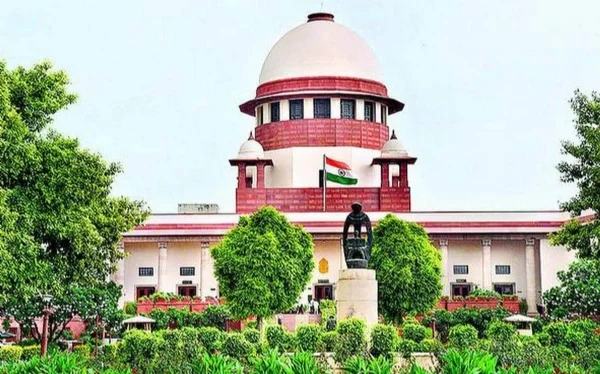
The Indian Bar Association has addressed a detailed representation to the Hon’ble Chief Justice of India requesting the Supreme Court to take suo motu cognizance of matters relating to examination paper leaks, student movements, the demonstrations at Jantar Mantar, clashes between police and protesters, and other issues affecting public order.
The letter submits that the Supreme Court is not merely the nation’s final adjudicatory forum, but, as the ultimate guardian of the Constitution, also bears a constitutional responsibility to intervene at an appropriate stage whenever circumstances so require. According to the letter, if constitutional courts intervene at an early stage, many disputes can be prevented from escalating into violence, public disorder and serious law-and-order crises.
“The Judiciary is the People’s Last Hope”
The letter begins by referring to two important judgments of the Supreme Court.
Relying upon State of Maharashtra v. Sarangdharsingh Chavan, (2011) 1 SCC 577, it states that the Supreme Court emphatically recognised that the paramount constitutional duty of Judges of the Supreme Court is to preserve the Rule of Law and to ensure effective protection of every citizen’s constitutional right to equal protection of the laws.
The letter also relies upon Tarak Singh v. Jyoti Basu, (2005) 1 SCC 201, wherein the Supreme Court described the unique constitutional role of the judiciary by observing that the judiciary today constitutes the greatest repository of public confidence. It is the trustee of the people and the last hope of the common citizen. When every other avenue has failed, it is to the judiciary that citizens ultimately turn in search of justice. The Court further observed that the judiciary is the only institution that every citizen of this country—irrespective of religion, caste, gender or place of birth—approaches with equal faith and confidence in the expectation of justice.
“Timely Judicial Intervention is Equally Essential”
The letter further submits that events often develop with such rapidity that, unless timely constitutional intervention takes place, they may escalate into violence, loss of life and widespread public disorder.
In such circumstances, according to the letter, the role of the Supreme Court cannot remain confined merely to deciding disputes after the damage has already occurred. The Constitution entrusts the courts not only with the protection of fundamental rights but also with the responsibility of addressing administrative failures and preserving the Rule of Law.
Accordingly, the letter contends that in cases involving large-scale examination paper leaks, violation of students’ rights, widespread public unrest or constitutional crises, the constitutional courts should, wherever necessary, exercise their suo motu jurisdiction and intervene in a timely manner.
Not Merely Jantar Mantar—A Question Concerning the Constitutional Order of the Entire Nation
The letter states that the present matter is not confined to a single protest or a single day’s violence. At its core lie numerous constitutional concerns, including the future of students, the credibility of the examination system, the democratic right to peaceful protest, the safety of police personnel, the right of ordinary citizens to move freely, and the preservation of public order.
The petition submits that unless timely institutional and judicial reforms are introduced in response to such incidents, similar confrontations are likely to recur during future public movements and protests. The letter therefore urges the Supreme Court to utilise this opportunity to formulate comprehensive national constitutional guidelines governing such situations.
Equal Constitutional Protection for Students, Police Personnel and Citizens
The Indian Bar Association emphasizes that the Constitution protects not merely the rights of one section of society, but the constitutional rights of every citizen equally.
According to the letter:
- Students are entitled to a fair, transparent and credible examination system.
- Peaceful protesters possess the constitutional and democratic right to express their grievances through lawful means.
- Police personnel are entitled to perform their statutory duties free from violence, attacks or unlawful obstruction.
- Ordinary citizens possess the constitutional right to free movement, normal civic life and the maintenance of public order.
The letter states that the constitutional rights of one class of citizens cannot be sacrificed in the name of protecting the rights of another. The essence of constitutional democracy lies in maintaining an appropriate balance between individual liberties and public order in accordance with the Rule of Law.
Equal Enforcement of Law Against Every Wrongdoer
The letter emphasizes that its principal demand is not for action against any particular side, but for equal application of the law against every person found responsible.
According to the petition, the Rule of Law can be regarded as meaningful only when the law is applied and enforced equally against everyone, irrespective of whether the person concerned is:
- an ordinary citizen;
- a political leader;
- a public servant;
- a police officer;
- a media organisation; or
- a social media influencer or any other person possessing public influence.
Accordingly, the petition seeks impartial, independent, time-bound and stringent legal action, without discrimination, political influence or selective enforcement, against:
- persons responsible for assaults upon police personnel;
- anti-social elements involved in violence, arson, stone-pelting, vandalism and destruction of public or private property;
- police personnel using excessive, unnecessary or unlawful force;
- political leaders and other influential persons who obstruct police or other public authorities in the discharge of their lawful duties, exert improper pressure upon them, or interfere with the impartial enforcement of law; and
- media personnel, digital platform operators, social media influencers and other individuals who disseminate false, misleading, fabricated or unverified reports, inflammatory material, fake videos, manipulated (morphed) clips, rumours, misinformation or disinformation with the effect of promoting violence, hostility, mob rule or public disorder.
The petition further states that all persons are equal before the law and that no individual, organisation or institution is entitled to special protection or immunity merely because of political influence, social status, economic power or media reach.
According to the letter, selective enforcement of law not only undermines public confidence in the justice delivery system and public administration but also encourages violent elements, organised misinformation campaigns and the tendency to take the law into one’s own hands.
Accordingly, the petition submits that equal and effective legal action against every person responsible for inciting violence, disrupting public order or abusing legal rights is alone consistent with Article 14 of the Constitution and the true spirit of the Rule of Law.
SIT Investigation into Paper Leak Cases and Relief for Students
The letter seeks a fair, impartial and time-bound investigation into the examination paper leak cases.
Where necessary, it requests the constitution of an independent Special Investigation Team (SIT) to investigate the entire conspiracy and determine responsibility at every level, including officials of the Education Department and, where warranted by the evidence, officers up to the level of the Chief Secretary, with appropriate legal action against all persons found responsible.
The petition further seeks:
- expeditious redressal of grievances raised by affected students;
- a transparent decision-making process; and
- appropriate relief and compensation wherever justified.
Mandatory Body-Worn Cameras for Every Police Officer
The letter states that, in order to prevent future disputes between police personnel and protesters, it is essential to make Body-Worn Cameras mandatory for every police officer deployed on law-and-order duty.
The petition further requests that mandatory arrangements be made for the preservation of CCTV footage, drone recordings, vehicle camera recordings, GPS records, wireless communication logs, control room records, call logs and all other electronic evidence, so that every incident may subsequently be investigated on the basis of objective digital evidence.
The letter further seeks that if any mandatory recording is found to be missing or has been deliberately destroyed, appropriate departmental as well as criminal proceedings should be initiated against the responsible officials.
Monitoring Social Media Content Inciting Violence
The petition further requests the establishment of an appropriate legal mechanism for monitoring content circulated through platforms such as YouTube, Facebook, Instagram, WhatsApp and X, where such content incites violence, spreads rumours or disturbs public order.
However, the letter expressly clarifies that such a mechanism must not be used to suppress legitimate criticism of the Government, independent journalism, satire or peaceful democratic dissent.
Request for Uniform National Guidelines
The Indian Bar Association has urged the Hon’ble Supreme Court not to confine its intervention merely to the present controversy, but to formulate uniform national guidelines governing:
- public demonstrations;
- student movements;
- police action during public protests;
- preservation of digital evidence;
- crowd-control measures;
- prevention of misuse of social media; and
- balanced protection of constitutional rights.
According to the letter, if the Supreme Court frames comprehensive national guidelines at this stage, future incidents relating to examination paper leaks, student protests, public demonstrations and other law-and-order situations can be addressed more effectively, thereby substantially reducing violence, confrontation, administrative confusion and unnecessary public tension.
The letter submits that such guidelines would not only ensure effective protection of the constitutional rights of students, peaceful protesters, police personnel and ordinary citizens, but would also prevent the repeated and unnecessary expenditure of public time, energy and resources by the administration, the police, the judiciary and other governmental institutions in dealing with recurring crises of a similar nature.
Enabling Better Governance and National Development
The petition further states that when governments and public authorities are no longer compelled to repeatedly expend their time and resources in responding to violence, disorder and confrontational situations, the same administrative capacity, institutional resources and governmental machinery can instead be directed towards:
- national development;
- improvement of the education system;
- employment generation;
- development of public infrastructure;
- strengthening law and order; and
- more effective implementation of public welfare programmes.
According to the letter, this would enable governance to shift its focus from crisis management to nation-building and sustainable development.
Objective of the Petition
The letter concludes by stating that the objective of the petition is not merely to secure judicial intervention in relation to the present incidents, but to establish a permanent constitutional and institutional framework capable of preventing the recurrence of similar situations in the future.
The petition submits that if comprehensive national guidelines are framed clearly defining the rights and responsibilities of all stakeholders:
- the Rule of Law will be strengthened;
- public confidence in constitutional institutions will increase;
- misuse of administrative powers will be reduced;
- public resources will be utilised more efficiently and responsibly; and
- the nation’s energy will no longer be wasted in conflict, disorder and recurring crises, but will instead be channelled towards development, good governance and building a more prosperous, secure and progressive India.
The letter emphasizes that the proposed constitutional framework is intended not only to prevent future conflicts but also to promote a governance model founded upon constitutional accountability, institutional efficiency, equal protection of rights and the effective utilisation of national resources in the larger public interest.