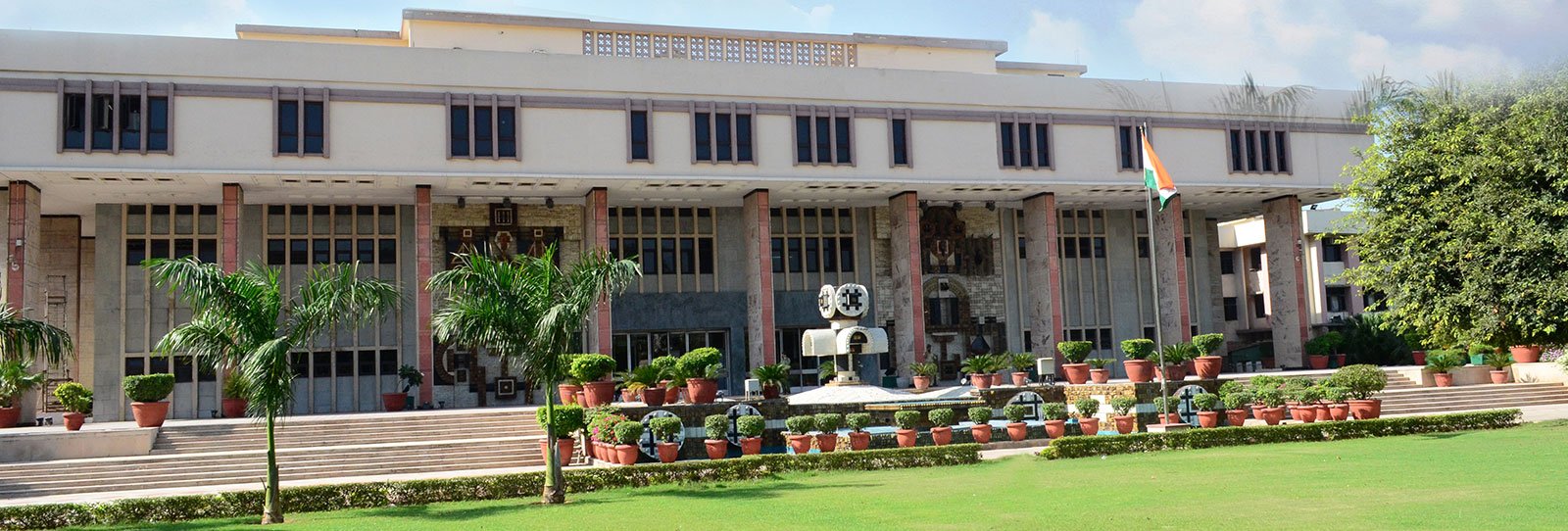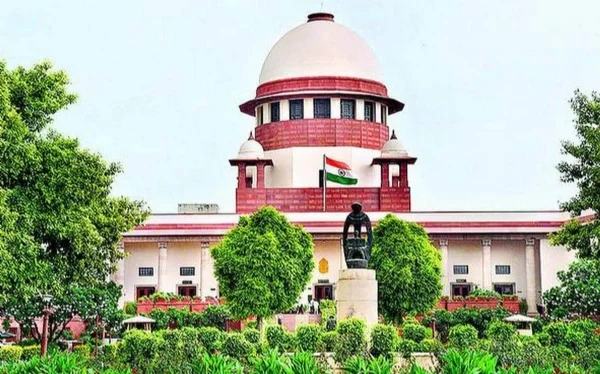
A pattern of judicial indiscipline in Delhi’s subordinate courts has come under renewed scrutiny following the discharge order passed by CBI Special Judge Jitendra Singh in the Delhi liquor policy case. The order has drawn criticism in legal circles, as it run contrary to binding precedents and observations laid down by the Supreme Court and the Delhi High Court.
Several judges of the Delhi courts have, in the past, acted in disregard of specific directions issued by the Supreme Court and the Delhi High Court, and have subsequently faced contempt proceedings, disciplinary action, and even mandatory judicial training.
The issue has assumed particular prominence in the context of the discharge order passed by CBI Special Judge Shri Jitendra Singh in the Delhi liquor policy case involving Arvind Kejriwal and others, concerning an alleged scam of more than ₹580 crores. Already, the Indian Lawyers and Human Rights Activists Association has filed a complaint seeking criminal prosecution, contempt proceedings, and disciplinary action against Rouse Avenue CBI Special Judge Shri Jitendra Singh in connection with the discharge order passed in favour of Arvind Kejriwal and 23 other accused.
Most shocking is the case of District Judge Archana Sinha, who was warned by the Bench of Justice Markandey Katju of possible imprisonment for contempt of the Supreme Court’s directions. The Supreme Court explicitly observed that observed that such sub ordinate Judges are bringing a bad name to the whole institution and must be thrown out of the judiciary – [Atma Ram Builders (P) Ltd. v. A.K. Tuli, (2011) 6 SCC 385 ] .
- In the case of Nikhil Jain v. State (NCT of Delhi), 2025 SCC OnLine Del 6150 the Delhi High Court found serious concerns regarding judicial indiscipline where subordinate courts appeared to have ignored binding orders of the High Court and the Supreme Court while granting undeserving protection to the accused. The Court noted that despite the anticipatory bail applications having already been rejected twice by the High Court and the rejection having been upheld by the Supreme Court, the Magistrate and the Additional Sessions Judge granted relief to the accused and observed that the conduct indicated judicial indiscipline and disregard of binding precedents. Accordingly, the Court dismissed the anticipatory bail application and directed that copies of the order be sent to the Registrar General of the Delhi High Court for placing the matter before the Inspecting Committees of the concerned judicial officers, and also to the Commissioner of Police for necessary action.
- In a recent judgment in the case of Netsity Systems (P) Ltd. v. State (NCT of Delhi), 2025 SCC OnLine SC 2079, the Hon’ble Supreme Court expressed serious concern regarding the manner in which the ACMM unlawfully granted bail in disregard of the binding precedents and the Sessions Judge declined to interfere with that illegal order. The Court observed that the judicial orders reflected a lack of proper appreciation of binding precedents and the approach expected while dealing with matters involving decisions of superior courts. Consequently, the Supreme Court directed that the concerned judicial officers undergo special judicial training for at least seven days at the Delhi Judicial Academy, with specific emphasis on sensitizing them about the conduct of judicial proceedings and the appropriate weight to be accorded to decisions of superior courts. The Court also requested the Chief Justice of the Delhi High Court and the Judicial Education & Training Programme Committee to make the necessary arrangements for such training.
- In Rohit Kumar v. State (NCT of Delhi), 2007 SCC OnLine Del 1381, the Delhi High Court held that the observations made by the trial court were in clear disobedience of the High Court’s earlier order and bordered on contempt of court. The Court further observed that the concerned Additional Sessions Judge lacked even elementary knowledge of the Code of Criminal Procedure while passing the impugned order. In view of these serious deficiencies, the High Court directed that the judicial officer undergo a refresher training course in criminal law and procedure at the Delhi Judicial Academy for at least three months, under the supervision of the Director of the Academy, with a performance report to be submitted to the Court. The Court also directed that the judgment be circulated to all judicial officers in Delhi for guidance and that a copy be placed in the personal file of the concerned officer.
- In New Delhi Municipal Council Vs. Prominent Hotel, 2015 SCC OnLine Del 11910, the Delhi High Court summarised various judgments of the Supreme Court and High Courts concerning the duty of subordinate courts to follow binding precedents of the High Court and the Supreme Court. The judgment further noted that where a judicial officer knowingly ignores or bypasses binding decisions of superior courts, such conduct may not be treated as a mere error of judgment but can amount to contempt of court, warranting appropriate action to preserve the authority and integrity of the judicial hierarchy.
- In Suman Sankar Bhunia v. Debarati Bhunia Chakraborty, 2025 SCC OnLine Del 8692, the Delhi High Court strongly criticised the conduct of the concerned Family Court Judge, observing that the proceedings reflected a serious lack of understanding of basic legal principles, statutory provisions, and jurisdictional limits. The Court held that such misapprehension of law and judicial authority undermined the integrity of the adjudicatory process. Consequently, the High Court directed that the concerned judicial officer undergo an immediate and comprehensive refresher training in matrimonial laws at the Delhi Judicial Academy before adjudicating any further matrimonial matters, and ordered the Registry to communicate the judgment to the appropriate authorities for necessary action.