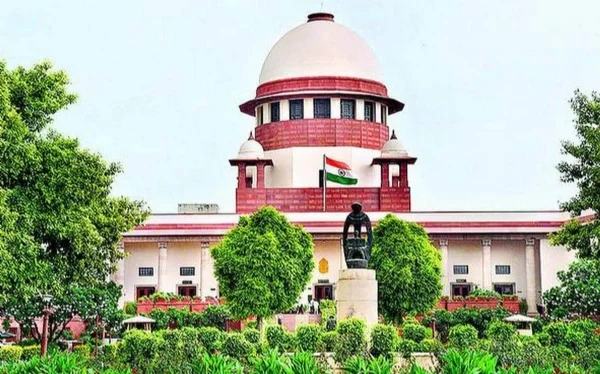
Courts Cannot Remain Passive When the Powerful Are Shielded. The Constitution Commands Accountability, Not Immunity. Constitutional Courts Are Duty-Bound to Intervene Whenever Investigation or Prosecution Is Compromised to Protect the Influential or the Powerful. [Zahira Habibulla H. Sheikh v. State of Gujarat, (2004) 4 SCC 158].
Breach of Public Trust Is Among the Gravest Offences in Criminal Law
The Law Treats Criminal Breach of Trust by a Public Servant as a Particularly Serious Offence, Reflecting the Constitutional Principle That Public Office Is a Sacred Trust and Not a Personal Privilege.
[Section 409, of IPC (corresponding sec 316(5) of Bharatiya Nyaya Sanhita, 2023)]
The Hon’ble Supreme Court has consistently held that no Minister, Chief Minister, senior public official, or even the Government itself is above the law or immune from prosecution. In T.N. Godavarman Thirumulpad v. Ashok Khot, (2006) 5 SCC 1, the Supreme Court found the then Minister for Forests of the Government of Maharashtra, Shri Swaroop Singh Naik, and the then Principal Secretary (Forests), Shri Ashok Khot, guilty and while imposing the sentence, the Supreme Court observed:
“Considering the high positions held by the contemnors more stringent punishment is called for, and, therefore, we are imposing custodial sentence.” The above observation is of considerable constitutional significance. It establishes that holding a high constitutional or public office is not a mitigating circumstance but, where public office is abused or judicial orders are deliberately violated, it may constitute an aggravating factor warranting a more stringent punishment. Those entrusted with higher public responsibilities are expected to exhibit a correspondingly higher degree of fidelity to the Constitution and the law.
The constitutional principle that the Rule of Law is supreme has been consistently reaffirmed by the Supreme Court and High Courts. No individual, regardless of office, rank, political authority, or constitutional status, is above the law. Every person is equally accountable for acts and omissions contrary to law.
In Nirmal Yadav v. Central Bureau of Investigation, 2011 SCC OnLine P&H 15415, the Punjab and Haryana High Court, relying upon the settled law declared by the Supreme Court, held:
“Be you ever so high, the law is above you.”
The Court further held that – Merely because the petitioner has enjoyed one of the highest constitutional offices (Judge of a High Court), she cannot claim any special right or privilege as an accused than prescribed under law. Rule of law has to prevail and must prevail equally and uniformly, irrespective of the status of an individual.
Likewise, in State of Haryana v. Bhajan Lal, AIR 1992 SC 604, it has been expressed as under:
“2. The king is under no man, but under God and the law” — was the reply of the Chief Justice of England, Sir Edward Coke when James-I once declared “Then I am to be under the law. It is treason to affirm it”, — so wrote Henry Bracton who was a Judge of the King’s Bench.
- The words of Bracton in his treatise in Latin “quod Rex non debate esse sub homine sed sub Deo et Lege” (That the kind should not be under man, but under God and the law) were quoted time and time again when the Stuart Kings claimed to rule by divine right. We would like to quote and requite those words of Sir Edward Coke even at the threshold.
- In our democratic polity under the Constitution based on the concept of ‘Rule of law’ which we have adopted and given to ourselves and which serves as an aorta in the anatomy of our democratic system. THE LAW IS SUPREME.”
In Shakila Abdul Gafar Khan v. Vasant Raghunath Dhoble, (2003) 7 SCC 749, the Hon’ble Supreme Court approved the celebrated observations of Justice Louis Brandeis in Olmstead v. United States, 1928 SCC OnLine US SC 131, emphasizing that:
“Government as the omnipotent and omnipresent teacher teaches the whole people by its example. If the Government becomes a lawbreaker, it breeds contempt for law; it invites every man to become a law unto himself.”
The Supreme Court has repeatedly reaffirmed that the Rule of Law must remain supreme under all circumstances. Its authority cannot be diluted, marginalized, or compromised for reasons of political expediency, administrative convenience, or the status of any individual or institution. Any departure from the equal and impartial application of law inevitably erodes public confidence in the justice delivery system and weakens the constitutional guarantee of equality before the law.
The consistent jurisprudence of the Supreme Court is that whenever the enforcement of law is selectively relaxed or legal accountability is denied to persons wielding political, executive, or institutional influence, the inevitable consequence is the breakdown of constitutional governance. Such erosion of the Rule of Law ultimately results in disorder, lawlessness, and anarchy, defeating the very object of the Constitution, which is to secure justice, equality, and the orderly administration of law.
Therefore, constitutional authorities, investigating agencies, prosecutors, and courts are under a continuing constitutional obligation to ensure that the law is enforced uniformly, fearlessly, and without favour, so that no individual or authority is permitted to place himself above the law or escape legal accountability on account of office, influence, or power. This alone preserves public confidence in the justice system and upholds the supremacy of the Constitution and the Rule of Law.
Courts Cannot Remain Passive but bound to intervene when attempts were made to save the powerful accused. [Zahira Habibulla H. Sheikh v. State of Gujarat, (2004) 4 SCC 158]
In Zahira Habibulla H. Sheikh v. State of Gujarat, (2004) 4 SCC 158, the Hon’ble Supreme Court emphasized the paramount duty of constitutional courts to ensure that the administration of justice is not defeated by abuse of power, defective investigation, or partisan prosecution. Approving the celebrated observations in Jennison v. Baker, the Court observed:
“The law should not be seen to sit by limply, while those who defy it go free, and those who seek its protection lose hope.”
The Supreme Court further held that it is the constitutional duty of the courts to ensure that offenders are brought to justice and that the power, authority, and machinery of the State are not misused to shield offenders or protect those acting under its influence or patronage. Public power is held only in trust for the people and must be exercised strictly in accordance with law and for the benefit of society at large.
The Court further declared that where deficiencies in investigation or prosecution are apparent, or where attempts are made to conceal the truth, suppress material evidence, or otherwise defeat the due administration of justice, constitutional courts cannot remain passive spectators. They are duty-bound to intervene firmly, within the framework of law, to ensure that justice is not frustrated by deliberate omissions, bias, or abuse of official authority.
The Supreme Court also emphasized that the responsibility to secure justice does not rest upon the courts alone. Investigating agencies and public prosecutors are equally under a legal and constitutional obligation to place all material and relevant facts before the court so that the truth may emerge and no miscarriage of justice occurs.
The principle laid down in Zahira Habibulla H. Sheikh is that the Rule of Law requires not merely the prosecution of individual offenders, but also judicial scrutiny whenever the investigative or prosecutorial process itself appears to have been compromised by bias, suppression of evidence, political influence, institutional protection, or abuse of authority. Constitutional courts are, therefore, required to ensure that the administration of justice remains independent, fair, effective, and free from every form of external or internal interference.
Consequently:
- (i) No Minister, Chief Minister, Judge, senior civil servant, constitutional authority, or Government enjoys immunity from the Rule of Law except to the limited extent expressly provided by the Constitution or statute.
- (ii) Abuse of public office is not a mitigating circumstance; it is an aggravating factor that may warrant more stringent judicial consequences.
- (iii) Public office is a constitutional trust, and breach of that trust attracts greater legal responsibility.
- (iv) Courts are constitutionally obligated to ensure that political influence, executive authority, institutional status, or governmental power never become instruments for defeating justice.
The consistent message emerging from the Supreme Court’s jurisprudence is unmistakable:
No office is higher than the Constitution. No authority is greater than the Rule of Law. The higher the office, the greater the accountability—and where public power is abused, the more stringent the legal consequences and punishment may justifiably be.