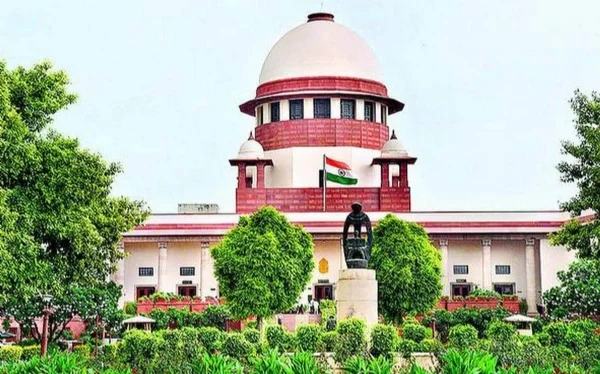
It is bound to recommend only those candidates who satisfy the parameters laid down by Constitution Bench judgments, and to exclude those who fall short of such standards. Even after an appointment is confirmed by the President of India, it remains subject to judicial review and may be set aside in exercise of writ jurisdiction. S.P. Gupta v. Union of India, AIR 1982 SC 149; Kumar Padma Prasad v. Union of India, (1992) 2 SCC 428].
In S.P. Gupta v. Union of India, AIR 1982 SC 149, the then Chief Justice of India was impleaded as a party respondent and called upon by the Constitution bench to file a reply affidavit. The affidavit so filed was subject to judicial scrutiny and criticism, and it was observed that the Chief Justice ought to have appeared through counsel, as was done in Union of India v. Sankalchand Himatlal Sheth, (1977) 4 SCC 193, where the then Chief Justice was duly represented through an advocate.
In Kumar Padma Prasad v. Union of India (1992) 2 SCC 428,), the Supreme Court admittede the Writ Petition and set aside the Presidential warrant of appointment of a High Court Judge, on the ground that the candidate is not competent for the post of High Court judge.
In furtherance of these settled principles, the Indian Bar Association has submitted a “Binding Precedent-Based Checklist” to the Hon’ble Chief Justice of India and the Collegium for the selection and elevation of Judges. This checklist, grounded in binding Constitution Bench judgments of the Supreme Court, clearly sets out the minimum constitutional qualities, ethical standards, and legal competence required for judicial appointments, and explicitly delineates who is fit to be appointed as a Judge and who is not. As per Art. 141 of the Constitution of India no authority in India can take any decision which is contrary to the binding judgment of the supreme Court and any contrary decision is held to be vitiated. [ State Bank of Travancore v. Mathew K.C., (2018) 3 SCC 85]
Further, in consonance with the binding directions of the Constitution Benches, it is necessary that all decisions taken pursuant to this checklist—whether of selection or rejection—shall be mandatorily recorded with reasons and published on the official website of the Supreme Court, thereby ensuring complete transparency, accountability, and public scrutiny in the judicial appointments process. This framework is firmly anchored in the authoritative pronouncements of the Supreme Court in S.P. Gupta v. Union of India, AIR 1982 SC 149, In Re: Justice C.S. Karnan, (2017) 7 SCC 1; Supreme Court of India v. Subhash Chandra Agarwal, (2020) 5 SCC 481.
Supreme Court, in K. S. Puttaswamy v. Union of India, (2017) 10 SCC 1; Asha Ranjan & Ors. v. State of Bihar & Ors., (2017) 4 SCC 397; Sovaran Singh Prajapati v. State of U.P., 2025 SCC OnLine SC 351has affirmed that every individual is entitled to protection under Article 14 of the ICCPR, which guarantees equality before courts and a fair, public hearing by a competent, independent, and impartial Judge. This principle forms the foundation of the rule of law.
It is consistently held that the office of a Judge is a constitutional trust, requiring the highest standards of fairness, integrity, independence, competence, and adherence to the rule of law. These qualities are fundamental, and any deviation undermines public confidence in the judiciary.
In Supreme Court of India v. Subhash Chandra Agarwal, (2020) 5 SCC 481; S.P. Gupta v. Union of India, AIR 1982 SC 149; Shrirang Yadavrao Waghmare v. State of Maharashtra, (2019) 9 SCC 144; C. Ravichandran Iyer v. Justice A.M. Bhattacharjee, (1995) 5 SCC 457; and R.K. Garg v. State of Himachal Pradesh, (1981) 3 SCC 166, the Supreme Court laid down the non-negotiable qualities of a Judge—independence, impartiality, integrity, propriety, equality, competence, and diligence—and emphasized that discourteous or improper conduct by even one Judge adversely affects the credibility of the entire institution.
The Constitution Bench has further outlined an essential checklist, including: unimpeachable integrity, spotless character, reliable conduct, legal competence, commitment to constitutional values, absence of serious aberrations, openness of mind, institutional responsibility, sharp intellect, and a compassionate approach.
Thus, judicial office demands not merely eligibility, but the highest standards of character, competence, and constitutional commitment, failing which the very foundation of justice stands compromised.
The binding judgments of the Supreme Court unequivocally establish that a person who lacks the essential attributes of judicial office is unfit to hold or continue in such position. The following parameters, as recognized in judicial precedents, constitute serious grounds on which Judges have been found unfit to remain in the judiciary:
A Judge who is rude, arrogant, or discourteous, or who disrespects, threatens, or intimidates litigants and advocates, fundamentally violates the core requirement of judicial temperament and erodes the dignity of the institution.
A Judge who acts unfairly, abuses judicial power, or allows extraneous considerations or influence to affect decision-making, compromises the very essence of impartial adjudication and the rule of law.
A Judge who is involved in corruption—directly or indirectly—or who manipulates proceedings, including granting undue or motivated adjournments to favour one party, or who fails to act when immediate intervention is required to prevent injustice, acts in clear breach of judicial duty. Equally, a Judge who proceeds on the assumption that he is above law and possesses unfettered or absolute discretion, undermines constitutional discipline and the limits of judicial power.
Further, absence of legal competence or intellectual capacity to understand and apply law, coupled with failure to consider submissions, non-recording of arguments, or disregard of binding precedents, reflects gross non-application of mind. Passing arbitrary, whimsical, or precedent-defying orders, or distorting facts and law, amounts to grave judicial misconduct.
Equally, any conduct involving bias, discrimination, or unequal treatment of parties strikes at the heart of Article 14 and destroys public confidence in judicial fairness.
Thus, it stands conclusively established that any individual exhibiting such serious deficiencies—whether in conduct, competence, integrity, independence, or impartiality—is unfit for elevation and equally unfit to continue in judicial office, as such continuance undermines public confidence and the foundational principles of justice and constitutional governance.
It is further clarified that if the Collegium recommends any ineligible or unsuitable person for appointment as a Judge of the Supreme Court or High Court, such a decision, being contrary to binding constitutional principles, would be null and void and vitiated in law. In such circumstances, any citizen has the right to approach the Supreme Court under Article 32 of the Constitution by filing a writ petition to challenge such recommendation or appointment.
It is well-settled that decisions of the Collegium are not absolute or beyond scrutiny, but are subject to constitutional standards and judicially evolved principles, and any deviation therefrom invites judicial intervention.
In Kumar Padma Prasad v. Union of India (1992) 2 SCC 428,), the Hon’ble Supreme Court itself intervened and set aside not only the recommendation but even the Presidential warrant of appointment, on the ground that the candidate did not fulfill the required legal qualifications. This landmark judgment establishes that judicial appointments are subject to constitutional scrutiny and cannot be sustained if they violate mandatory requirements.
Going forward, it is expected that “merit, integrity, and constitutional commitment” will be the sole basis for judicial appointments. The checklist seeks to ensure that individuals displaying incompetence, improper conduct, arrogance, lack of judicial temperament, or institutional indiscipline are filtered out at the threshold itself, and only those meeting the highest standards of judicial office are elevated. This checklist is envisioned as a robust institutional safeguard to preserve the integrity of the judiciary.
It is expected that the grave institutional lapses — and the consequent harassment, prejudice, and denial of justice suffered by litigants and members of the Bar at the hands of incompetent, controversial, and unfit judicial officers, including Justice Yashwant Verma, Justice P.D. Dinakaran, Justice C.S. Karnan, Justice Rohinton Nariman, Justice Deepak Gupta, and others — will not be permitted to recur. The faithful implementation of this Checklist will ensure that persons lacking the requisite judicial temperament, displaying conduct unbecoming of judicial office, or falling short of the mandatory standards of competence, integrity, and impartiality are effectively screened out at the threshold of the selection process itself. Consequently, only those who are demonstrably competent, constitutionally committed, and possessed of the balance and rectitude indispensable to high judicial office will be considered for appointment to the higher judiciary.
As a result, the common citizen will no longer be compelled to face situations where, instead of receiving justice, they are confronted with conduct that undermines judicial dignity, fairness, and constitutional principles. Court proceedings are expected to become more respectful, balanced, and just, thereby strengthening public confidence in the judiciary.
It is now evident, in light of binding Constitution Bench judgments, that the Collegium must strictly adhere to this checklist while conducting the entire selection process. Every decision—whether of selection or rejection—must be based on predefined constitutional standards, judicial principles, and objective criteria.
⚖️ Mandatory Compliance with Constitutional Standards :- The Collegium is now duty-bound to operate strictly within these parameters. Any deviation may amount to disobedience of binding precedents, attracting serious legal consequences.
🔥 End of Arbitrariness and Opacity :-
With the implementation of this checklist, arbitrariness, bias, and opacity in judicial appointments are expected to be decisively curtailed. Only those candidates who satisfy the highest benchmarks of fairness, integrity, constitutional commitment, and legal competence will be considered for elevation.
This initiative marks a significant step towards ensuring that the judiciary remains independent, accountable, transparent, and truly worthy of public trust.
🧾 Five Months of Extensive Research — A Multi-Organisational Effort
This comprehensive checklist has been developed after nearly five months of intensive research, analysis, and consultation by a collaborative team comprising the Indian Bar Association, Rashtriya Sanvidhan Raksha Samiti, Indian Lawyers & Human Rights Activists Association, Junior Lawyers & Law Students Association, and the Supreme Court and High Court Litigants Association.
The entire initiative has been led by Advocate Nilesh Ojha, Chairman of the Indian Bar Association, who guided the effort to consolidate binding Constitution Bench judgments, judicial principles, and practical insights into a coherent, objective, and implementable framework.
At the core of this initiative lies the fundamental principle that access to a competent, impartial, and honest Judge is a constitutional right of every citizen. For a long time, serious concerns have been raised regarding opacity, subjectivity, and arbitrariness in the collegium system. While the NJAC was introduced as a reform measure, its striking down left the core issue—namely, injustice arising from unsuitable or arbitrary judicial appointments—largely unaddressed.
This checklist seeks to fill that gap by translating constitutionally mandated standards into practical, measurable, and enforceable criteria.
⚖️ Towards Complete Transparency in Judicial Appointments
The framework proposed by the IBA emphasizes that the process of judicial appointments must now be made transparent, structured, and accountable. It recommends the following key measures:
- Recording clear, reasoned, and objective grounds for both selection and rejection, with appropriate public disclosure;
• Converting the collegium process into written and codified norms, eliminating scope for arbitrariness or subjective discretion;
• Ensuring that every selection is accompanied by a demonstrable evaluation showing how the candidate satisfies all parameters of the checklist;
These steps aim to ensure that judicial appointments are based on merit, verifiable standards, and constitutional principles, rather than opaque or discretionary considerations.
📢 People’s Right to Know and Judicial Accountability
The IBA has strongly emphasized that in a constitutional democracy like India, citizens are not mere recipients of justice but stakeholders in the justice system. Therefore, they have a legitimate right to know:
➡️ The criteria and standards applied in selecting Judges;
➡️ Whether constitutional principles and binding judicial directions are being faithfully followed;
This initiative seeks to ensure that the judiciary remains not only independent but also accountable, transparent, and worthy of public trust.
When the process of judicial appointments becomes open, reasoned, and reviewable, it will not only curb potential misuse or arbitrariness but also empower citizens to seek legal remedies where deviations occur.
This initiative represents a significant step towards making the judiciary more constitutional, transparent, accountable, and citizen-centric.
If effectively implemented, it will ensure that only individuals of the highest standards occupy judicial office, thereby guaranteeing a fair, dignified, and trustworthy justice delivery system and strengthening public confidence in the judiciary.